Read this article in your native language (10+ supported) 👉
[Read in your language]
The Silent Signs Of Heart Disease All Women Need To Know About
⚠️ DISCLAIMER: This article is for informational purposes only and does not constitute medical advice. Always consult a healthcare professional.
High-Impact Intro
John: 👋 Hello, Health Hackers! Imagine your heart as the ultimate backstage crew in the theater of your life—quietly keeping the show running until one day it drops a subtle hint, like a flickering light no one notices. Heart disease is the leading cause of death for women, claiming about one in five lives, yet those signs often whisper instead of shout.44% of U.S. women live with some form of it, and many miss the cues because they’re not the Hollywood chest-clutching drama.[1][2] Why now? Awareness is rising, but misdiagnosis rates stay high—women’s symptoms get chalked up to stress or indigestion too often. Time to tune in.
Lila: Spot on, John. But readers, which one are you? The skeptical one thinking “Heart stuff is for older folks”? The overwhelmed mom juggling symptoms with chaos? The curious go-getter wanting facts? Or the time-poor pro needing quick red flags? Let’s decode this together—no hype, just data-driven clarity.
The Problem (The “Why”)
John: Picture driving with a dashboard light blinking faintly—ignore it, and you’re stranded. That’s heart disease for women: subtle signals like a traffic jam in slow motion. Old way? We all pictured grippy chest pain, but reality hits different. Women face “silent” heart attacks—up to 1 in 5 go unnoticed, damaging the heart stealthily because symptoms masquerade as flu or fatigue.[3][15] It’s risky because delayed action means worse outcomes; women are less likely to get evidence-based treatments post-event.[2]
Lila: Yikes, like mistaking a flat tire for a pothole. And the myths?
John: **Myth vs Reality:** “Heart disease is a man’s problem.” Nope—it’s the #1 killer for women, with unique twists like pregnancy complications hiking risks two-to-four-fold.[2][4] Takeaway: Track your history; one chat with a doc can rewrite your risk story.
Under the Hood: How it Works
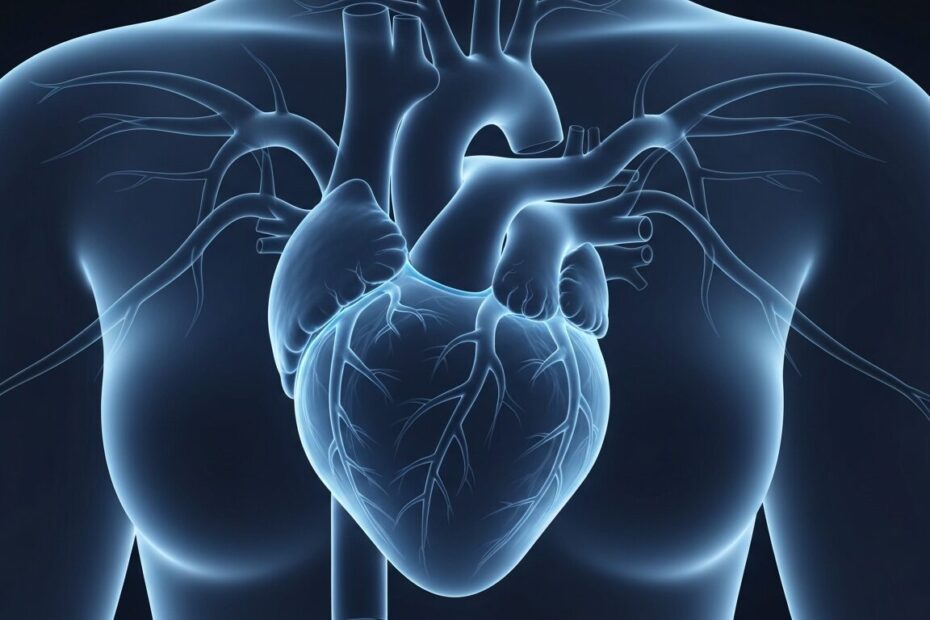
John: Heart disease brews when arteries clog or spasm, starving your heart muscle of oxygen—like a garden hose kinked during a drought. For women, it’s often microvascular (tiny vessels) or SCAD tears, not just big blockages.[1][8] Blood flow stalls, cells die quietly. Research suggests stress, hormones, and inflammation crank this up post-menopause or after pregnancy issues.[2][6]
Now, **One Diagram, Three Layers:**
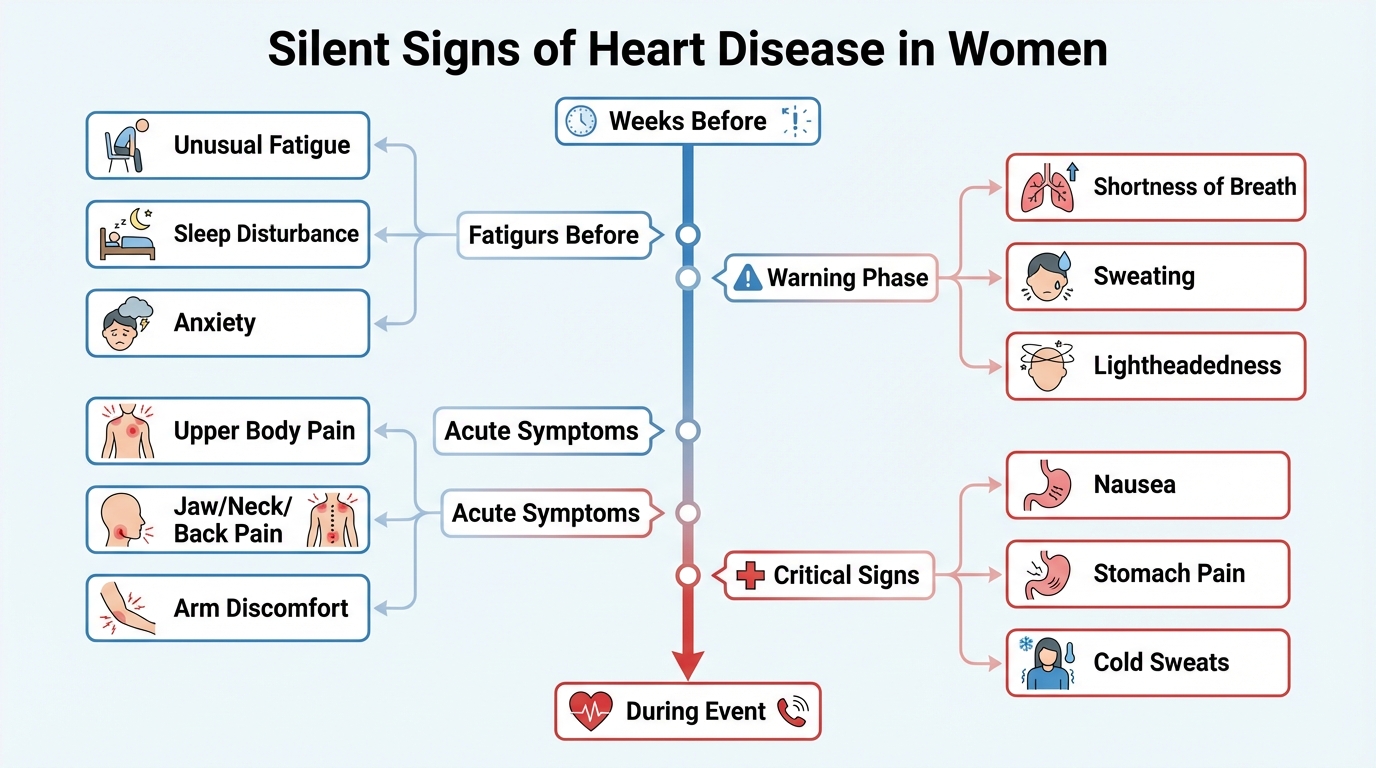
**Layer 1: 10 seconds** – Heart needs steady blood flow. Blockage? Silent damage, fatigue/nausea signals “fix me!”
**Layer 2: 60 seconds** – Plaque builds (cholesterol + inflammation), or vessels spasm/tighten. Women: estrogen drop + diabetes/smoking = faster chain reaction. Symptoms: breath short, jaw aches, not chest crush.[5][9]
**Layer 3: 3 minutes** – Assumptions: symptoms mimic indigestion (ignores microvascular hits). Limits: silent ones (20% cases) leave scars, upping future attack odds. Failure modes: misdiagnosis as anxiety; pregnancy history ignored raises stroke risk 75% later.[8][2]
| Common Mistake | Better System |
|---|---|
| Dismissing fatigue/nausea as “just stress” – delays care, risks silent damage. | Log symptoms + family history; screen BP/cholesterol yearly – catches 80% risks early.[4][10] |
| Ignoring pregnancy red flags like preeclampsia – lifetime risk jumps. | Post-pregnancy check-ups track hypertension/diabetes – cuts future heart events.[2][6] |
Practical Use Cases & Application
John: Scenario 1: Busy mom post-gestational diabetes—sudden jaw ache + nausea at rest? Not brunch gone wrong; could be microvascular alert. Changes daily: Pause, breathe check, call doc.[7] Scenario 2: Perimenopausal exec with unexplained back pain/sweats—old stress label, new heart scan saves time off. Scenario 3: Smoker with flu-like fatigue—quit + monitor halves risk doubling.[6] Scenario 4: Post-cancer chemo fatigue—unique women’s risk; routine EKGs spot early.[8]
Lila: But John, what if it’s “just tiredness” after a long week?
John: Fair skepticism—track if it persists sans reason, pairs with breath issues. Research shows women dismiss 1/3 symptoms; better: note patterns, consult pro.[5]
Lila: And for younger women, no family history?
John: Pregnancy complications or early periods flag risks uniquely; one study links preeclampsia to 2-4x hypertension odds later. Self-advocate regardless.[2]
Educational Action Plan (How to Start)
John: **Level 1 (Learn):** Read AHA/CDC women’s heart guides; note personal risks like menopause age or pregnancy history—free online, 20 mins.[4][5]
**Level 2 (Try Safely):** Log daily energy/breath in a notebook; aim 30-min walks (exercise cuts risks more for women); discuss at next check-up—no big changes, just data gathering.[8]
**Tiny Experiment (15 minutes today):** Sit quietly, check pulse (wrist, 1 min: 60-100 bpm normal). Recall last week’s “off” feelings—fatigue? Nausea? Jot 3 notes. Goal: Spot patterns. Observe: Does it tie to activity/stress? Share with doc next visit. Low-risk awareness builder.
Conclusion & Future Outlook
Lila: Tradeoffs clear: Effort in screenings yields big prevention wins, but ignoring whispers risks silent damage. Uncertainty? Symptoms vary; not all fatigue is cardiac.[1]
John: **Risk Ledger:**
– What can go wrong? Misdiagnosis delays treatment; obesity/diabetes amplify 2-4x.[4][8]
– Who should be careful? Post-pregnancy, menopausal, autoimmune women—80% have risks.[10]
– Safest minimum: Annual BP/cholesterol checks + symptom journal.
**What to Watch Next:**
– Monitor BP trends (130/80+ flags action).[4]
– Controversy: Silent attacks understudied in trials excluding postpartum women.[2]
– Skill: Symptom logging—builds self-advocacy muscle.
References
- The Silent Signs Of Heart Disease All Women Need To Know About
- Heart disease risk factors in women highlight need for increased awareness, prevention
- About Women and Heart Disease – CDC
- Heart Attack Symptoms in Women | American Heart Association
- Heart disease in women: Understand symptoms and risk factors
- Heart Disease in Women – MedlinePlus
▼ AI tools to streamline research and content production (free tiers may be available)
Free AI search & fact-checking
👉 Genspark
Recommended use: Quickly verify key claims and track down primary sources before publishing
Ultra-fast slides & pitch decks (free trial may be available)
👉 Gamma
Recommended use: Turn your article outline into a clean slide deck for sharing and repurposing
Auto-convert trending articles into short-form videos (free trial may be available)
👉 Revid.ai
Recommended use: Generate short-video scripts and visuals from your headline/section structure
Faceless explainer video generation (free creation may be available)
👉 Nolang
Recommended use: Create narrated explainer videos from bullet points or simple diagrams
Full task automation (start from a free plan)
👉 Make.com
Recommended use: Automate your workflow from publishing → social posting → logging → next-task creation
※Links may include affiliate tracking, and free tiers/features can change; please check each official site for the latest details.