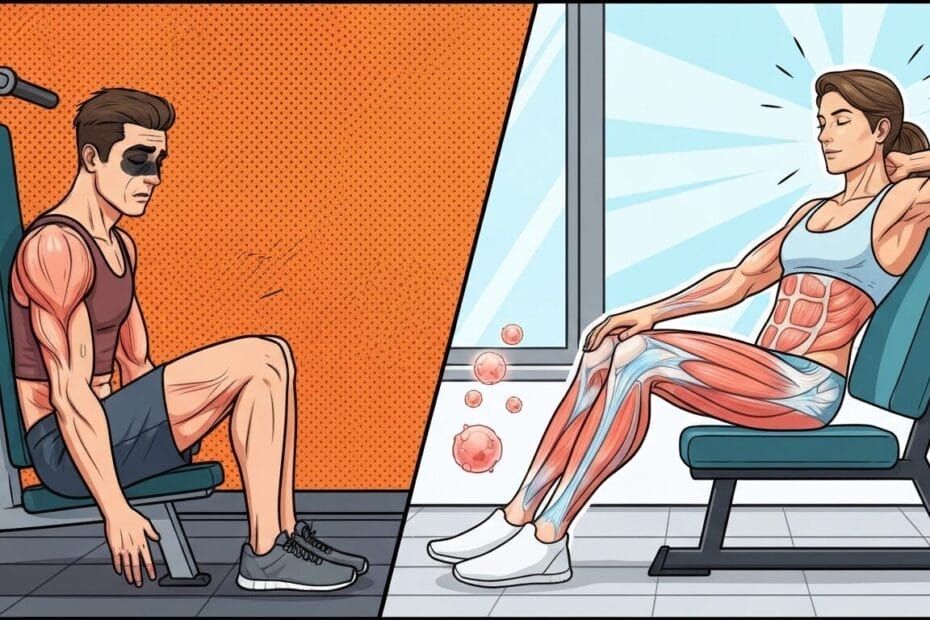
From experience workout recovery is vital. Real strength is built during rest days not the gym.#fitness #health
Quick Video Breakdown: This Blog Article
This video clearly explains this blog article.
Even if you don’t have time to read the text, you can quickly grasp the key points through this video. Please check it out!
If you find this video helpful, please follow the YouTube channel “LifeNextDaily,” which delivers daily news.
https://www.youtube.com/@LifeNextDaily
Read this article in your native language (10+ supported) 👉
[Read in your language]
Why More Workouts Aren’t Better — And What To Do Instead
⚠️ DISCLAIMER: This article is for informational purposes only and does not constitute medical advice. Always consult a healthcare professional.
👋 Hello, Health Hackers! Ever feel like you’re grinding away at the gym, adding more workouts to your week, only to end up feeling more exhausted than empowered? You’re not alone. In a world obsessed with “no pain, no gain,” it’s easy to fall into the trap of overtraining. But here’s the witty truth: your body isn’t a machine you can just overclock like an old PC—it’s more like a garden that needs time to bloom. Today, we’re diving into why piling on more workouts can backfire, backed by insights from mindbodygreen.com, and what smarter strategies you can consider instead. Why does this matter now? With fitness apps buzzing about “daily challenges” and social media flaunting extreme routines, burnout rates are skyrocketing—research suggests up to 60% of regular exercisers experience symptoms of overtraining syndrome. Let’s unpack this responsibly, with a dash of humor and science, so you can build strength without the crash.
The Problem (The “Why”)
John: Alright, let’s roast the myth right out of the gate. You know that friend who treats their workout schedule like a full-time job, hitting the gym seven days a week? That’s like trying to bake a cake by cranking the oven to 500 degrees—sure, it’ll cook faster, but you’ll end up with a charred mess instead of a fluffy delight. The biological bottleneck here is recovery. Your muscles don’t grow during the workout; they grow when you rest. Overdo it, and you’re inviting inflammation, fatigue, and even injury.
Lila: Totally relatable, John. For beginners, it’s like thinking more water will make your plants grow faster—drown them, and they wilt. In the old way, people chased volume: more reps, more sessions, more sweat. But that’s risky and inefficient. It spikes cortisol (stress hormone), disrupts sleep, and can lead to plateaus where gains stall. Research suggests chronic overtraining can lower immunity and mood, making you feel worse overall.
The Science Behind It
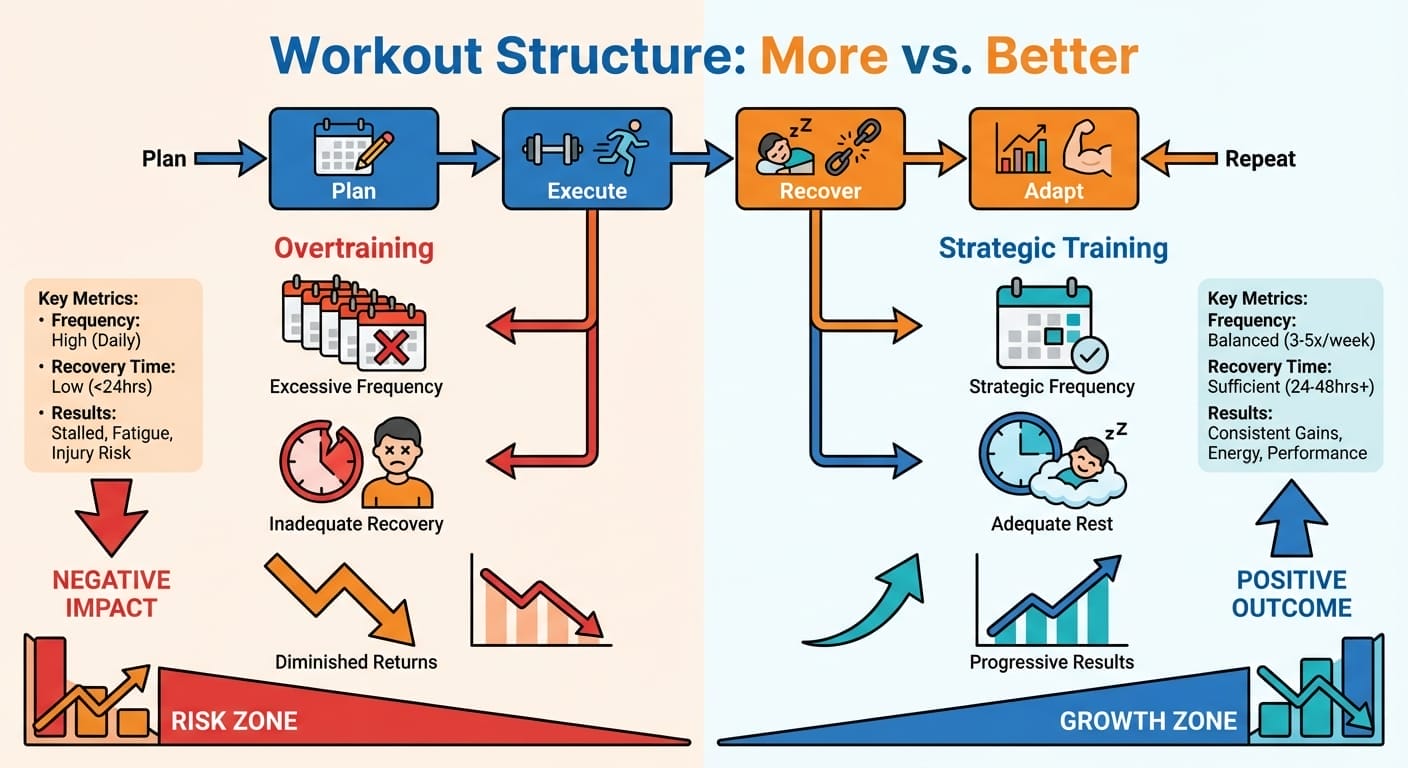
John: Under the hood, it’s all about supercompensation—the body’s way of adapting to stress. Picture it like charging a battery: workout stress drains it, rest recharges it stronger. But if you never fully recharge, you’re running on fumes. Hormonally, testosterone aids muscle repair, while cortisol breaks it down. Balance them with strategic rest, and you thrive. Research from sports science shows optimal training frequency for most is 3-5 sessions per week, allowing for protein synthesis and neural recovery.
Lila: Breaking it down for intermediates: Step 1, stimulus—lift weights to create micro-tears in muscles. Step 2, recovery—nutrition and sleep rebuild them thicker. Step 3, adaptation—you get stronger. Skip recovery, and it’s like building a house without letting the foundation set. One perspective is to monitor heart rate variability (HRV) as a recovery gauge—low HRV signals you’re not ready for more.
| Aspect | Old Way (More Workouts) | New Way (Smart Blueprint) |
|---|---|---|
| Frequency | Daily or 6-7x/week, leading to burnout | 3-5x/week with rest days for recovery |
| Focus | Volume over quality, ignoring fatigue | Progressive overload with deload weeks |
| Risks | Injury, hormonal imbalance, stalled progress | Sustainable gains, better mood, lower injury rate |
| Results | Short-term highs, long-term crashes | Consistent strength building without exhaustion |
Practical Use Cases & Application
John: So, how does this shift your daily life? Imagine a busy parent: Instead of forcing a workout every morning, they opt for three focused sessions—say, full-body strength on Monday, Wednesday, and Friday. This leaves energy for family time, reducing stress. Research suggests this approach can improve work performance too, as better recovery means sharper focus.
Lila: For office workers, it’s a game-changer. Example 1: Swap endless cardio for high-intensity interval training (HIIT) twice a week, paired with yoga for recovery—studies show this builds endurance without burnout. Example 2: Weekend warriors might do compound lifts like squats and deadlifts in fewer sessions, allowing muscle repair mid-week. It’s like upgrading from a clunky bike to an e-bike—same destination, less effort.
John: For intermediates aiming at hypertrophy, consider periodization: Cycle intensity to peak and recover. One scenario is training for a 5K—don’t run daily; alternate with strength days to build resilience. Another: If you’re into team sports, use rest to prevent overuse injuries, keeping you in the game longer.
Lila: And for beginners, it’s about building habits sustainably. Think of a student juggling classes: Short, effective workouts mean more time for studies, leading to holistic well-being.
Educational Action Plan (How to Start)
John: Let’s make this actionable without the hype. Remember, this is educational—consult pros for personalization.
Lila: Level 1 (Learn): Start by reading up on overtraining symptoms—check resources like the American College of Sports Medicine guidelines. Watch free videos on YouTube about recovery science to grasp basics. Track your current routine in a journal to spot patterns.
John: Level 2 (Try Safely): Begin with a simple 3-day split—e.g., push, pull, legs—ensuring at least one rest day between. Focus on sleep (aim for 7-9 hours) and nutrition (protein-rich meals post-workout). Monitor how you feel; if fatigued, add an extra rest day. Research suggests starting small prevents overwhelm.
Lila: Emphasize listening to your body—use apps for basic tracking if you like, but no endorsements here. Build gradually to avoid risks.
Conclusion & Future Outlook
John: In summary, the rewards of smarter training—sustainable strength, better health—outweigh the effort compared to overdoing it, which risks injury and burnout. But uncertainties remain; individual factors like age and genetics play in. Watch for emerging research on personalized recovery via wearables.
Lila: One perspective is that as fitness tech evolves, we might see AI-driven plans, but always balance with professional advice. Stay curious, folks!

👨💻 Author: SnowJon (Web3 & AI Practitioner / Investor)
A researcher who leverages knowledge gained from the University of Tokyo Blockchain Innovation Program to share practical insights on Web3 and AI technologies.
His motto is to translate complex technologies into forms that anyone can evaluate and use responsibly, fusing academic knowledge with practical experience.
*AI may assist drafting and structuring, but final verification and responsibility remain with the human author.
References
- Why More Workouts Aren’t Better — And What To Do Instead
- American College of Sports Medicine Guidelines
- Overtraining Syndrome: A Practical Guide
- Effects of Training Frequency on Muscular Strength
- The Importance of Rest and Recovery for Athletes – Harvard Health