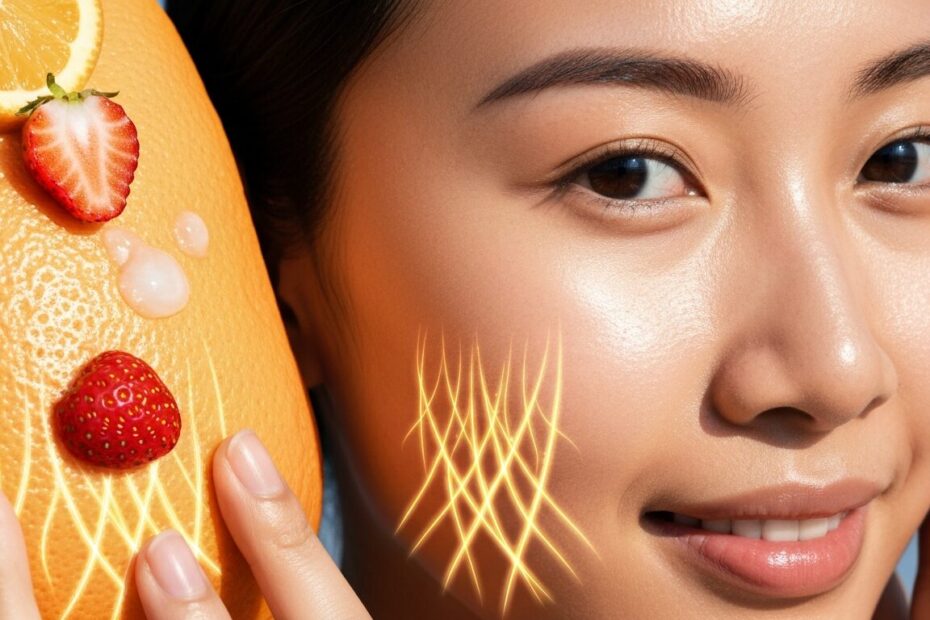
Losing collagen after 25? Discover 3 nonnegotiable, natural tips to restore your skins firmness and keep it looking youthful.
—#CollagenBoost #FirmSkin #NaturalBeauty
—
Quick Video Breakdown: This Blog Article
This video clearly explains this blog article.
Even if you don’t have time to read the text, you can quickly grasp the key points through this video. Please check it out!
If you find this video helpful, please follow the YouTube channel “LifeNextDaily,” which delivers daily news.
https://www.youtube.com/@LifeNextDaily
Read this article in your native language (10+ supported) 👉
[Read in your language]
3 Nonnegotiable Tips To Naturally Restore Collagen & Keep Your Skin Firm
⚠️ DISCLAIMER: This article is for informational purposes only and does not constitute medical advice. Always consult a healthcare professional.
👋 Hello, Health Hackers! Ever looked in the mirror and wondered why your skin seems to be playing a game of “let’s sag a little more today”? If you’re like most of us navigating the wild ride of aging, you’ve probably heard the buzz about collagen—the protein that’s basically the scaffolding holding your skin together. But here’s the witty twist: collagen isn’t just some trendy supplement aisle darling; it’s the unsung hero of your body’s structure, making up about 30% of your total protein. And guess what? After age 25, we start losing it at a rate of about 1% per year, turning firm skin into something that feels more like a deflated balloon.
Why does this matter now? In a world obsessed with filters and flawless selfies, natural ways to boost collagen are gaining traction amid growing awareness of holistic health. Research suggests that with lifestyle tweaks, you might support your body’s own collagen production without relying solely on pricey creams or procedures. We’re talking science-backed tips that could help keep your skin bouncy—think of it as giving your face a natural facelift. But remember, this isn’t a magic fix; it’s about understanding the biology and making informed choices. Let’s dive in with a conversational chat between me, John, the no-nonsense life strategist, and Lila, our beginner-friendly lifestyle architect, to unpack three nonnegotiable tips inspired by the latest wellness insights.
The Problem (The “Why”)
John: Alright, folks, let’s roast the hype first. Collagen loss isn’t just about wrinkles—it’s a sneaky thief that affects joints, bones, and even gut health. Imagine your skin as a trampoline: collagen is the springs keeping it taut. Over time, those springs rust and weaken due to factors like sun exposure, poor diet, and stress. The old way? Slathering on creams that promise miracles but barely penetrate the skin’s surface. It’s like trying to fix a leaky roof by painting the ceiling—ineffective and wasteful.
Lila: Exactly, John. For beginners, think of it like this: Your body used to be a collagen factory in your 20s, churning out the good stuff effortlessly. But now? Production slows, and without the right raw materials, it’s like running a bakery without flour. The bottleneck is biological: enzymes break down collagen faster than you can rebuild it, leading to that dreaded sag. What was hard before? Relying on invasive treatments or unproven supplements that might not even absorb properly. It’s expensive, risky, and often disappointing.
The Science Behind It
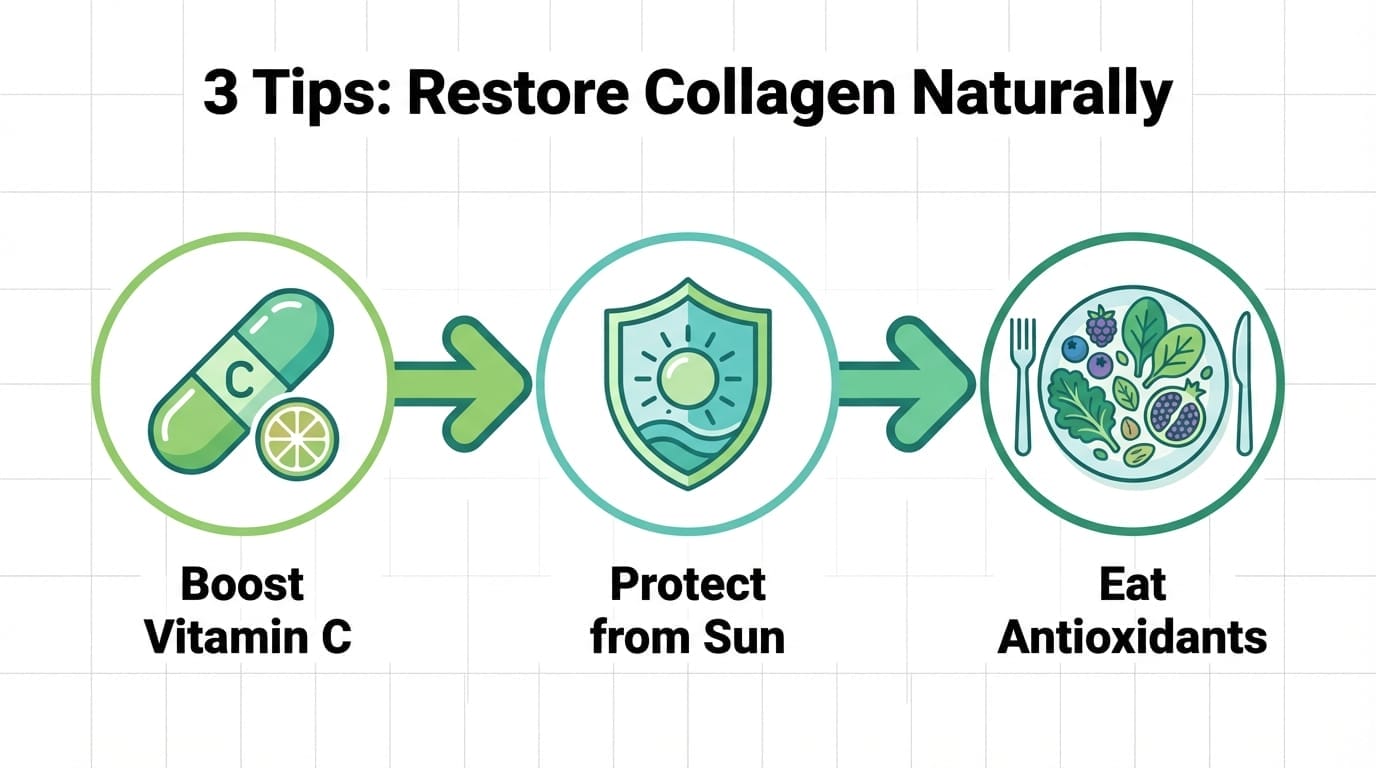
John: Under the hood, collagen is a triple-helix protein made from amino acids like glycine, proline, and hydroxyproline. Your body synthesizes it using vitamin C as a cofactor—think of it as the glue in a DIY project. But to naturally restore it, we focus on three nonnegotiable tips: nutrition, protection, and stimulation. Let’s break it down step by step.
First, nutrition: Research suggests foods rich in collagen-building blocks, like bone broth or vitamin C-packed fruits, can support production. It’s not about eating collagen directly (though supplements exist), but providing precursors.
Second, protection: UV rays and pollution accelerate breakdown by generating free radicals— pesky molecules that damage collagen fibers. It’s like sunlight fading a colorful painting over time.
Third, stimulation: Activities that boost blood flow, such as gentle exercise or facial massage, may encourage fibroblast cells to produce more collagen. Analogy? Like fertilizing soil to grow stronger plants.
Lila: Great breakdown, John. For newbies, picture collagen as the rebar in concrete—it’s what gives skin its firmness. The mechanism involves fibroblasts in your dermis layer firing up when stimulated, but factors like aging reduce their efficiency. Here’s a quick comparison to clarify old vs. new approaches.
| Aspect | Old Way (Reactive) | New Way (Proactive) |
|---|---|---|
| Nutrition Focus | Ignoring diet, relying on topical creams | Incorporating collagen-boosting foods like citrus and greens |
| Protection | Minimal sunscreen use, leading to faster breakdown | Daily UV protection and antioxidant intake |
| Stimulation | Passive waiting for aging to happen | Gentle exercises and massages to promote production |
| Overall Risk | Higher chance of ineffective results and side effects from procedures | Lower risk with natural methods, but consistency required |
Practical Use Cases & Application
John: So, how does this play out in real life? Let’s get concrete. First, for busy professionals: Imagine starting your day with a smoothie loaded with berries (vitamin C) and nuts (healthy fats)—research suggests this could support collagen synthesis, potentially leading to firmer skin over months. It’s like fueling your car’s engine for a smoother ride.
Second, for fitness enthusiasts: Incorporating strength training might stimulate collagen in joints, reducing injury risk. One perspective is that it’s akin to building muscle—consistent effort yields resilience.
Third, parents juggling chaos: Simple sun protection habits, like hats and antioxidants from green tea, could protect family skin health without much effort. It’s preventive, like wearing a helmet while biking.
Fourth, aging gracefully seekers: Facial yoga or gua sha tools (used gently) may boost circulation, encouraging natural firmness. Think of it as a mini workout for your face.
Lila: Love those examples, John. They show how small changes ripple into daily life, from work routines to family time, making skin care feel less like a chore and more like smart living.
Educational Action Plan (How to Start)
John: Ready to experiment responsibly? Here’s a step-by-step guide, keeping it educational and safe. Remember, results vary, and consult pros.
Lila: Level 1 (Learn): Start by reading reputable sources on collagen biology. Check out articles from sites like Harvard Health or PubMed abstracts on vitamin C’s role. Watch free videos explaining skin structure—aim for 15 minutes a day to build knowledge without overwhelm.
Level 2 (Try Safely): Begin with small habits. For nutrition, try adding one collagen-friendly food per meal, like oranges or eggs—track how your skin feels over weeks. For protection, apply broad-spectrum sunscreen daily if outdoors. For stimulation, do a 5-minute facial massage with clean hands. Monitor for any irritation and stop if needed. This is about safe exploration, not drastic changes.
John: Spot on. Emphasize consistency over intensity—think marathon, not sprint.
Conclusion & Future Outlook
Lila: Wrapping up, these tips balance effort with potential gains: minimal risks like dietary tweaks versus rewards of firmer skin. But uncertainty lingers—genetics and environment play roles, so not everyone sees the same results.
John: Absolutely. Watch for emerging research on peptides or red light therapy, but always with caution. The future? More personalized approaches, perhaps via apps tracking habits. Stay informed, stay skeptical, and prioritize health holistically.

👨💻 Author: SnowJon (Web3 & AI Practitioner / Investor)
A researcher who leverages knowledge gained from the University of Tokyo Blockchain Innovation Program to share practical insights on Web3 and AI technologies.
His motto is to translate complex technologies into forms that anyone can evaluate and use responsibly, fusing academic knowledge with practical experience.
*AI may assist drafting and structuring, but final verification and responsibility remain with the human author.
References
- 3 Nonnegotiable Tips To Naturally Restore Collagen & Keep Your Skin Firm
- Harvard Health: Collagen – What is it and what are its uses?
- NCBI: Nutrition and Skin Health
- Mayo Clinic: Skin Care Tips
- WebMD: Collagen – What You Need to Know