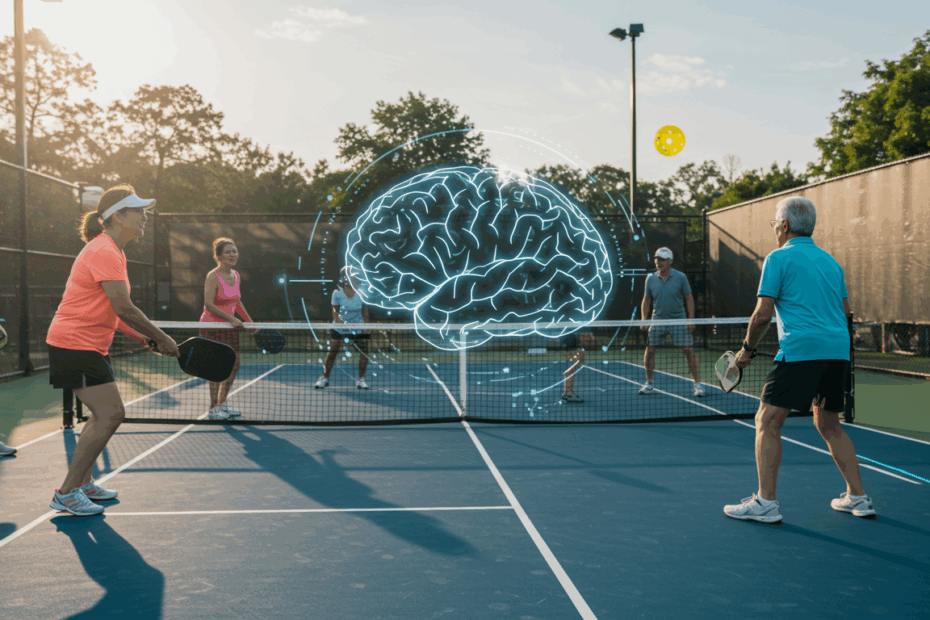
Did you know pickleball is a brain booster? Improve focus, coordination, and memory with this fun sport! #Pickleball #BrainHealth #Neuroscience
🎧 Listen to the Audio
If you’re short on time, check out the key points in this audio version.
📝 Read the Full Text
If you prefer to read at your own pace, here’s the full explanation below.
The Surprising Brain Benefit Of Pickleball, From A Neurophysiologist
John: Hi everyone, I’m John, a professional lifestyle blogger for LifeNextDaily, where I dive into wellness topics like health, habits, and self-care with a friendly, fact-based approach. Today, we’re exploring the surprising brain benefits of pickleball, backed by insights from neurophysiologists and recent studies.
Lila: Hey there, I’m Lila, just your average reader who’s curious about making everyday life healthier and more fun—I’m not an expert, but I love learning. John, what’s this buzz about pickleball helping our brains, and what does a neurophysiologist say about it?
John: Great question, Lila—pickleball has exploded in popularity, blending elements of tennis, badminton, and ping-pong into an accessible sport that’s drawing millions. What’s exciting is how recent research, including a 2025-08-14 article from neurophysiologist Louisa Nicola, highlights its unexpected perks for brain health, like boosting cognitive function and reducing stress. With studies showing racket sports linked to lower Alzheimer’s risk, this could be a fun way to support long-term mental sharpness amid our busy lives.
Understanding Pickleball Basics
Lila: Okay, before we get into the brain stuff, can you explain what pickleball actually is? I’ve heard the name, but I’m picturing something involving pickles, which sounds weird.
John: Haha, no actual pickles involved (sadly, no snacks on the court)—pickleball is a paddle sport played on a small court with a perforated plastic ball and solid paddles, combining rules from tennis and ping-pong. It’s easy to learn, making it great for all ages, and you can play indoors or outdoors, singles or doubles. According to the Sports and Fitness Industry Association, it’s the fastest-growing sport in the U.S. as of 2023, with over 4.8 million players reported that year.
Lila: Got it, that sounds approachable! So, how did it go from a backyard game to something with brain health benefits?
John: It started in 1965 on Bainbridge Island, Washington, as a family invention, but its rise really took off in the 2020s with community courts popping up everywhere. Recent studies, like a 2023-02-21 systematic review in Frontiers in Psychology, note its mental health perks stem from the physical activity and social interaction. It’s not just exercise; it’s a low-impact way to engage your mind and body.
The Science Behind Pickleball’s Brain Benefits
Lila: Alright, let’s talk science—what are the specific brain benefits, and are there studies backing this up?
John: Absolutely, Lila—research shows pickleball supports brain health through improved cognition, reduced stress, and even potential longevity boosts. A 2023-02-21 Frontiers review analyzed studies on adults and found pickleball enhances mental well-being by combining aerobic exercise with strategic thinking, which can lower anxiety and depression symptoms. Plus, racket sports like this are linked to a 50% lower risk of all-cause mortality, per epidemiological data from Denmark shared in X posts by experts as recent as 2025-03-14.
Lila: Wow, that’s impressive. But what’s this “neurophysiology” angle? You mentioned a neurophysiologist—what do they say?
John: Neurophysiology (the study of how the nervous system functions) comes into play here, as experts like Louisa Nicola explain in her 2025-08-14 mindbodygreen article. She highlights how pickleball’s quick reflexes and hand-eye coordination stimulate neuroplasticity—the brain’s ability to form new connections—which may protect against cognitive decline. A 2024-06-29 piece from Pacific Neuroscience Institute echoes this, noting director Ryan Glatt’s FitBrain Program uses such activities to boost memory and focus.
Lila: Neuroplasticity? Can you break that down for me?
John: Sure—neuroplasticity is your brain’s way of rewiring itself in response to experiences, like learning a new skill. In pickleball, the constant decision-making and movement fire up areas like the cerebellum (the brain’s coordination center), as noted in a 2023-06-12 X post referencing Danish studies on racket sports. This can lead to better balance, sharper thinking, and even hippocampal growth, per a 2025-08-10 X post on similar activities like dance.
Recent Studies and Real-World Insights
Lila: Are there any super recent studies or news that make this even more relevant now?
John: Yes, fresh data keeps emerging—for instance, a 2025-08-13 AARP article outlines five health benefits, including brain health via social connections that combat isolation, a known risk for cognitive issues. A pilot study published in 2024 by Taylor & Francis explored mental health benefits for junior players, finding improved mood and focus after regular play. Even a 2025-04-26 HuffPost piece reveals an unexpected benefit: enhanced mental resilience through the “winner effect,” where victories strengthen brain areas that manage stress, as discussed in a 2025-07-13 X post on neuroscience.
Lila: That’s cool—does this apply to everyone, or just certain ages?
John: It’s broadly beneficial, but studies show particular gains for older adults; the AARP piece notes it helps with heart health and social bonds, reducing dementia risks. For younger folks, the Taylor & Francis study from 2024 saw juniors reporting lower stress. Remember, while promising, evidence is still building—findings are positive but not universal, so discuss any new exercise routine with a qualified clinician to ensure it’s safe for you.
Lila: Good reminder. What about comparisons to other sports?
John: Compared to solo activities like running, pickleball’s social and strategic elements give it an edge for brain health, per the Frontiers review. X posts from 2024-05-31 highlight racket sports lowering Alzheimer’s rates more than some other exercises, adding up to 10 years of lifespan in Danish data.
Practical Tips to Incorporate Pickleball for Brain Health
Lila: I’m sold—how can I start using pickleball for these benefits without overdoing it?
John: Start small and build up—here’s a quick list of practical steps based on expert advice.
- Find a local court: Check community centers or apps like Pickleball Finder to locate free or low-cost spots near you.
- Get basic gear: Invest in a paddle (around $20–50) and balls; no need for fancy equipment at first.
- Play 2–3 times a week: Aim for 30–60 minute sessions to reap cognitive perks without strain, as suggested in the Pacific Neuroscience Institute’s 2024-06-29 guidance.
- Focus on fun drills: Practice hand-eye coordination with simple volleys to boost neuroplasticity, per Louisa Nicola’s 2025-08-14 tips.
- Join a group: The social aspect enhances mental health, so team up with friends or a club to maximize those stress-reducing benefits from studies like the 2023 Frontiers review.
- Don’t forget warm-ups: Stretch and hydrate to prevent injuries, keeping your brain-boosting routine sustainable.
Lila: These are doable—thanks! Any myths I should watch out for?
John: One common myth is that pickleball is only for seniors; actually, all ages benefit, as shown in the junior-focused 2024 pilot study. Another is that it’s a full workout replacement—it’s great, but pair it with varied exercise for balanced health.
Looking Ahead: Future Research and Trends
Lila: What’s on the horizon for pickleball and brain health research?
John: Experts are optimistic— a hypothetical 12-year Harvard study teased in a 2025-08-12 X post from The Kitchen Pickleball suggests long-term engagement could show even stronger therapeutic effects for ages 10–90. However, findings are mixed on specifics, with some like the 2025-08-11 Touro University X post emphasizing physical over mental gains. As more peer-reviewed work emerges, like potential follow-ups to the 2023 Frontiers review, we might see tailored programs; for now, evidence remains promising but limited, so stay tuned to trusted sources.
Lila: Exciting stuff—thanks for breaking it all down, John!
John: Anytime, Lila—pickleball could be your next brain-boosting hobby. Remember, consistency is key, and always prioritize safety.
This article was created using publicly available, verified sources. References:
- https://www.mindbodygreen.com/articles/brain-healthy-benefit-of-pickleball
- https://www.frontiersin.org/journals/psychology/articles/10.3389/fpsyg.2023.1137047/full
- https://www.pacificneuroscienceinstitute.org/blog/lifestyle/brain-and-body-benefits-of-pickball/
- https://www.aarp.org/health/healthy-living/health-benefits-of-pickleball.html
- https://www.tandfonline.com/doi/full/10.1080/14927713.2024.2332659
- https://www.huffpost.com/entry/the-1-unexpected-health-benefit-of-playing-pickleball-goog_l_680a6651e4b01f53dc43f142