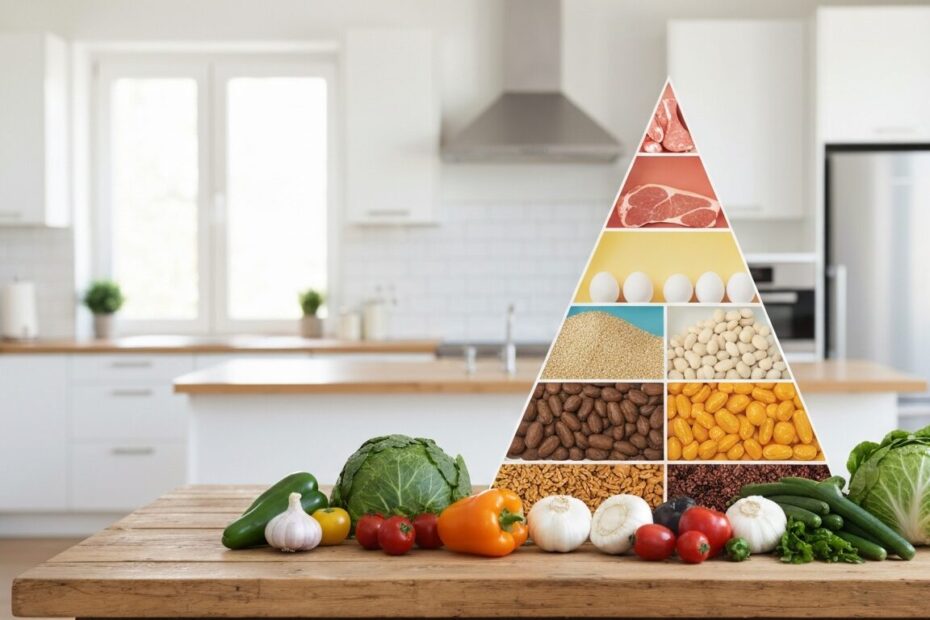
In my view the new dietary guidelines correctly prioritize real food over processed options.#nutrition #health
Quick Video Breakdown: This Blog Article
This video clearly explains this blog article.
Even if you don’t have time to read the text, you can quickly grasp the key points through this video. Please check it out!
If you find this video helpful, please follow the YouTube channel “LifeNextDaily,” which delivers daily news.
https://www.youtube.com/@LifeNextDaily
Read this article in your native language (10+ supported) 👉
[Read in your language]
The New Dietary Guidelines Want Us To Eat More Of This (& Less Of This)
⚠️ DISCLAIMER: This article is for informational purposes only and does not constitute medical advice. Always consult a healthcare professional.
High-Impact Intro: Time to Flip the Food Pyramid?
👋 Hello, Health Hackers! Imagine waking up to a world where your morning bacon isn’t the villain, but the hero of your plate. That’s the vibe from the brand-new U.S. Dietary Guidelines for 2025-2030, released just days ago on January 7, 2026. Spearheaded by Health and Human Services Secretary Robert F. Kennedy Jr. and Agriculture Secretary Brooke Rollins, these guidelines are shaking things up like a protein shake after a tough workout. They’re part of the “Make America Healthy Again” push, inverting the classic food pyramid to put meat, dairy, and healthy fats at the top, while demoting grains and processed carbs to the bottom. Why now? Well, with rising rates of obesity, diabetes, and chronic diseases—affecting over 40% of American adults according to recent stats—these updates aim to steer us toward “real food” and away from ultra-processed junk. It’s a nod to emerging research on metabolic health, emphasizing nutrient-dense whole foods over empty calories. But don’t toss your bread just yet; this isn’t about extremes. In this post, we’ll unpack what’s more (hello, full-fat dairy!) and what’s less (goodbye, added sugars), using humor, science, and analogies to make it digestible. Buckle up—by the end, you’ll have a clearer plate for 2026.
The Problem (The “Why”): Why Our Old Eating Habits Are Like a Leaky Bucket
Picture this: Your body is like a bucket, and nutrition is the water you pour in. For decades, the old dietary guidelines filled that bucket with a base of carbs—think mountains of bread, pasta, and cereals—topped with sparing amounts of proteins and fats. But research suggests this approach often led to a “leaky” system: spikes in blood sugar, crashes in energy, and a sneaky buildup of inflammation that contributes to issues like insulin resistance. The old way made eating feel like a constant battle against cravings, where processed foods hijacked your brain’s reward system, much like scrolling social media endlessly for that dopamine hit. It was hard because it ignored how our biology evolved—hunter-gatherers thrived on proteins and fats, not on factory-made snacks loaded with added sugars that make up 13% of the average American’s daily calories. Expensive? Ultra-processed foods are cheap upfront but rack up health costs down the line. Risky? Absolutely, as they often lack essential nutrients, leaving you nutritionally bankrupt. These guidelines address that bottleneck by flipping the script to prioritize satiety and sustainability.
The Science Behind It
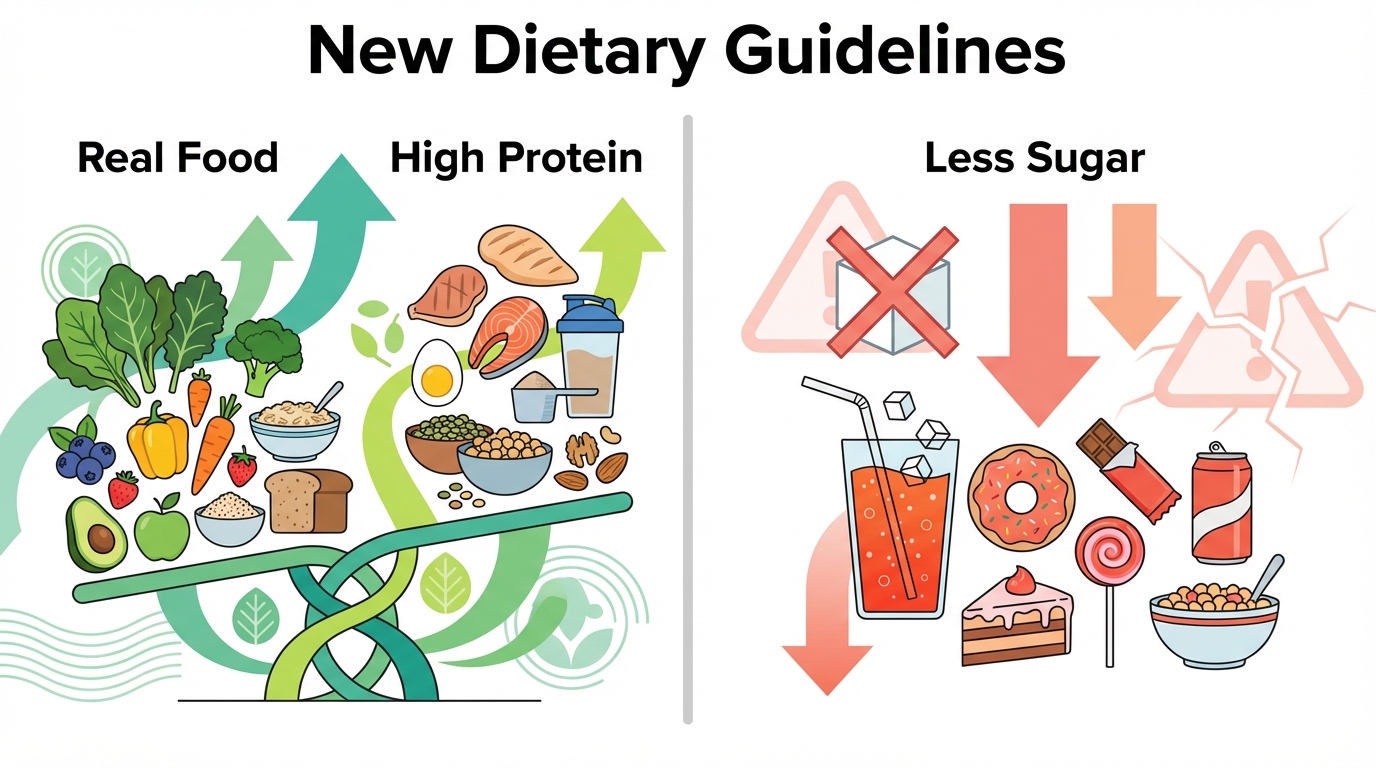
Let’s dive into the nitty-gritty of these new guidelines. At their core, they’re built on a foundation of metabolic science, drawing from studies on how proteins and healthy fats support muscle maintenance, hormone balance, and steady energy levels. Step one: The inverted pyramid elevates proteins (like meat, eggs, and dairy) because they promote fullness—research suggests they can reduce overall calorie intake by curbing hunger hormones like ghrelin. Step two: Healthy fats, including those from full-fat dairy and avocados, are encouraged for their role in cell health and absorption of fat-soluble vitamins (A, D, E, K). No more fearing saturated fats; the guidelines “end the war” on them, aligning with evidence that they don’t inherently cause heart disease when part of a balanced diet. Step three: Cutting back on added sugars and ultra-processed foods tackles inflammation and gut health—think of processed carbs as fuel for bad bacteria in your microbiome, while whole foods nurture the good guys. It’s like upgrading from a rusty old car to a sleek electric model: more efficient, less breakdown-prone. Humor aside, this shift is backed by experts praising the focus on whole, nutrient-dense foods, though some warn about potential overconsumption of saturated fats without portion control.
| Aspect | Old Guidelines (Pre-2025) | New Guidelines (2025-2030) |
|---|---|---|
| Base of Pyramid | Grains and carbs (e.g., bread, pasta) | Proteins and healthy fats (e.g., meat, dairy) |
| Sugar & Processed Foods | Limited advice, often allowing more refined carbs | Strong emphasis on limiting added sugars and ultra-processed items |
| Fats | Low-fat focus, caution on saturated fats | Encourages healthy fats, including full-fat dairy |
| Overall Focus | Calorie counting and balance | Nutrient density and “real food” over processed |
Practical Use Cases & Application: Real-Life Plate Upgrades
So, how does this translate to your daily grind? Let’s get witty: If your old breakfast was a sad bowl of sugary cereal (less of that now), swap it for eggs and full-fat yogurt—more protein means you’re not hangry by 10 a.m. Example one: For busy parents, these guidelines make meal prep a breeze. Research suggests prioritizing protein-rich lunches like grilled chicken salads can sustain energy for afternoon chaos, reducing reliance on vending machine snacks. Example two: Athletes or gym enthusiasts might love the nod to red meat; it’s packed with iron and B vitamins, potentially aiding recovery without the carb crash. One perspective is that this could enhance performance, but balance with veggies to avoid digestive woes. Example three: For those managing weight, cutting ultra-processed foods (think chips and sodas) while amping up healthy fats like nuts could promote satiety, making dieting feel less like punishment. Finally, in social settings, it’s a conversation starter—host a dinner with guideline-approved steak and veggies, and watch friends debate the pyramid flip. These shifts aren’t magic, but they reframe eating as fuel, not filler.
Educational Action Plan: How to Start Without Overhauling Your Fridge
Ready to dip your toe in? Here’s a beginner-friendly plan, emphasizing education first—no one-size-fits-all here.
- Level 1 (Learn): Start by reading the official HHS guidelines summary online—it’s free and breaks down the inverted pyramid. Watch short videos from reputable sources like CNN or NPR on the changes; they often include expert takes. Check out books like “The Obesity Code” for metabolic insights, but cross-reference with peer-reviewed studies on PubMed.
- Level 2 (Try Safely): Begin small: For one meal a day, swap a processed item (like white bread) for a whole-food alternative (like eggs or nuts). Track how you feel in a simple journal—energy levels, fullness? Experiment with full-fat dairy in moderation, perhaps adding cheese to salads. Remember, consult a doctor before big changes, especially if you have conditions like high cholesterol. Focus on variety to ensure nutrient balance, and consider the risks of overdoing saturated fats by monitoring portions.
Conclusion & Future Outlook: Balancing the Plate of Progress
In summary, these guidelines tip the scales toward more proteins, healthy fats, and real foods, while dialing back on sugars and processed junk—rewards include potential better energy and health, but risks like unbalanced intake loom if not approached mindfully. The effort is moderate: small swaps yield gains without revolutionizing your kitchen. Looking ahead, uncertainty remains—will this curb chronic diseases, or spark debates on sustainability? Watch for updates from bodies like the WHO, and remember, nutrition science evolves. Stay curious, eat mindfully, and here’s to healthier plates in 2026!

👨💻 Author: SnowJon (Web3 & AI Practitioner / Investor)
A researcher who leverages knowledge gained from the University of Tokyo Blockchain Innovation Program to share practical insights on Web3 and AI technologies.
His motto is to translate complex technologies into forms that anyone can evaluate and use responsibly, fusing academic knowledge with practical experience.
*AI may assist drafting and structuring, but final verification and responsibility remain with the human author.
References
- The New Dietary Guidelines Want Us To Eat More Of This (& Less Of This)
- Kennedy, Rollins Unveil Historic Reset of U.S. Nutrition Policy, Put Real Food Back at Center of Health | HHS.gov
- New US dietary guidelines include inverted food pyramid, urge less sugar, more protein | CNN
- RFK Jr.’s new dietary guidelines end ‘the war on saturated fats’ : Shots – Health News : NPR
- New US dietary guidelines call for more protein, less processed food – BBC
▼ AI tools to streamline research and content production (free tiers may be available)
Free AI search & fact-checking
👉 Genspark
Recommended use: Quickly verify key claims and track down primary sources before publishing
Ultra-fast slides & pitch decks (free trial may be available)
👉 Gamma
Recommended use: Turn your article outline into a clean slide deck for sharing and repurposing
Auto-convert trending articles into short-form videos (free trial may be available)
👉 Revid.ai
Recommended use: Generate short-video scripts and visuals from your headline/section structure
Faceless explainer video generation (free creation may be available)
👉 Nolang
Recommended use: Create narrated explainer videos from bullet points or simple diagrams
Full task automation (start from a free plan)
👉 Make.com
Recommended use: Automate your workflow from publishing → social posting → logging → next-task creation
※Links may include affiliate tracking, and free tiers/features can change; please check each official site for the latest details.