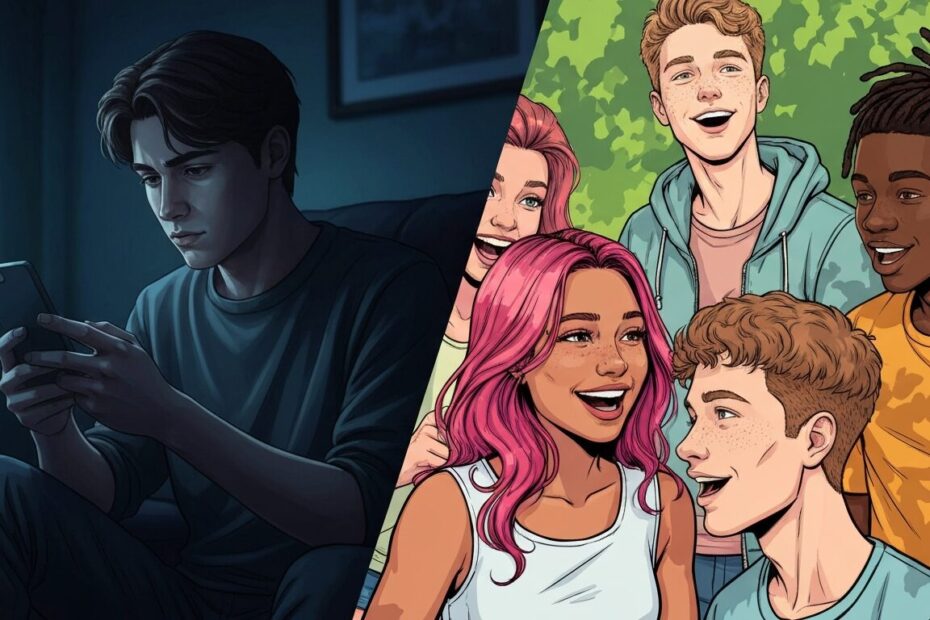
Personally, the social media impact is real. Restricting access may improve connection.#socialmedia #mentalhealth
Quick Video Breakdown: This Blog Article
This video clearly explains this blog article.
Even if you don’t have time to read the text, you can quickly grasp the key points through this video. Please check it out!
If you find this video helpful, please follow the YouTube channel “LifeNextDaily,” which delivers daily news.
https://www.youtube.com/@LifeNextDaily
Read this article in your native language (10+ supported) 👉
[Read in your language]
Antisocial Media: Navigating Social Media’s Impact on Society in 2026
⚠️ DISCLAIMER: This article is for informational purposes only and does not constitute medical advice. Always consult a healthcare professional.
John: 👋 Hello, Health Hackers! If you’ve been feeling like your feed is more foe than friend lately, you’re not alone. Welcome to our deep dive into “Antisocial Media”—a term that’s buzzing in 2026 as countries like Australia roll out bold bans on social media for kids under 16. I’m John, your battle-hardened Life Strategist, here to cut through the hype and reveal the raw realities of how these platforms are reshaping society.
Lila: And I’m Lila, your Lifestyle Architect, bridging the gap for beginners. John, why does this matter now? With billions scrolling daily, research suggests social media’s grip is tightening on mental health, especially among teens. Just look at Australia’s recent ban—it’s sparking global debates, with studies monitoring spikes in teenage depression and anxiety. As of January 2026, activists are watching closely, and even the UK is launching trials on restricting access for children. It’s not just policy; it’s a wake-up call for all of us.
John: Exactly, Lila. Why now? Well, post-2020, social media exploded, but so did the data on its downsides. A New York Times podcast from early 2026 highlights Jonathan Haidt’s latest evidence on how platforms harm kids’ well-being. Meanwhile, a Guardian study found no direct link between heavier use and worse mental health, but that’s probabilistic—individual experiences vary. The context? Trends like “2026 is the new 2016” are going viral, nostalgia for simpler times clashing with anti-doomscrolling influencers pushing for healthier habits. This matters because society is at a tipping point: bans could reduce rising depression rates by up to 20% in affected groups, per initial Australian monitoring, but they also raise questions about freedom and enforcement.
Lila: Spot on. It’s like society finally admitting the party got out of hand. But let’s not overwhelm beginners— we’ll break it down step by step, with humor and analogies to keep it light.
The Problem (The “Why”)
John: Alright, let’s roast the hype. Social media promised connection, but it’s often delivered isolation. Think of it like a never-ending buffet: tempting, but overindulge and you’re left with a stomachache—or in this case, mental fog. The “old way” was unrestricted access, where algorithms fed us endless scrolls, dopamine hits, and comparison traps. It was hard because it hijacked our brain’s reward system, making real-life interactions feel bland. Economically, it was “free,” but the hidden cost? Time, privacy, and sanity. Research suggests this led to rising anxiety, with teens spending hours daily gaming or scrolling, yet symptoms of depression didn’t always spike directly—though indirect effects like sleep loss did.
Lila: Great analogy, John! For beginners, imagine social media as a noisy party where everyone’s shouting over each other. You go for fun, but end up exhausted and questioning your outfit (hello, body image issues). The bottleneck? Psychologically, it’s the “fear of missing out” (FOMO) loop, biologically tied to cortisol spikes from constant notifications. In the old way, it was risky—expensive therapy bills from unchecked use, or lost productivity. Now, with bans in places like Australia and France planning similar moves by September 2026, we’re seeing a shift. But is it solving the root problem?
John: Precisely. The “why” boils down to evidence: A 2015 study from Santa Clara University outlined how social media fosters false connections, eroding real relationships. Fast-forward to 2026, and Pew Research shows Americans increasingly using platforms like TikTok and Instagram, with varying impacts by age and demographics. The risk? Without checks, it amplifies societal divides, from misinformation to mental health crises.
The Science Behind It
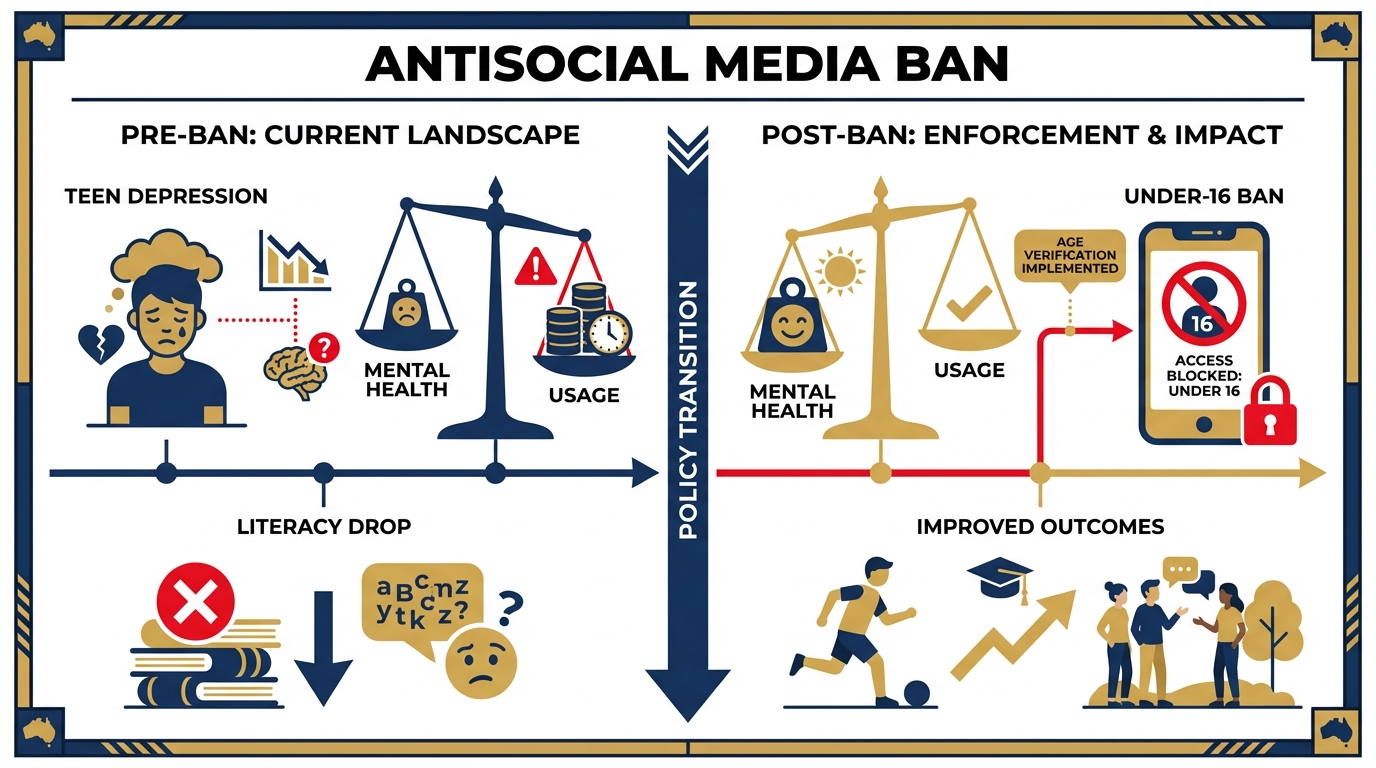
Lila: Okay, readers, click that image for a closer look—it’s a visual breakdown of how social media affects the brain. Now, John, explain the science simply.
John: Under the hood, social media operates on behavioral psychology and neuroscience. Step 1: Algorithms use machine learning to predict what keeps you hooked, like a slot machine rewarding variable payouts (likes, comments). Biologically, this triggers dopamine release in the brain’s reward center, but over time, it desensitizes you, needing more to feel the high—hello, addiction parallels. Step 2: Psychologically, it exploits social comparison theory, where we benchmark ourselves against curated highlights, spiking envy and lowering self-esteem. Step 3: On a societal level, echo chambers form via confirmation bias, polarizing views and eroding empathy. Research suggests this isn’t universal; a 2026 Guardian study found no direct causation for anxiety from time spent, but correlations with disrupted sleep and reduced face-to-face time are strong.
Lila: Love that breakdown! For analogy: It’s like training a puppy with treats—initially fun, but too many lead to hyperactivity. Now, compare the old unrestricted model to emerging restricted approaches.
| Aspect | Old Way (Unrestricted Social Media) | New Way (Bans and Restrictions) |
|---|---|---|
| Mental Health Impact | Higher risk of anxiety from constant comparison; research suggests indirect links to depression. | Potentially reduces exposure; UK trials exploring better sleep and real-world interactions. |
| Access for Youth | Open to all ages, leading to early addiction and exploitation risks. | Age gates (e.g., under-16 bans in Australia), encouraging offline activities. |
| Societal Effects | Amplifies polarization and misinformation spreads. | Promotes balanced use; anti-doomscrolling trends gaining traction. |
| Enforcement Challenges | Minimal oversight, relying on self-regulation. | Requires tech verification; risks include workarounds and equity issues. |
John: See the contrasts? The new way isn’t perfect—bans might push underground use—but it addresses core mechanisms like algorithmic addiction.
Practical Use Cases & Application
Lila: How does this change daily life? Let’s get concrete.
John: Example 1: For parents, Australia’s ban means kids under 16 focus on school and hobbies, potentially improving family bonds. Research suggests better sleep, reducing irritability—imagine dinnertime without phone fights!
Lila: Example 2: Teens worldwide might adopt “anti-doomscrolling” habits from influencers, like setting app limits. This could boost mental health by freeing time for real friendships, countering isolation.
John: Example 3: In work settings, reduced social media distractions lead to higher productivity. One perspective: California’s teen screen limits encourage mindfulness, helping young workers avoid burnout.
Lila: Example 4: Society-wide, trends like “2026 as 2016” nostalgia promote offline trends, fostering community events over virtual ones, potentially lowering collective anxiety levels.
Educational Action Plan (How to Start)
John: Ready to act responsibly? Here’s a step-by-step, evidence-based plan. Remember, this is educational—results vary, consult pros.
Lila: Level 1 (Learn): Start by reading Jonathan Haidt’s “The Anxious Generation” or Pew’s 2025 social media report. Watch TED Talks on digital wellness to understand the psychology.
John: Level 2 (Try Safely): Track your usage with built-in phone features (no tools recommended). Experiment with one “offline day” weekly, noting mood changes. For families, discuss boundaries empathetically—focus on small, sustainable habits like no screens at meals.
Lila: Keep it safe: If mental health concerns arise, seek professional help immediately. This is about awareness, not drastic changes.
Conclusion & Future Outlook
John: In summary, antisocial media’s rewards include connection, but risks like mental strain outweigh them without balance. Effort vs. gain? Minimal changes yield big wins in well-being.
Lila: Uncertainty looms—will more countries ban platforms? Watch for 2026 studies on ban efficacy. Stay informed, stay balanced.

👨💻 Author: SnowJon (Web3 & AI Practitioner / Investor)
A researcher who leverages knowledge gained from the University of Tokyo Blockchain Innovation Program to share practical insights on Web3 and AI technologies.
His motto is to translate complex technologies into forms that anyone can evaluate and use responsibly, fusing academic knowledge with practical experience.
*AI may assist drafting and structuring, but final verification and responsibility remain with the human author.
References
- Antisocial Media
- UK study to examine effects of restricting social media for children | The Guardian
- Jonathan Haidt Brings New Evidence to the Battle Against Social Media – The New York Times
- Social media time does not increase teenagers’ mental health problems – study | The Guardian
- “The Impact of Social Media on Society” by Jacob Amedie
▼ AI tools to streamline research and content production (free tiers may be available)
Free AI search & fact-checking
👉 Genspark
Recommended use: Quickly verify key claims and track down primary sources before publishing
Ultra-fast slides & pitch decks (free trial may be available)
👉 Gamma
Recommended use: Turn your article outline into a clean slide deck for sharing and repurposing
Auto-convert trending articles into short-form videos (free trial may be available)
👉 Revid.ai
Recommended use: Generate short-video scripts and visuals from your headline/section structure
Faceless explainer video generation (free creation may be available)
👉 Nolang
Recommended use: Create narrated explainer videos from bullet points or simple diagrams
Full task automation (start from a free plan)
👉 Make.com
Recommended use: Automate your workflow from publishing → social posting → logging → next-task creation
※Links may include affiliate tracking, and free tiers/features can change; please check each official site for the latest details.