Personally, swapping coffee for Matcha has significantly smoothed out my morning energy levels.#Matcha #BrainHealth
Quick Video Breakdown: This Blog Article
This video clearly explains this blog article.
Even if you don’t have time to read the text, you can quickly grasp the key points through this video. Please check it out!
If you find this video helpful, please follow the YouTube channel “LifeNextDaily,” which delivers daily news.
https://www.youtube.com/@LifeNextDaily
Read this article in your native language (10+ supported) 👉
[Read in your language]
Sipping Smarts: The Brain-Healthy Drink a Nutritional Psychiatrist Swears By Every Morning
⚠️ DISCLAIMER: This article is for informational purposes only and does not constitute medical advice. Always consult a healthcare professional.
👋 Hello, Health Hackers! Ever woken up feeling like your brain is still in sleep mode, desperately reaching for that first cup of coffee to kickstart the day? You’re not alone. In a world where mental fog, stress, and cognitive overload are the norm, finding simple, natural ways to support brain health is more crucial than ever. Today, we’re diving into a morning ritual shared by Dr. Uma Naidoo, a renowned nutritional psychiatrist, who sips a specific brain-healthy drink every day to fuel her mind. Based on insights from her article, this isn’t just another wellness trend—it’s backed by science on how nutrition intersects with mental well-being.
Why does this matter now? With rising rates of anxiety, depression, and burnout—affecting over 280 million people globally according to the World Health Organization—optimizing brain health through diet is a hot topic. Post-pandemic, more folks are seeking sustainable habits to enhance focus, mood, and resilience without relying on pills or stimulants. Research suggests that what we consume can influence neurotransmitter function, inflammation, and even neuroplasticity. Enter this daily drink: it’s affordable, accessible, and packs a punch for cognitive support. But don’t worry, we’re not pushing miracles here—just witty insights, analogies, and balanced facts to help you decide if it’s worth a try. Let’s unpack it step by step, with a dash of humor to keep things light (because who needs more brain strain?).
The Problem (The “Why”)
Imagine your brain as a high-performance sports car zipping through a busy city. Without the right fuel, it sputters, overheats, or worse, breaks down in traffic. That’s the bottleneck many of us face: modern life demands sharp focus and emotional balance, but our diets often sabotage us. The “old way” typically involves grabbing sugary cereals, caffeine bombs like coffee, or nothing at all—leading to blood sugar spikes, crashes, and inflammation that fog up your mental windshield.
In the past, boosting brain health meant expensive supplements, restrictive diets, or vague advice like “eat more veggies.” It was hard because it required guesswork: How do you know if that kale smoothie is actually helping your neurons? It was expensive, with fancy nootropics costing a fortune, and risky, as unverified trends could lead to nutrient imbalances or interactions with medications. Humor me with this analogy: It’s like trying to fix a leaky roof with duct tape during a storm—temporary, messy, and likely to fail when you need it most. Research suggests chronic inflammation from poor diet contributes to cognitive decline, with studies showing up to 50% of Alzheimer’s cases potentially linked to modifiable factors like nutrition. So, what’s a better fuel for that brain-car of yours?
The Science Behind It
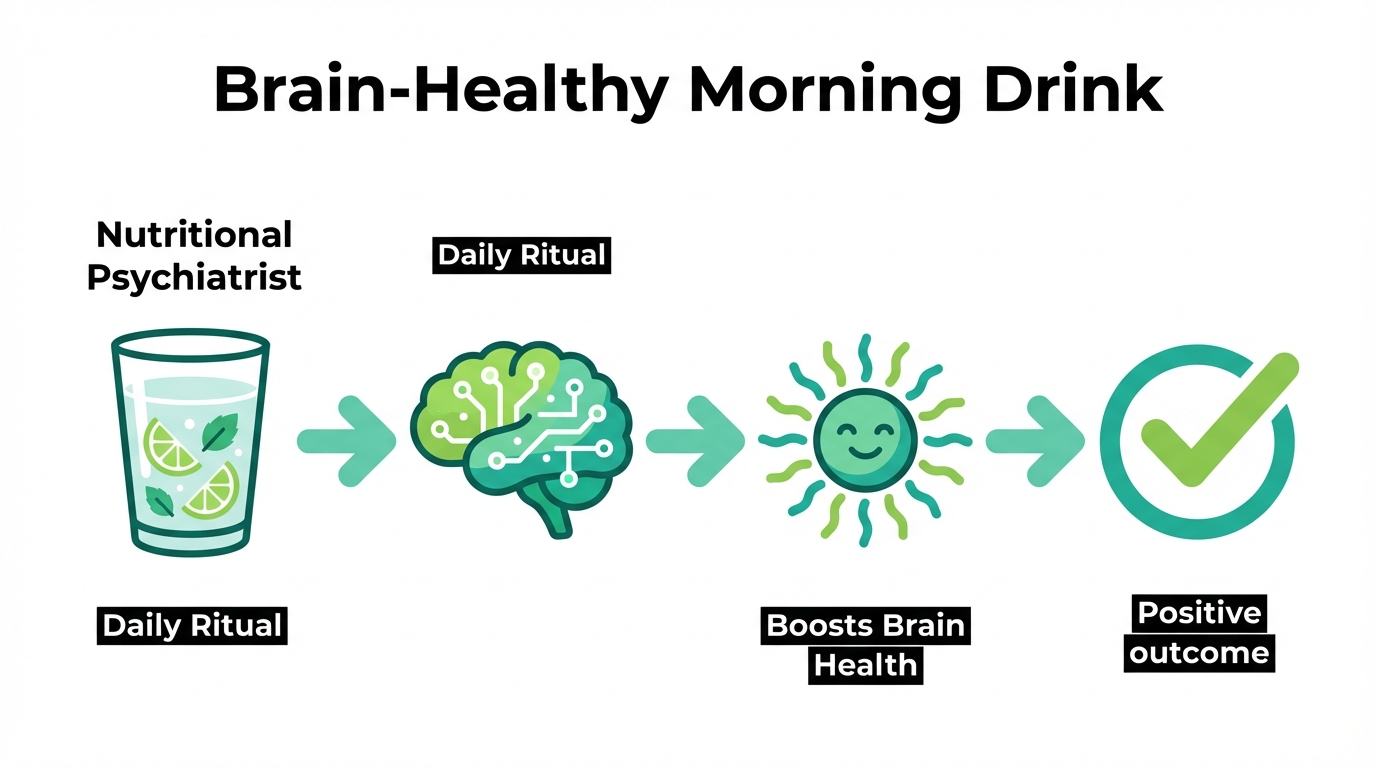
Alright, let’s get to the heart of it—or should I say, the brain? The drink in question, as revealed by Dr. Naidoo, is matcha green tea. This vibrant green powder isn’t your average tea; it’s a concentrated form of green tea leaves, ground into a fine powder and whisked into hot water. But why does a nutritional psychiatrist swear by it? Let’s break down the mechanism in beginner-friendly steps, using science that’s as straightforward as a morning routine.
Step 1: The Key Ingredients. Matcha is loaded with catechins like EGCG (epigallocatechin gallate), a powerful antioxidant, and L-theanine, an amino acid that promotes calm focus. Unlike regular green tea, matcha delivers the whole leaf, so you get up to 10 times more nutrients per cup. Think of EGCG as a shield against oxidative stress, which is like rust building up in your brain’s engine.
Step 2: Brain Impact. Research suggests EGCG crosses the blood-brain barrier, reducing inflammation and protecting neurons. L-theanine teams up with a mild dose of caffeine (about half that of coffee) to boost alpha brain waves, enhancing alertness without the jitters. It’s like giving your brain a gentle hug instead of a caffeine slap. Studies, including those from the Journal of Medicinal Food, show this combo can improve attention and reduce stress hormones like cortisol.
Step 3: Gut-Brain Connection. As a nutritional psychiatrist, Dr. Naidoo emphasizes the gut’s role in mental health. Matcha’s polyphenols feed beneficial gut bacteria, supporting the gut-brain axis. Analogy alert: It’s like fertilizing a garden—healthy soil (gut) leads to blooming flowers (mood and cognition). One perspective is that this reduces symptoms of anxiety by modulating serotonin production.
Step 4: Long-Term Benefits. Over time, consistent sipping may support neuroplasticity, helping your brain adapt and learn. But remember, effects vary; it’s not a cure-all. Consider the risks: Too much can cause stomach upset due to tannins, and it’s not for everyone, especially if you have caffeine sensitivity.
| Aspect | Old Way (e.g., Coffee or Sugary Drinks) | New Way (Matcha Green Tea) |
|---|---|---|
| Caffeine Delivery | High dose, quick spike leading to crashes and anxiety. | Moderate, sustained release with L-theanine for calm energy. |
| Antioxidant Levels | Low or none, contributing to oxidative stress. | High in EGCG, fighting inflammation and supporting neuron health. |
| Mood Impact | Temporary boost followed by irritability or fatigue. | Promotes relaxation and focus via gut-brain support. |
| Cost and Accessibility | Cheap but often laden with additives; long-term health costs add up. | Affordable powder form; one tin lasts weeks. |
Practical Use Cases & Application
How does sipping matcha change your daily life? Let’s explore concrete examples tailored to health and wellness enthusiasts. Remember, these are hypothetical scenarios based on research—results vary, so observe your own responses.
Example 1: For Busy Professionals. Picture a harried executive juggling meetings. Instead of coffee-induced heart palpitations, matcha provides steady focus. Research suggests it can enhance working memory, helping you nail that presentation without the post-lunch slump. One perspective is swapping your afternoon energy drink for matcha to maintain productivity without burnout.
Example 2: For Students or Learners. If you’re cramming for exams, matcha’s L-theanine might improve attention span. A study in Nutritional Neuroscience found green tea extracts boosted cognitive performance during tasks. It’s like upgrading from a rickety bike to a smooth electric scooter for your study sessions—easier navigation through complex material.
Example 3: For Stress Management. Those dealing with anxiety could benefit from its calming effects. Dr. Naidoo notes how it supports mood without sedation. Imagine it as a natural chill pill: Sip during morning meditation to set a relaxed tone for the day, potentially reducing cortisol levels as per stress research.
Example 4: For Aging Gracefully. For older adults, the antioxidants may protect against cognitive decline. While not a fountain of youth, studies like those from the American Journal of Clinical Nutrition link regular green tea consumption to lower dementia risk. Consider it a daily habit for long-term brain maintenance, much like oil changes for your car.
Educational Action Plan (How to Start)
Ready to explore? Here’s a step-by-step guide to dip your toes in safely. This is educational only—always check with a doctor, especially if you have health conditions.
Level 1 (Learn): Start by reading foundational resources. Check out articles on green tea’s benefits from reputable sites like Healthline or PubMed abstracts on L-theanine. Watch free videos from nutritional experts explaining the gut-brain axis. Aim to understand key terms like “polyphenols” through simple analogies: They’re like bodyguards for your cells.
Level 2 (Try Safely): Begin small to test tolerance. Purchase high-quality matcha from a trusted source (research grades like ceremonial vs. culinary). Whisk 1/2 teaspoon in hot water once a day, perhaps in the morning. Track how you feel in a journal: Note energy levels, mood, or any digestive changes over a week. If caffeine-sensitive, opt for decaf versions or dilute it. Remember, hydration is key—pair with water to avoid dehydration. This low-risk trial helps you learn your body’s response without overcommitting.
Conclusion & Future Outlook
In summary, matcha offers a compelling balance of risks and rewards: Potential brain boosts from antioxidants and calm energy, versus minor side effects like tummy upset if overdone. The effort is minimal—a quick whisk for major gains in focus and mood, but it’s no magic bullet. Uncertainty lingers; more long-term studies are needed, especially on diverse populations. Watch for emerging research on nutritional psychiatry, like how diet influences mental health disorders. If this sparks curiosity, experiment mindfully—your brain will thank you (or at least not complain as much).

👨💻 Author: SnowJon (Web3 & AI Practitioner / Investor)
A researcher who leverages knowledge gained from the University of Tokyo Blockchain Innovation Program to share practical insights on Web3 and AI technologies.
His motto is to translate complex technologies into forms that anyone can evaluate and use responsibly, fusing academic knowledge with practical experience.
*AI may assist drafting and structuring, but final verification and responsibility remain with the human author.
References
- I’m A Nutritional Psychiatrist: The Brain-Healthy Drink I Sip Every Morning
- Healthline: What Is Matcha Green Tea? Benefits, Uses, and Side Effects
- PubMed: The Effects of L-Theanine on Cognitive Function
- NCBI: Green Tea Catechins and Brain Health
- WHO: Depression Fact Sheet