
Personally, exercising when tired works best if I pick light movement over heavy lifting.#fitness #wellness
Quick Video Breakdown: This Blog Article
This video clearly explains this blog article.
Even if you don’t have time to read the text, you can quickly grasp the key points through this video. Please check it out!
If you find this video helpful, please follow the YouTube channel “LifeNextDaily,” which delivers daily news.
https://www.youtube.com/@LifeNextDaily
Read this article in your native language (10+ supported) 👉
[Read in your language]
Should You Work Out If You’re Tired? A Science-Backed Guide To Deciding
⚠️ DISCLAIMER: This article is for informational purposes only and does not constitute medical advice. Always consult a healthcare professional.
👋 Hello, Health Hackers! Ever stared at your gym bag after a long day, feeling like a deflated balloon, and wondered if pushing through that workout is a heroic act or just plain masochism? You’re not alone. In our hustle culture, where “no pain, no gain” is gospel, fatigue often gets dismissed as laziness. But here’s the twist: science is flipping the script. Research suggests that exercising when tired isn’t always the villain—sometimes it’s the sidekick that energizes you. With burnout rates skyrocketing—over 40% of adults report feeling exhausted most days, according to recent surveys—figuring out when to hit the mat versus hit the sack is more crucial than ever. This guide, inspired by mindbodygreen’s insights, dives into the biology of fatigue and exercise to help you decide wisely. We’ll keep it witty, evidence-based, and zero-judgment—because hey, even superheroes need rest days.
The Problem (The “Why”)
John: Alright, let’s cut through the fluff. Fatigue isn’t just “being lazy”—it’s your body’s alarm system blaring that something’s off. Imagine your energy levels like a smartphone battery: running apps (work, stress, poor sleep) drains it fast, and if you keep pushing without recharging, you hit that dreaded 1% and crash.
Lila: Totally relatable, John. In the old way, people either powered through tiredness with sheer willpower—hello, overtraining injuries—or skipped workouts altogether, feeling guilty. But that binary thinking ignores the nuance. What was hard before? Listening to vague advice like “just do it” without understanding if your fatigue is from a tough day or something deeper, like chronic stress or nutrient deficits. It risks burnout or, worse, ignoring signals that could point to health issues.
John: Spot on. Research from sleep studies shows chronic fatigue affects cortisol levels, messing with recovery. The bottleneck? Without science-backed cues, you’re guessing, which is like driving blindfolded—expensive in terms of health risks and wasted effort.
The Science Behind It
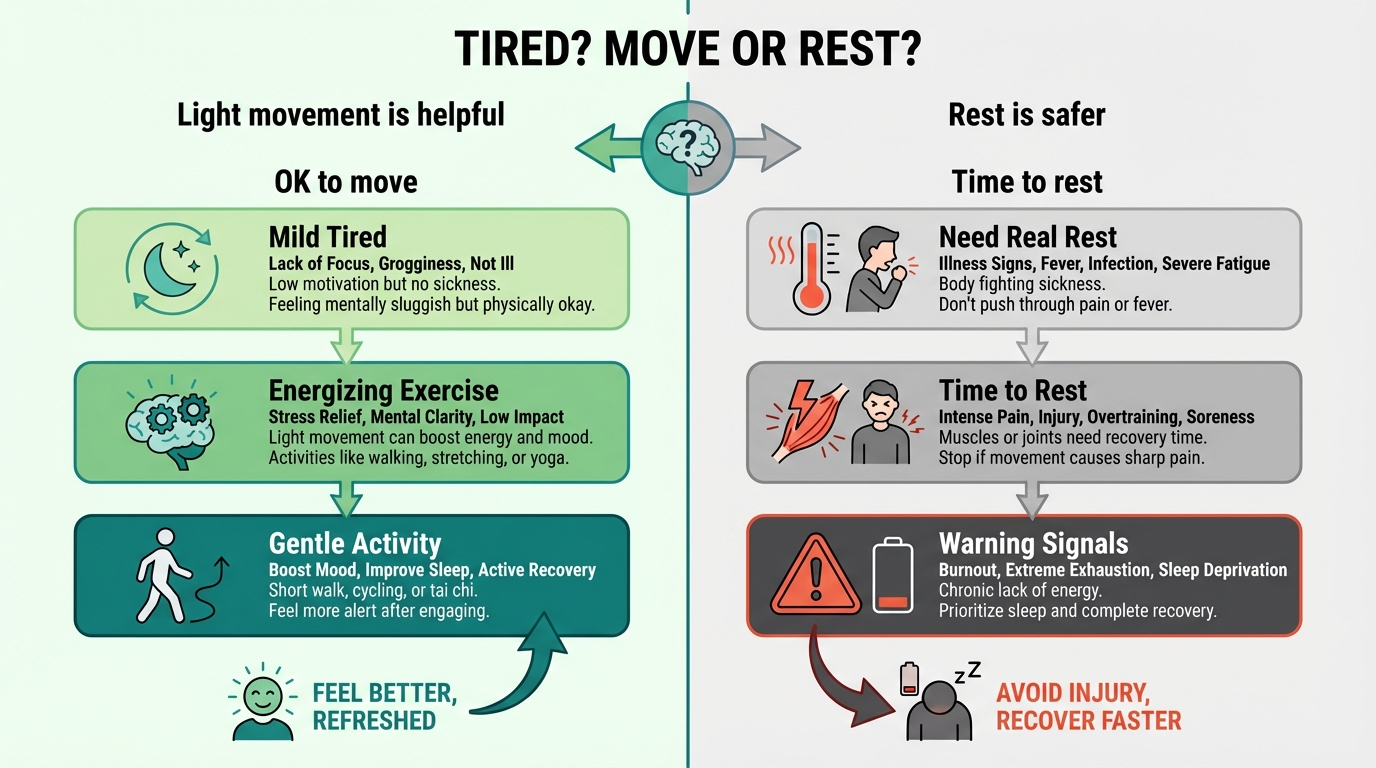
John: Under the hood, it’s all about your body’s energy systems and hormones. Let’s break it down simply: When you’re tired, your adenosine levels (that “sleepy chemical”) are high, and ATP (your cells’ fuel) is low. Exercise can either deplete this further or flip the switch via endorphins and improved blood flow.
Lila: For beginners, think of it like a car engine. Mild fatigue? A gentle drive (light exercise) revs it up, releasing feel-good chemicals. But if the tank’s empty (severe exhaustion), forcing it leads to breakdown.
John: Exactly. Studies, like those in the Journal of Physiology, suggest moderate exercise can combat mental fatigue by boosting dopamine. However, if you’re dealing with physical overexertion, it might worsen inflammation. Key steps: 1) Assess fatigue type—mental vs. physical. 2) Check recovery markers like heart rate. 3) Balance intensity—yoga for calm, HIIT for energy spikes, but only if you’re not depleted.
| Aspect | Old Way (Ignoring Fatigue) | New Way (Science-Backed Approach) |
|---|---|---|
| Decision Making | Push through regardless, risking injury | Evaluate based on fatigue signals and recovery needs |
| Energy Impact | Often leads to deeper exhaustion | Can boost energy if moderate and timed right |
| Health Risks | Higher chance of overtraining syndrome | Lower risks with personalized adjustments |
Lila: Love this table—it makes the comparison crystal clear without overwhelming anyone.
Practical Use Cases & Application
John: So, how does this play out in real life? Let’s get concrete with scenarios tailored to health enthusiasts.
Lila: First, the office worker: After a mentally draining day, a brisk walk might recharge you, as research suggests light cardio improves cognitive function without taxing the body.
John: Second, the athlete in training: If fatigue is from yesterday’s heavy lift, opt for active recovery like swimming. Studies show this aids muscle repair without adding stress.
Lila: Third, the stressed parent: Yoga or stretching when tired can lower cortisol, per mindfulness research, turning exhaustion into calm energy for family time.
John: Fourth, chronic fatigue cases: Here, rest might win, but gentle movement like tai chi could help, as evidenced by studies on fibromyalgia patients. Always consider individual factors—research suggests listening to your body prevents long-term setbacks.
These change daily decision-making by shifting from guilt-driven routines to intuitive, science-informed choices, potentially improving mood, sleep, and overall wellness.
Educational Action Plan (How to Start)
Lila: Ready to apply this? We’ll keep it step-by-step, empathetic, and safe—no pressure, just education.
John: Level 1 (Learn): Start by reading reputable sources on fatigue and exercise. Check out articles from the American College of Sports Medicine or books like “Why We Sleep” by Matthew Walker to understand sleep’s role. Track your energy patterns in a simple journal for a week—what drains you, what revives you?
Lila: Level 2 (Try Safely): Experiment with low-stakes trials. On a mildly tired day, try a 10-minute walk and note how you feel after. If exhausted, prioritize rest and observe recovery. Use tools like a heart rate monitor if you have one to gauge effort—aim for zones where you can chat comfortably. Remember, research suggests building habits gradually to avoid overwhelm. Consult pros for personalized tweaks.
Conclusion & Future Outlook
John: Wrapping up: The rewards of smart exercising when tired? Potential energy boosts, better mood, and sustainable fitness. Risks? Overdoing it could lead to injury or deepened fatigue—balance is key. Effort versus gain boils down to self-awareness; it’s not about grinding harder but smarter.
Lila: Looking ahead, with emerging research on wearables and AI tracking fatigue, decisions might get even easier. But uncertainty remains—bodies vary, so stay curious and adaptive. Watch for studies on personalized wellness tech.

👨💻 Author: SnowJon (Web3 & AI Practitioner / Investor)
A researcher who leverages knowledge gained from the University of Tokyo Blockchain Innovation Program to share practical insights on Web3 and AI technologies.
His motto is to translate complex technologies into forms that anyone can evaluate and use responsibly, fusing academic knowledge with practical experience.
*AI may assist drafting and structuring, but final verification and responsibility remain with the human author.
References
- Should You Work Out If You’re Tired? A Science-Backed Guide To Deciding
- Exercise and Fatigue: A Review from the Journal of Applied Physiology
- Why We Need Sleep – Sleep Foundation
- American College of Sports Medicine Resources
- Overtraining Syndrome: A Practical Guide