Did you know mitochondrial issues link to 90%+ chronic diseases? A Stanford scientist shares 5 ways to boost your cell power for better energy.#MitochondrialHealth #Biohacking #CellEnergy
Quick Video Breakdown: This Blog Article
This video clearly explains this blog article.
Even if you don’t have time to read the text, you can quickly grasp the key points through this video. Please check it out!
If you find this video helpful, please follow the YouTube channel “LifeNextDaily,” which delivers daily news.
https://www.youtube.com/@LifeNextDaily
Read this article in your native language (10+ supported) 👉
[Read in your language]
5 Ways To Boost Mitochondrial Health, According To A Stanford Scientist
⚠️ DISCLAIMER: This article is for informational purposes only and does not constitute medical advice. Always consult a healthcare professional.
John: 👋 Hello, Health Hackers! Ever feel like your body’s energy factory is running on fumes? You’re not alone. In a world where we’re bombarded with quick-fix energy boosters, it’s refreshing to dive into the real science behind what powers us at the cellular level. Today, we’re unpacking insights from a Stanford scientist on boosting mitochondrial health—those tiny powerhouses in your cells that turn food into fuel. Why now? Well, with rising interest in longevity and biohacking, especially post-pandemic, people are realizing that true vitality starts from within. Research suggests that optimizing mitochondria could help with everything from fatigue to aging gracefully. But remember, this isn’t a magic pill; it’s about sustainable lifestyle tweaks backed by science.
Lila: Totally, John. For beginners, think of mitochondria as the batteries in your remote control—if they’re weak, nothing works right. This topic matters because, according to recent studies, mitochondrial dysfunction is linked to over 90% of chronic diseases. Let’s break it down without the hype.
The Problem (The “Why”)
John: Alright, let’s roast the old way of thinking about energy. Back in the day, we’d chug coffee or down energy drinks, treating our bodies like overworked machines without maintenance. The bottleneck? Mitochondria aren’t just passive; they’re dynamic organelles that can get damaged by stress, poor diet, and toxins. Imagine your mitochondria as a bustling city power grid—traffic jams (oxidative stress) and blackouts (inflammation) lead to crashes. Research suggests that without proper care, they produce less ATP (your energy currency), leading to fatigue, brain fog, and even accelerated aging. The old way was reactive: feel tired, grab a stimulant. But that’s like putting a band-aid on a leaky engine.
Lila: Great analogy, John. For intermediates, the economic bottleneck is similar to a factory with inefficient workers—output drops, costs rise. In biological terms, free radicals build up, damaging mitochondrial DNA, which research links to conditions like diabetes and neurodegeneration. It’s not just about feeling sluggish; it’s a systemic issue.
The Science Behind It
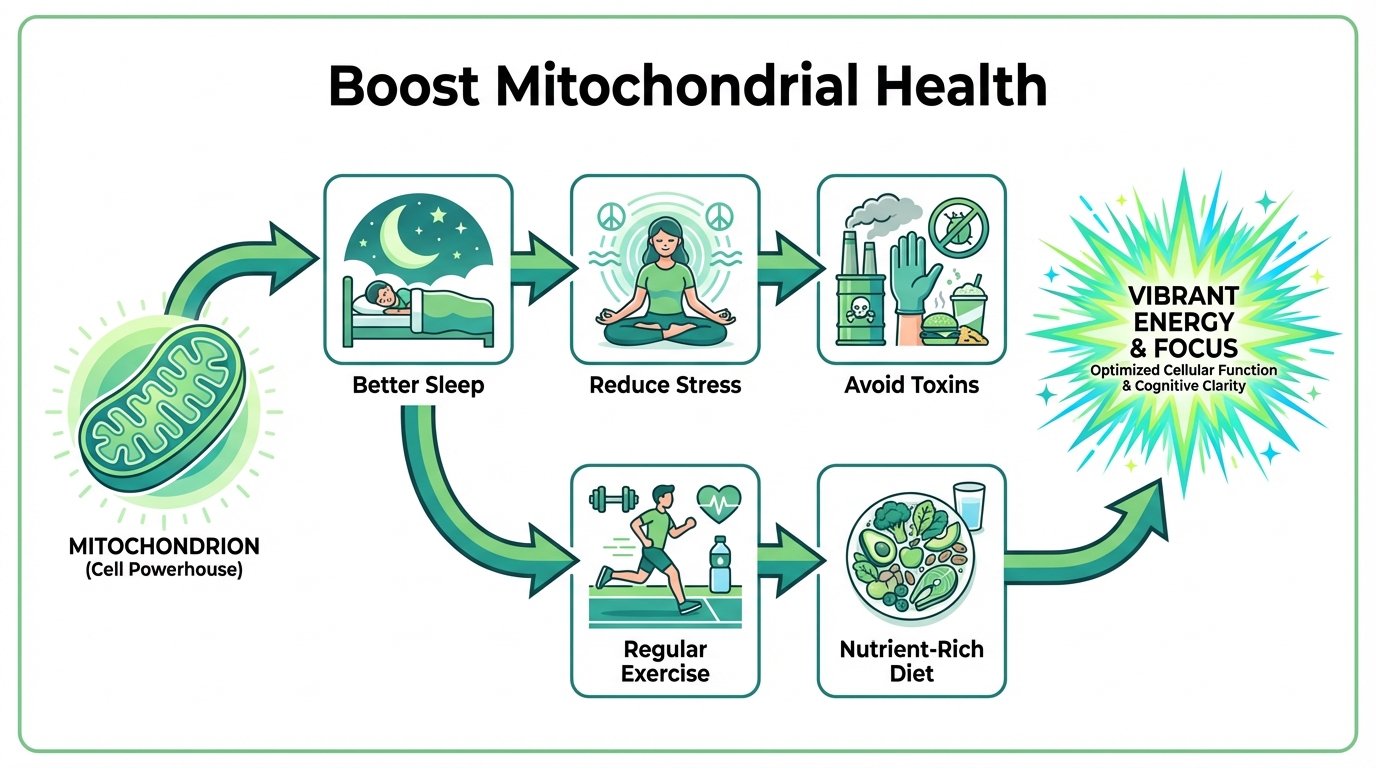
John: Under the hood, mitochondria are like mini power plants in every cell, converting nutrients into ATP via the electron transport chain. But they’re sensitive souls—too much sugar spikes insulin, overwhelming them; chronic stress floods them with cortisol, causing leaks. The Stanford insights highlight five lifestyle changes: exercise, diet, sleep, cold exposure, and fasting. Let’s break it down step-by-step. First, exercise triggers mitophagy, where old mitochondria get recycled—like upgrading your phone. Second, a diet rich in antioxidants (think veggies) fights oxidative damage. Third, quality sleep allows repair. Fourth, cold plunges boost resilience via hormesis. Fifth, intermittent fasting promotes efficiency by forcing cells to clean house.
Lila: Love the phone upgrade metaphor! For beginners, hormesis is like weightlifting for cells—small stresses make them stronger. Research suggests these aren’t fads; they’re rooted in evolutionary biology.
| Aspect | Old Way | New Way (Boosted Mitochondrial Health) |
|---|---|---|
| Energy Source | Relies on constant sugar hits, leading to crashes | Balanced fats and proteins for steady ATP production |
| Stress Management | Ignores chronic stress, causing mitochondrial burnout | Incorporates recovery like sleep and meditation |
| Exercise Approach | Sedentary or overtraining without recovery | HIIT and strength training to enhance mitophagy |
| Diet Focus | Processed foods high in toxins | Nutrient-dense foods with antioxidants |
| Overall Risk | Higher chance of fatigue and disease | Potential for sustained energy and longevity |
John: See that table? It cuts through the fluff. The new way isn’t revolutionary; it’s evolutionary—aligning with how our bodies are designed.
Practical Use Cases & Application
Lila: So, how does this play out in daily life? For a busy professional, boosting mitochondria means swapping endless coffee for a morning walk—research suggests even 20 minutes of brisk exercise can amp up ATP production, reducing that 3 PM slump.
John: Exactly. Example one: Athletes. Intermittent fasting could enhance recovery by promoting autophagy, like a cellular detox. But consider risks—don’t fast if you’re underweight or have eating disorders. Second, for office workers: Cold showers mimic cold exposure, potentially increasing brown fat, which burns energy efficiently. One perspective is it boosts mood via endorphins. Third, parents juggling chaos: Prioritizing sleep hygiene, like dim lights before bed, allows mitochondrial repair, leading to more patience and focus. Fourth, seniors: A diet with omega-3s from fish might support brain health, as studies link it to reduced cognitive decline.
Lila: Witty note: If mitochondria were employees, these habits are like giving them a raise—better performance without burnout.
Educational Action Plan (How to Start)
John: Ready to experiment responsibly? Here’s a step-by-step guide, emphasizing science over hype.
Lila: Level 1 (Learn): Start by reading the original article from mindbodygreen or books like “The Mitochondria and the Future of Medicine” by Lee Know. Watch TED Talks on cellular energy to grasp basics.
John: Level 2 (Try Safely): Begin small. For exercise, try 10-minute HIIT sessions twice a week—research suggests this stimulates mitochondrial biogenesis without overload. Track how you feel, but consult a doc first. For diet, add one antioxidant-rich meal daily, like a spinach salad. Experiment with 12-hour fasting windows, eating between 8 AM and 8 PM, to ease into it. Remember, results vary; monitor energy levels and adjust.
Lila: And for cold exposure, start with cool showers, not ice baths, to avoid shocks. It’s about building habits sustainably.
Conclusion & Future Outlook
John: In summary, the effort to boost mitochondrial health—through exercise, diet, etc.—offers rewards like sustained energy, but risks include overdoing it, like exercise-induced fatigue. Balance is key; research suggests long-term gains in vitality, but uncertainty remains as science evolves. Watch for new studies on personalized nutrition.
Lila: Absolutely. One interpretation is that these changes could redefine aging, but always prioritize professional advice.

👨💻 Author: SnowJon (Web3 & AI Practitioner / Investor)
A researcher who leverages knowledge gained from the University of Tokyo Blockchain Innovation Program to share practical insights on Web3 and AI technologies.
His motto is to translate complex technologies into forms that anyone can evaluate and use responsibly, fusing academic knowledge with practical experience.
*AI may assist drafting and structuring, but final verification and responsibility remain with the human author.
References
- 5 Ways To Boost Mitochondrial Health, According To A Stanford Scientist
- Mitochondrial Dysfunction and Chronic Disease: Treatment With Natural Supplements
- Mitochondrial Dynamics and Bioenergetics in Health and Disease
- Exercising to Relax – Harvard Health
- Sleep Hygiene – Sleep Foundation
- Cold Water Immersion: Physiological Responses