
🎧 Podcast Episode
Best Smart Rings 2026: Galaxy
Listen to this article as a podcast! Two hosts break down the key points in an easy-to-follow conversation.
▶ Press play to start listening
🌐 日本語版はこちら: infinity-lifestyle.jp で読む
2026 Ultimate Smart Ring Comparison: Mastering Sleep with Galaxy, Oura, and RingConn
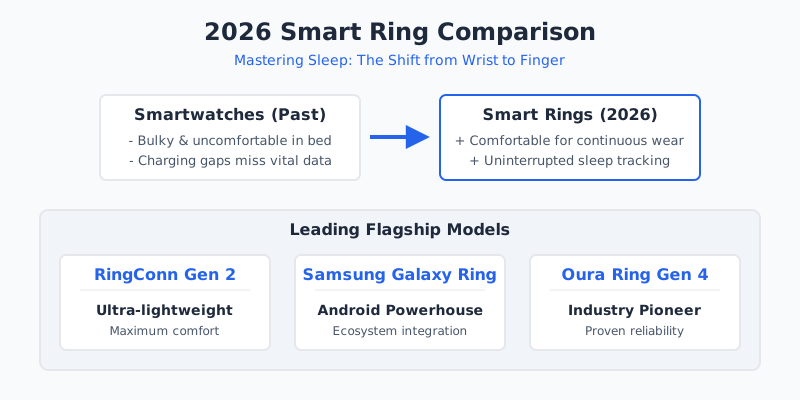
As of 2026, the primary battleground for wearable technology has decisively shifted from the wrist to the finger. The global market is currently witnessing an unprecedented level of competition, driven by the rollout of highly advanced devices. Leading the charge are the ultra-lightweight “RingConn Gen 2,” the Android ecosystem powerhouse “Samsung Galaxy Ring,” and the undisputed pioneer of the industry, the “Oura Ring Gen 4.”
This article provides an objective, data-driven comparison of these three flagship models, helping you navigate the complex smart ring landscape to find the perfect device for your lifestyle and health goals.
The New Era of Sleep Tracking: Why “Smart Rings” Now?
For years, smartwatches dominated the health-tracking sector, but they have always suffered from structural drawbacks: they are often too bulky to wear comfortably in bed, and finding the right time to charge them without missing vital health data can be frustrating. Recent clinical research indicates that for sleep tracking—specifically the continuous monitoring of biometric data overnight—the finger is actually a superior location. Blood vessels are closer to the skin’s surface on the finger than on the wrist, allowing photoplethysmography (PPG) sensors to measure heart rate, blood oxygen levels (SpO2), and temperature variations with significantly higher clinical accuracy.
Globally, the retail landscape has rapidly adapted to this shift. Major electronics retailers like Best Buy and Amazon have established dedicated smart ring sections, while major telecom carriers across North America and Europe, such as AT&T and Vodafone, have started bundling smart rings with premium smartphone plans. The market has officially transitioned from a niche hardware enthusiast segment to mainstream consumer adoption, bolstered by recent FDA clearances and CE marks in the EU for features like sleep apnea detection.
Furthermore, Samsung’s aggressive global rollout of the Galaxy Ring has forced competitors to innovate rapidly. With telecom operators viewing these rings as the next frontier of connected health ecosystems, the infrastructure supporting these devices has never been stronger.
Smart rings are no longer just for early adopters. With global wearable market forecasts projecting the smart ring sector to surpass $5 billion by 2028, 2026 is widely recognized by industry analysts as the “Year of the Smart Ring.”
Comparing the Big Three: Which Ring is Right for You?
We have analyzed the three most prominent high-end smart rings currently available on the global market. Because each device operates on a fundamentally different design philosophy and business model, consumers must evaluate not just the upfront hardware cost, but the Total Cost of Ownership (TCO), OS compatibility, and long-term ecosystem lock-in.
| Comparison Metric | RingConn Gen 2 | Galaxy Ring | Oura Ring Gen 4 |
|---|---|---|---|
| Manufacturer | RingConn (Global) | Samsung (South Korea) | Oura Health (Finland) |
| Base Price (USD) | $299.00 | $399.00 | $349.00+ |
| Subscription | None (Free) | None (Free) | $5.99/mo ($69.99/yr) |
| Battery Life | Up to 12 days | Up to 7 days | Up to 8 days |
| Size & Weight | 2mm thick / ~2.0g | 7.0mm width / 2.3g–3.0g | 7.9mm width / 3.3g–5.2g |
| Supported OS | iOS / Android | Android 11.0+ Only | iOS / Android |
| Unique Advantage | Ultra-thin, Sleep Apnea tracking | Galaxy AI, Ecosystem gestures | Smart Sensing, Industry standard |
### The Running Cost Trap: Subscription vs. One-Time Purchase
The most critical factor when choosing a smart ring is the Total Cost of Ownership (TCO).
While the Oura Ring Gen 4 starts at $349, accessing its detailed data analytics, personalized AI insights, and full suite of health metrics requires a mandatory $5.99 monthly (or $69.99 annual) membership. If you use the device for three years, your total investment will easily exceed $550.
In stark contrast, the RingConn Gen 2 ($299) and the Galaxy Ring ($399) operate on a “one-time purchase” model with zero subscription fees. RingConn, in particular, offers exceptional long-term value, providing a comprehensive suite of health metrics without locking users into a recurring payment structure, making it highly disruptive in the current market.
Always calculate the “3-year total cost” rather than just looking at the hardware price tag. Devices like RingConn and Galaxy Ring become significantly more cost-effective the longer you wear them.
Data Analytics and Technical Advantages of Each Model
Let’s dive deeper into the proprietary technologies embedded in these devices and how they translate into actionable health improvements.
RingConn Gen 2: The Ultra-Thin, Subscription-Free Challenger
The RingConn Gen 2 represents a massive leap forward in hardware miniaturization. Its most defining characteristic is its astonishingly slim profile—measuring just 2mm in thickness and weighing a mere 2 grams. For many users, traditional smart rings felt too bulky, interfering with typing or gripping weights at the gym. RingConn solved this by utilizing aerospace-grade titanium and a refined internal resin structure, making it virtually unnoticeable on the finger.
Technologically, it features advanced PPG sensors optimized to reduce light noise and motion artifacts, delivering highly accurate heart rate and blood oxygen readings. Furthermore, it includes advanced sleep apnea monitoring algorithms, a feature highly sought after in the US and EU markets.
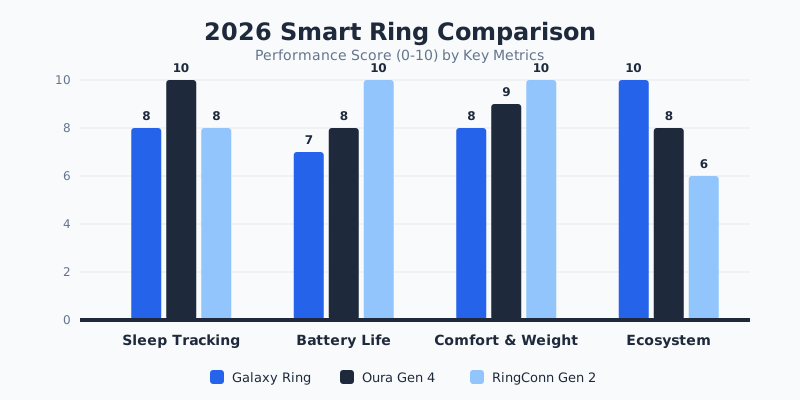
Perhaps most impressively, it boasts a battery life of up to 12 days on a single charge. Compared to the 7-8 day average of its competitors, this means you can take a week-long business trip or vacation without ever needing to pack the charging case.
Galaxy Ring: The Android Ecosystem Powerhouse
Samsung’s Galaxy Ring is a masterclass in ecosystem integration, combining cutting-edge sensor technology with the analytical power of Galaxy AI.
For sleep analysis, it evaluates five core metrics: sleep depth, sleep latency, nighttime movement, heart rate, and respiratory rate. These data points are synthesized within the free Samsung Health app to generate a daily “Energy Score”—a holistic metric indicating your physical readiness for the day.
Where the Galaxy Ring truly shines is in its interoperability with Galaxy smartphones. Using a “double pinch” gesture, users can remotely trigger their smartphone camera shutter or dismiss morning alarms. Additionally, if you wear a Galaxy Watch alongside the ring, the Samsung Health ecosystem intelligently distributes the sensor workload between the two devices, extending the ring’s battery life by up to 30%. However, it is crucial to note that the Galaxy Ring requires Android 11.0 or higher, completely excluding Apple (iOS) users from the ecosystem.
Oura Ring Gen 4: The AI-Powered Industry Standard
As the undisputed pioneer of the smart ring sector, Oura Health has pushed the boundaries even further with its 4th generation device.
The Gen 4 monitors microscopic changes in Heart Rate Variability (HRV) and skin temperature around the clock. Its sophisticated AI algorithms process this data to generate highly accurate “Readiness Scores” and predictive stress monitoring.
The standout feature of the Gen 4 is its “Smart Sensing” technology. Oura increased the number of signal pathways from 8 in the previous model to 18. This allows the ring to dynamically adapt to the shape of your finger and any rotational shifting that occurs during the night, ensuring optimal data capture in real-time. This innovation has resulted in a 31% improvement in nighttime heart rate accuracy and a 120% boost in SpO2 signal quality. Combined with its renowned cycle-tracking capabilities for women’s health, Oura’s data accuracy remains the gold standard in the industry.
Choose RingConn for battery life and an ultra-thin design, Galaxy Ring for deep Android integration, or Oura for unparalleled AI insights and clinical-grade accuracy. Your smartphone OS and budget will largely dictate the right choice.
Global Impact and Practical Use Cases (Objective Analysis)
How is the mass adoption of smart rings altering our daily routines? Looking at the intersection of emerging technology and lifestyle, we can identify three major shifts in the global market.
1. The Perfection of “Ambient Computing”
While devices like the Apple Watch are incredible tools, the constant presence of a screen often contributes to digital fatigue and notification anxiety. Smart rings are the ultimate expression of “ambient computing”—technology that fades into the background. Users simply wear the ring and forget about it. The AI works silently in the background, collecting data 24/7, and only surfaces insights via your smartphone when necessary (e.g., “Your HRV is dropping; prioritize rest tonight”). This represents a shift toward technology that supports human well-being without demanding constant attention.
2. Complementing, Not Replacing, Smartwatches
Market data shows that smart rings are not cannibalizing smartwatch sales; rather, they serve as complementary devices. The optimal setup for many tech-savvy users in 2026 is a hybrid approach: wearing a smartwatch during the day for fitness tracking, receiving notifications, and making contactless payments via Apple Pay or Google Wallet, while relying on the smart ring for overnight sleep tracking and continuous baseline vitals. Samsung’s decision to allow the Galaxy Ring and Galaxy Watch to share sensor duties perfectly illustrates this industry-wide trend toward device synergy.
3. A Corporate Performance Management Tool
Sleep architecture (the balance of REM and Deep sleep) and Heart Rate Variability (HRV) are direct predictors of cognitive performance, stress resilience, and executive function. What was once the domain of elite athletes is now accessible to global business professionals. By checking their “Readiness” or “Energy” scores before high-stakes meetings or international flights, professionals can engage in data-driven energy management. As corporate wellness programs in the US and Europe increasingly subsidize these devices, smart rings are transitioning from fitness gadgets to essential productivity tools.
Think of a smart ring as a digital health assistant. By visualizing your physical state with hard data, you can optimize your schedule, prevent burnout, and maximize your professional output.
Conclusion: Editorial Verdict and 3 Key Takeaways
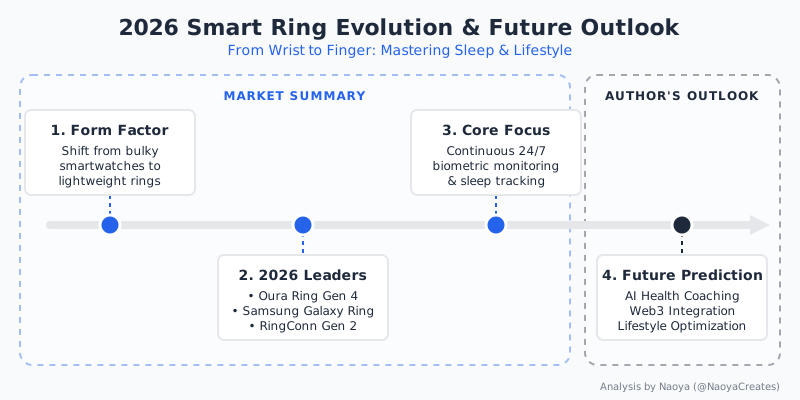
The 2026 smart ring market offers consumers an incredibly rich array of choices, with each manufacturer carving out a distinct niche. Here are the three main takeaways:
1. RingConn Gen 2 is the Value Champion: With its $299 one-time price, up to 12 days of battery life, and ultra-thin 2mm design, it is arguably the most accessible and practical entry point for first-time smart ring buyers globally.
2. Galaxy Ring is the Android User’s Dream: Thanks to ecosystem-exclusive features like gesture controls and intelligent battery management with the Galaxy Watch, it offers the most seamless experience for those already invested in Samsung’s hardware.
3. Oura Ring Gen 4 Remains the Analytical King: While the subscription fee is a hurdle, Oura’s decade of algorithm refinement, Smart Sensing technology, and holistic AI insights make it the top choice for data purists.
【Editorial View】
The evolution of smart rings has drastically lowered the barrier to understanding our own biology. From an objective standpoint, the subscription-free model combined with the extreme comfort and battery life of the RingConn Gen 2 makes it the most pragmatic choice for the average consumer looking to improve their sleep hygiene. However, the backing of tech giants like Samsung ensures that the ecosystem wars will continue to drive rapid innovation across the board.
For cost and comfort, go RingConn. For Android synergy, go Galaxy. For premium AI analytics, go Oura. Choose the partner that best aligns with your daily habits.
Next Steps: What You Can Do Today
If you are ready to integrate a smart ring into your life, here are three actionable steps you can take right now:
1. Order a Sizing Kit
Smart rings do not follow standard jewelry sizing, and a snug fit is mandatory for accurate sensor readings. All major manufacturers offer a plastic sizing kit for a nominal fee (usually $10-$15, which is later credited toward your final purchase). Order the kit and wear the plastic dummy ring for at least 24 hours to ensure it feels comfortable during daily tasks and sleep.
2. Identify Your Specific Health Goals
Are you trying to identify signs of sleep apnea? Do you want to track your menstrual cycle? Or do you simply want to know if you are recovered enough for a heavy gym session? Clarifying your primary goal will immediately narrow down which device’s algorithms are best suited for you.
3. Check OS and App Compatibility
If you use an iPhone, the Galaxy Ring is off the table. Furthermore, check if the ring’s companion app integrates smoothly with your preferred centralized health database, such as Apple Health or Google Health Connect, to ensure your data isn’t siloed.
Don’t rush into buying the actual hardware. Order a sizing kit first to familiarize yourself with the sensation of wearing a ring 24/7.
—
**Disclaimer:** This site aims to provide objective information on lifestyle and emerging technology. The data and pricing reflect the market status as of April 2026. Please verify the latest specifications and prices on the respective manufacturers’ official websites.
**About the Author: Naoya**
A content creator exploring the intersection of emerging tech and modern lifestyle. Naoya provides practical insights into how AI, Web3, and next-generation wearables are reshaping our daily routines and global work culture.
🔗 Follow on X: @NaoyaCreates
Data Sources
- The Verge: The Smart Ring Market is Exploding in 2026
- WIRED: Review: RingConn Gen 2 – The Subscription-Free King
- TechCrunch: RingConn Launches Gen 2 Smart Ring with 12-Day Battery
- CNET: Samsung Galaxy Ring Review: A New Era for Android Health
- Bloomberg: Samsung Pushes Galaxy Ring to Global Telecom Carriers
- Engadget: Oura Ring Gen 4 Review: Smart Sensing Changes the Game
- Ars Technica: Oura Gen 4 vs. Galaxy Ring: The Ultimate Showdown
- ZDNet: Best Smart Rings of 2026: Sleep, Fitness, and Recovery