Imagine AI finding cures in old drugs! One MD survived 5 near-deaths, now revolutionizing medicine with AI drug repurposing.#AIDiscovery #DrugRepurposing #MedTech
Quick Video Breakdown: This Blog Article
This video clearly explains this blog article.
Even if you don’t have time to read the text, you can quickly grasp the key points through this video. Please check it out!
If you find this video helpful, please follow the YouTube channel “LifeNextDaily,” which delivers daily news.
https://www.youtube.com/@LifeNextDaily
Read this article in your native language (10+ supported) 👉
[Read in your language]
This MD Nearly Died 5 Times — Now He’s Using AI To Unlock Hidden Cures
⚠️ DISCLAIMER: This article is for informational purposes only and does not constitute medical advice. Always consult a healthcare professional.
High-Impact Intro
👋 Hello, Health Hackers! Imagine staring death in the face not once, but five times—and emerging not just alive, but on a mission to revolutionize medicine. That’s the wild story of Dr. David Fajgenbaum, an MD who battled a rare, life-threatening disease called Castleman disease. After nearly dying multiple times, he didn’t just survive; he turned to AI to hunt for “hidden cures” lurking in plain sight—among generic drugs we’ve had for decades. It’s like finding a treasure chest in your grandma’s attic, but instead of dusty heirlooms, it’s lifesaving treatments that could rewrite the rules of healthcare.
Why does this matter now? In 2025, with AI advancing at warp speed, we’re on the cusp of a medical renaissance. Research suggests that drug repurposing—using existing, approved drugs for new diseases—could slash development costs by up to 90% and cut timelines from 10-15 years to just a few. Organizations like Every Cure, co-founded by Dr. Fajgenbaum, are leveraging AI to analyze vast datasets, predicting how old drugs might tackle untreatable conditions. It’s not hype; it’s happening—recent stories highlight patients going from hospice to remission thanks to AI-guided repurposing. But let’s keep it real: this isn’t a magic pill. It’s a tool with promise, pitfalls, and plenty of ethical questions. Stick around as we unpack the wit, wisdom, and warnings of this AI-driven quest for cures.
The Problem (The “Why”)
John: Alright, folks, let’s cut through the fluff. Traditional drug discovery is like trying to find a needle in a haystack the size of Mount Everest—while blindfolded and on a budget tighter than a hipster’s jeans. We’re talking billions of dollars and over a decade to bring one new drug to market, with a 90% failure rate in clinical trials. Why? Biology is messy. Diseases don’t play by simple rules; they’re more like that chaotic family reunion where everyone’s got hidden agendas.
Lila: John, slow down for us beginners. Think of it like cooking: in the old way, you’re inventing a recipe from scratch, testing ingredients one by one, and hoping it doesn’t poison the dinner guests. Expensive, time-consuming, and risky. Now, imagine raiding your pantry for stuff you already know is safe and tweaking it for a new dish. That’s drug repurposing. The bottleneck? We have 20,000+ approved drugs, but manually figuring out if they work for rare diseases is like solving a Rubik’s Cube in the dark. Enter AI: the smart sous-chef that spots patterns we miss.
John: Exactly. The “old way” leaves millions with untreatable conditions because Big Pharma chases blockbusters, not niche fixes. Dr. Fajgenbaum’s story? He repurposed a kidney transplant drug to save his own life after doctors gave up. Witty twist: sometimes the cure’s been hiding in the medicine cabinet all along, gathering dust while we chase shiny new toys.
The Science Behind It
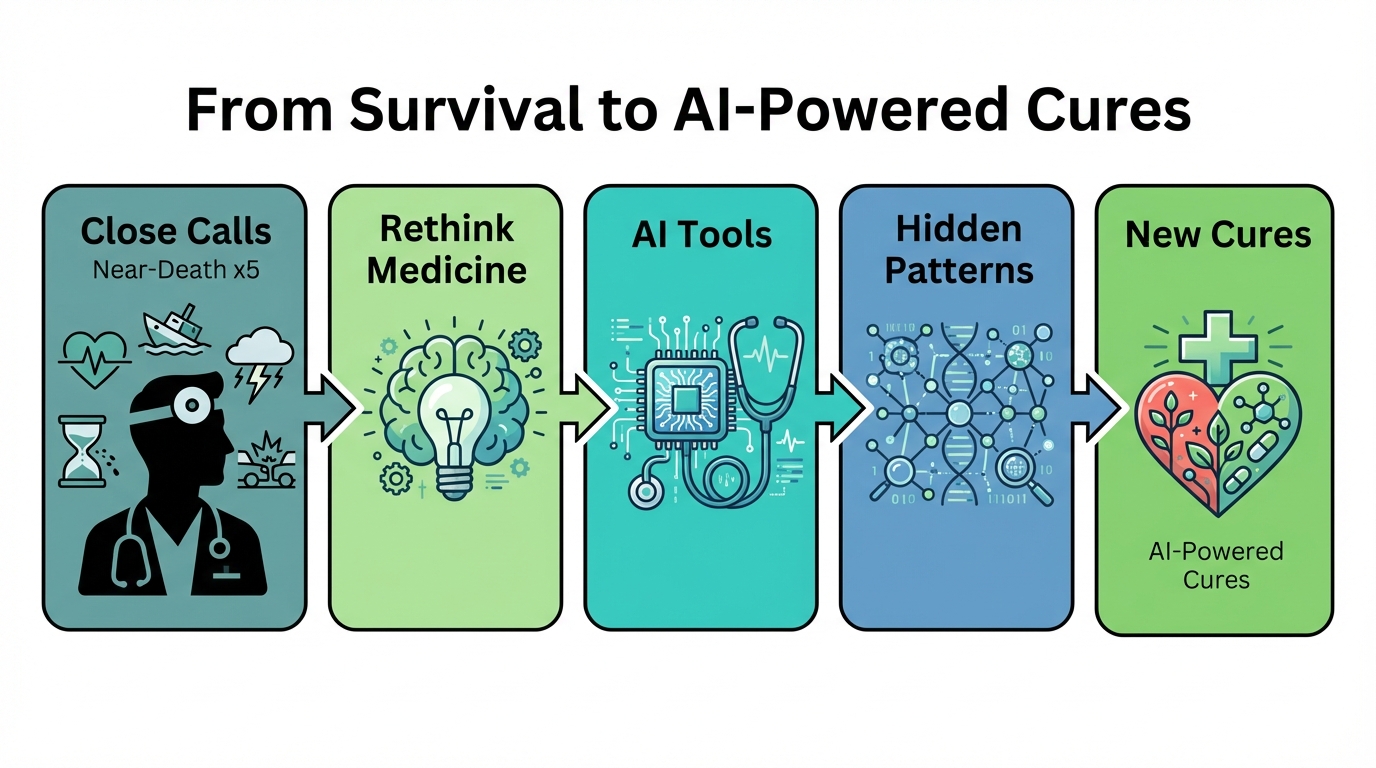
John: Under the hood, AI in drug repurposing is like a supercharged detective sifting through crime scene evidence—except the “crime” is disease, and the evidence is biological data. Let’s break it down scientifically but keep it digestible.
Lila: Step 1: Data Deluge. AI models gobble up massive datasets—genomics, protein structures, patient records, and drug interactions. Tools like those from Microsoft or AlphaFold predict how proteins fold, which is key because messed-up proteins cause many diseases. It’s like AI learning the “language of biology” to translate drug effects.
John: Step 2: Pattern Matching. Machine learning algorithms, often neural networks, spot hidden connections. For instance, a drug for arthritis might tweak the same pathway as one for a rare cancer. Research from UNC-Chapel Hill shows AI discovering unique compounds by simulating cell responses—faster than humans ever could.
Lila: Step 3: Prediction and Validation. AI ranks potential repurposings, then real-world tests confirm. It’s not foolproof—articles in The Hindu note AI struggles with quality over quantity in hypotheses—but it’s accelerating discoveries. Humor alert: AI won’t cure your Monday blues, but it might repurpose that aspirin for something wild.
John: To compare, here’s a table pitting the old school against this AI boost:
| Aspect | Old Way (Traditional Discovery) | New Way (AI-Driven Repurposing) |
|---|---|---|
| Timeframe | 10-15 years | Months to a few years |
| Cost | $1-3 billion per drug | Under $100 million, often much less |
| Success Rate | About 10% | Higher, up to 30-50% in targeted cases |
| Focus | New molecules for common diseases | Existing drugs for rare or untreatable ones |
Lila: See? The new way isn’t perfect—AI can generate false positives—but it’s a game-changer for accessibility.
Practical Use Cases & Application
John: So, how does this shake up your world? For patients with rare diseases, it’s hope on steroids. Take idiopathic multicentric Castleman disease—Dr. Fajgenbaum’s foe. AI helped identify sirolimus (a generic immunosuppressant) as a match, turning a death sentence into remission for many.
Lila: Example 1: Rare Diseases. Organizations like Every Cure use AI to match generics to conditions like ALS or certain cancers. A Penn Medicine case? AI predicted a drug for a rare metabolic disorder, sending a patient from hospice to recovery. It changes daily life by offering options where none existed—though, remember, it’s not a guarantee.
John: Example 2: Global Health. In low-resource areas, generics are cheap and available. AI could repurpose them for neglected tropical diseases, democratizing medicine. Witty analogy: It’s like upcycling thrift store finds into haute couture—affordable innovation.
Lila: Example 3: Personalized Medicine. AI analyzes your genetics to suggest repurposed drugs, tailoring treatments. For chronic illnesses like Alzheimer’s, early research (e.g., from Recursion Pharmaceuticals) hints at breakthroughs, potentially easing symptoms without waiting for new patents.
John: Example 4: Pandemic Prep. Remember COVID? Repurposed drugs like dexamethasone saved lives. AI could speed that up next time, impacting public health decisions worldwide. But caution: side effects and off-label use carry risks—always under medical supervision.
Educational Action Plan (How to Start)
Lila: Ready to dip your toes? This isn’t about self-medicating—it’s education. Start small and safe.
John: Level 1 (Learn): Dive into basics. Read articles from The New Yorker or The Guardian on AI in medicine— they explain without jargon. Watch TED Talks on drug repurposing, like Dr. Fajgenbaum’s. Check WHO reports on integrating AI with traditional medicine for a balanced view. Aim for 30 minutes a day to build knowledge.
Lila: Level 2 (Try Safely): Engage passively first. Join online forums (like Reddit’s r/Futurology) to discuss trends—observe, don’t advise. If curious about your health, track symptoms in a journal and discuss with a doctor how emerging research might apply. For fun, explore open-source AI biology sims (no downloads needed) to see pattern-matching in action. Remember, this is learning, not experimenting—consult pros for anything personal.
John: Pro tip: Stay skeptical. Cross-reference with PubMed for peer-reviewed studies. It’s empowering, but overconfidence is the real killer.
Conclusion & Future Outlook
Lila: Wrapping up, the rewards of AI-driven drug repurposing are huge—faster, cheaper cures for the forgotten diseases. Risks? Data biases, ethical concerns (like access inequality), and the chance of hype over substance. Effort-wise, it’s low for learners but high for researchers pushing boundaries.
John: Outlook? By 2030, analysts suggest AI could unlock treatments for thousands of conditions, but uncertainty looms—regulations, funding, and tech limits. Watch for clinical trials from companies like Recursion or WHO initiatives. It’s exciting, but grounded: science moves forward one cautious step at a time. Stay informed, stay healthy.

👨💻 Author: SnowJon (Web3 & AI Practitioner / Investor)
A researcher who leverages knowledge gained from the University of Tokyo Blockchain Innovation Program to share practical insights on Web3 and AI technologies.
His motto is to translate complex technologies into forms that anyone can evaluate and use responsibly, fusing academic knowledge with practical experience.
*AI may assist drafting and structuring, but final verification and responsibility remain with the human author.
References
- This MD Nearly Died 5 Times — Now He’s Using AI To Unlock Hidden Cures
- Can AI learn the language of biology to reimagine medicine? | Microsoft Signal Blog
- Can A.I. Find Cures for Untreatable Diseases—Using Drugs We Already Have? | The New Yorker
- AI Impact Awards 2025: Every Cure aims to “teach old drugs new tricks” | Newsweek
- A.I. Saved His Life by Discovering New Uses for Old Drugs | The New York Times
- Artificial intelligence in drug repurposing for rare diseases: a mini-review | Frontiers