
🎧 Podcast Episode
AI Wearables 2026: Mental Health Trends and Original Analysis
Listen to this article as a podcast! Two hosts break down the key points in an easy-to-follow conversation.
▶ Press play to start listening
🌐 日本語版はこちら: INFINITY情報局 で読む
AI Wearables Are Becoming Your Therapist’s Silent Partner
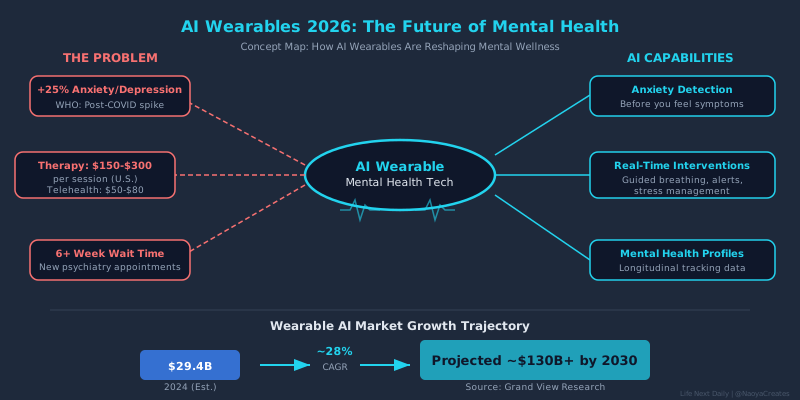
A new generation of wearables doesn’t just track your steps. These devices now detect anxiety episodes before you feel them, guide real-time breathing interventions, and build longitudinal mental health profiles — all on your wrist or finger. By 2026, this category is likely to reshape how millions manage stress, sleep, and emotional well-being outside clinical settings.
The Surprising Number That Started This Shift
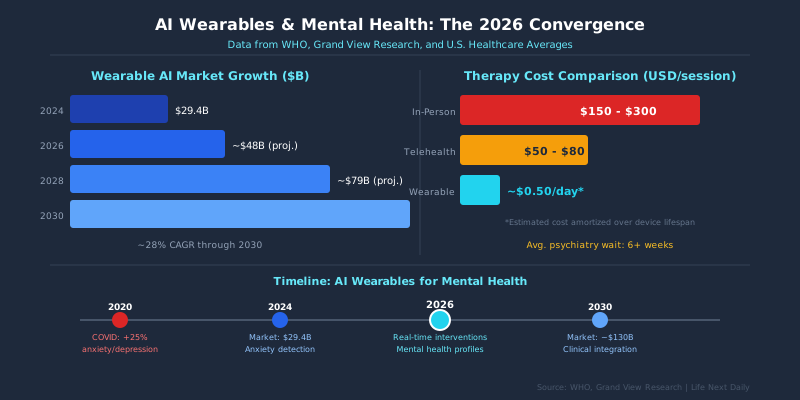
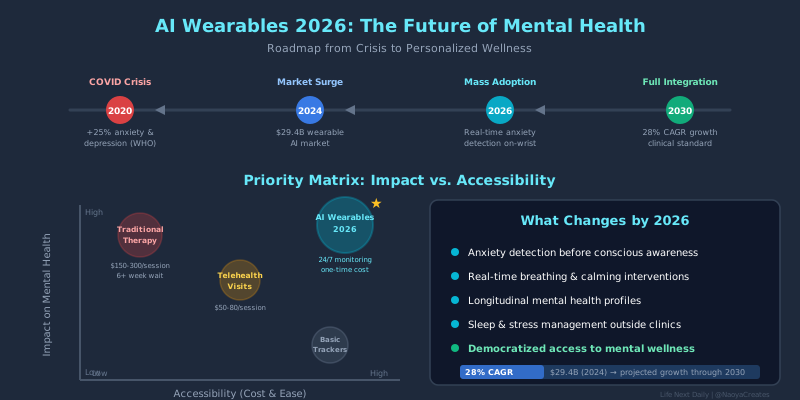
The World Health Organization reported a 25% increase in global prevalence of anxiety and depression during just the first year of the COVID-19 pandemic. That spike never fully receded. Meanwhile, the global wearable AI market reached an estimated $29.4 billion in 2024 and is projected to grow at roughly 28% CAGR through 2030, according to industry analyses from Grand View Research. Those two trend lines are now colliding: consumer demand for accessible mental health tools meets hardware capable of delivering them.
Traditional therapy costs $150–$300 per session in the U.S. (compared to roughly $50–$80 for a telehealth visit). The average wait time for a new psychiatry appointment exceeds 6 weeks in most metro areas, per a 2023 Merritt Hawkins survey. Wearables won’t replace therapists. But they’re filling the enormous gap between appointments.
A 25% jump in anxiety/depression worldwide created demand that the healthcare system couldn’t absorb — opening the door for AI wearables to serve as a first line of continuous monitoring between clinical visits.
Why Mental Health Wearables Matter Right Now
Three forces converged in 2024–2025 to make this category viable rather than gimmicky.
First, sensor maturity. Photoplethysmography (PPG — the optical sensor that reads blood flow through your skin) has improved dramatically. Modern wearables extract HRV (Heart Rate Variability — the variation in time between heartbeats, a key stress biomarker) with clinical-grade accuracy in controlled conditions. Electrodermal activity (EDA — measuring tiny changes in skin conductance linked to emotional arousal) sensors, once limited to lab equipment costing thousands, now ship in consumer devices like the Fitbit Sense series.
Second, on-device AI. Edge inference (running AI models directly on the device rather than in the cloud) means your stress data doesn’t need to leave your wrist. Apple’s Neural Engine, Qualcomm’s Snapdragon W-series, and Samsung’s Exynos W processors can now run lightweight models that classify emotional states in real time. This matters for privacy — mental health data is among the most sensitive information a person generates.
Third, regulatory movement. The FDA cleared its first prescription digital therapeutic (PDT — software approved as a medical treatment) for substance use disorders back in 2017 with reSET. Since then, the pipeline has expanded. In 2024, companies like Pear Therapeutics (prior to its restructuring) and Akili Interactive demonstrated that software-based interventions can receive regulatory approval. Wearable-based mental health tools are likely next in line for similar pathways.
Sensor accuracy, on-device AI processing, and an evolving FDA framework have all matured at the same time — making 2025–2026 the first realistic window for wearables that meaningfully address mental health rather than just gamify mood logging.
The Current Landscape: Who’s Building What
Not all wearables approach mental health the same way. Some passively monitor. Others actively intervene. Here’s how the major players and emerging startups compare as of mid-2025:
| Device / Platform | Mental Health Features | AI Approach | Price Range | Key Limitation |
|---|---|---|---|---|
| Apple Watch Ultra 2 / Series 10 | HRV tracking, mindfulness reminders, sleep staging, mood logging (iOS 17+) | On-device ML for Health app insights; Siri integration | $399–$799 | No EDA sensor; mental health features are passive |
| Samsung Galaxy Ring / Watch 7 | Energy Score, stress tracking, sleep coaching, body composition | Samsung Health AI recommendations; Galaxy AI integration | $300–$450 | Mental health insights are basic; no clinical validation claims |
| Oura Ring Gen 3 | Readiness Score, stress resilience, daytime stress monitoring, sleep analysis | Cloud-based trend analysis; Oura Labs experimental features | $299 + $6/mo membership | No real-time interventions; requires subscription |
| Whoop 4.0 | Stress Monitor, Journal feature correlating behaviors to recovery, strain tracking | Whoop Coach (GPT-powered conversational AI for health advice) | $239/yr subscription | No screen; relies on phone app for all interactions |
| Fitbit Sense 2 (Google) | EDA sensor, continuous stress management score, mood tracking | Google AI integration; Fitbit Premium AI insights | $199–$299 | Fitbit’s brand direction under Google remains uncertain |
| Muse 2 / Muse S | EEG-based (electroencephalogram — measures brain electrical activity) meditation guidance, real-time neurofeedback | Brain-sensing algorithms that provide live audio feedback during meditation | $250–$400 | Single-purpose; not an all-day wearable |
| Emerging: Halo (by various startups) | Voice tone analysis, continuous mood inference, AI therapy chatbot pairing | Multi-modal AI combining biometric + behavioral signals | TBD (most in beta or pre-order) | Unproven accuracy; privacy concerns with voice data |
A clear pattern emerges. Established players (Apple, Samsung, Google) add mental health as a feature within broader health ecosystems. Dedicated devices (Muse, Whoop) go deeper on specific use cases. And a wave of startups is betting on multi-modal AI (combining multiple data types — heart rate, voice, movement, skin conductance — into a single emotional assessment).
For daily use, the practical difference is significant. If you already wear an Apple Watch, you’ll get incremental mental health features through software updates. If you specifically want stress management tools, a dedicated device like Whoop’s AI Coach or Muse’s neurofeedback offers a more intentional experience — at the cost of wearing yet another device.
If you want passive awareness, your existing smartwatch likely already tracks stress biomarkers. If you want active mental health intervention — real-time breathing cues during a panic spike, neurofeedback during meditation — you’ll need a purpose-built device, at least for now.
What the Published Research Actually Shows
Claims are easy. Evidence is harder. Here’s what peer-reviewed and industry-validated data tells us about wearable-based mental health monitoring.
HRV as a stress predictor: A 2023 systematic review published in Frontiers in Psychiatry found that wearable-derived HRV data showed “moderate to strong correlation” with self-reported stress levels, though accuracy varied significantly between resting and active states. HRV works best as a baseline comparator — your trends matter more than absolute numbers.
EDA for emotional arousal: Research from MIT Media Lab, published across multiple studies, has demonstrated that EDA sensors can detect emotional arousal events with approximately 70–80% accuracy in controlled settings. Real-world accuracy drops because physical activity, temperature changes, and hydration all affect skin conductance. Fitbit’s implementation in the Sense series has not published independent clinical validation studies for its stress scoring specifically.
Sleep and mental health: The link between sleep quality and mental health is well-established in clinical literature. A large-scale 2024 study in The Lancet Psychiatry confirmed that sleep disturbance is both a symptom and predictor of depressive episodes. Wearables that track sleep stages (using accelerometer + PPG data) can flag deteriorating patterns weeks before a user self-reports feeling worse. This is possibly where wearables add the most value: early warning systems.
What hasn’t been proven yet: No consumer wearable has received FDA clearance specifically for diagnosing or treating a mental health condition as of mid-2025. The gap between “this device tracks stress biomarkers” and “this device treats anxiety” remains wide and legally significant.
Wearable stress tracking works best as a personal trend monitor — think of it like a financial dashboard for your nervous system. It won’t diagnose anything, but it can show you that your Tuesday meetings consistently spike your stress or that your sleep has degraded over three weeks. That pattern recognition alone can be actionable.
How This Changes Your Daily Life in 2026
Forget the abstract future. Here’s what this looks like in practice over the next 12 months.
Morning routine: Your wearable analyzes last night’s sleep stages and HRV recovery. Instead of a generic “you slept 7 hours” notification, an AI summary tells you: “Your deep sleep was 18 minutes shorter than your baseline. Your HRV suggests elevated sympathetic nervous system activity. Consider a lighter workout today.” Whoop’s AI Coach already delivers versions of this. Apple and Samsung are likely to follow with more sophisticated AI-generated daily briefings.
During work: Continuous stress monitoring detects a sustained cortisol-related spike during a 2-hour meeting block. Your device vibrates subtly and suggests a 90-second box breathing exercise. This real-time intervention model — detect, alert, guide — is what separates 2026 wearables from 2023’s passive dashboards. Companies like Garmin (with Body Battery) and Whoop (with Stress Monitor) are already prototyping versions of these nudges.
Evening: Your weekly mental health summary aggregates stress events, sleep quality, physical activity, and mood entries you’ve logged. A conversational AI (powered by an LLM — Large Language Model, the same technology behind ChatGPT) helps you identify patterns: “You reported lower mood on days with less than 20 minutes of outdoor time. Would you like to set a reminder for a midday walk?” This isn’t therapy. It’s personalized behavioral insight that used to require a human coach charging $200/hour.
For remote workers especially: The boundary between work stress and personal life has dissolved for millions of people. Wearables that quantify this bleed — showing exactly when your body shifts from productive focus to unhealthy stress — offer something no app-based solution can: objective, continuous, body-level data.
The biggest near-term impact is for knowledge workers and remote employees. Wearable AI can identify the specific meetings, tasks, and time blocks that drive your stress — turning vague burnout into specific, fixable patterns.
Privacy: The Elephant on Your Wrist
Mental health data is not like step counts. Knowing someone’s anxiety patterns, sleep disturbances, and emotional arousal events creates an intimate profile that could affect insurance premiums, employment decisions, and personal relationships if mishandled.
Current protections vary dramatically:
- Apple: Health data is encrypted end-to-end and processed on-device by default. Apple’s privacy stance is a genuine competitive advantage here.
- Google/Fitbit: Fitbit’s privacy policy was updated after the Google acquisition. Data may be used to “improve Google services,” which has raised concerns among privacy advocates.
- Whoop: Stores data on cloud servers. The company states it does not sell personal health data, but its privacy policy allows sharing with “service providers.”
- Startups: Many emerging wearable companies have vague or incomplete privacy policies. Voice-analysis-based mood detection is especially concerning — audio data is difficult to fully anonymize.
In the U.S., HIPAA (the Health Insurance Portability and Accountability Act — the main federal health data privacy law) generally does not cover consumer wearable data because it applies to healthcare providers and insurers, not device manufacturers. The FTC has taken enforcement actions against health apps that mishandle data, but comprehensive legislation specifically for wearable mental health data does not yet exist.
If you’re considering an AI mental health wearable, check three things before purchasing: where your data is stored, whether it can be fully deleted on request, and whether the company sells or shares data with third parties.
Your mental health data is more sensitive than your fitness data. Before strapping on a mood-tracking wearable, treat the privacy policy like a terms-of-service for your inner life — actually read it.
Summary: Three Things to Remember
- AI wearables are shifting from passive tracking to active intervention. Real-time stress detection, guided breathing prompts, and AI-powered behavioral coaching are moving from prototype to product in 2025–2026. This is the most meaningful evolution in consumer health tech since continuous glucose monitoring went mainstream.
- The science is promising but not definitive. HRV and EDA-based stress detection show moderate to strong correlation with self-reported states, but no consumer device has clinical-grade mental health diagnostic approval. Use these tools as supplements to — never replacements for — professional care.
- Privacy protections haven’t caught up. Mental health wearable data exists in a regulatory gray zone. Choose devices from companies with strong, transparent data practices, and favor on-device processing over cloud-dependent systems when possible.
Author’s Take: I’ve been tracking HRV and sleep data with multiple wearables for over a year. The single most valuable insight hasn’t been any one metric — it’s been the longitudinal view. Seeing that my HRV consistently drops on weeks with more than three evening screen-time hours past 10 PM changed my behavior more effectively than any self-help book. The 2026 generation of wearables will likely make this kind of insight automatic and conversational rather than requiring you to manually dig through charts. That’s the real breakthrough: not better sensors, but better AI interpretation of what those sensors already capture.
You don’t need to buy a new device to start. If you already own a smartwatch, enable HRV tracking and mood logging today — building a personal baseline now means AI features will have richer data to work with when they arrive via software updates.
Next Steps: What You Can Do Today
- Audit your current wearable’s mental health features. Open your Apple Health, Samsung Health, Fitbit, or Whoop app. Enable HRV tracking, stress monitoring, and sleep staging if they aren’t already active. Most users have these features available but turned off. Building 30+ days of baseline data now will make any future AI coaching feature dramatically more useful.
- Review your wearable’s privacy settings. Go into your device’s companion app, find the privacy or data-sharing section, and disable any “share with partners” or “improve services” toggles you’re not comfortable with. If you can’t find clear data deletion options, that’s a red flag worth noting before mental health features get more granular.
- Try a one-week stress journal alongside your wearable. For seven days, log your subjective stress level (1–10) three times daily in a simple notes app. At the end of the week, compare your self-reported numbers against your wearable’s stress data. This exercise reveals how well your specific device tracks your stress — and where the gaps are. It takes less than two minutes a day and gives you a personal accuracy benchmark no review article can provide.
Original Analysis: Where This Actually Leads
Author’s Perspective: The mental health wearable space in 2025 reminds me of where fitness trackers were around 2014 — lots of promise, inconsistent execution, and a public that’s curious but skeptical. What changed fitness wearables from novelty to necessity was integration: when Apple Watch made step counting invisible and automatic, people stopped thinking about it and just benefited from it. Mental health wearables need that same disappearing act. The moment stress detection and intervention feel as seamless as a heart rate notification, adoption will accelerate nonlinearly.
How This Changes Daily Life: The most underrated impact won’t be individual. It’ll be relational. Imagine sharing a “stress summary” with your partner or manager the way you might share a calendar. Not for surveillance — for empathy. “I had a rough biometric week, can we reschedule that difficult conversation?” That kind of data-backed emotional communication could reduce workplace friction and relationship conflicts in ways that self-reporting never achieved because people are notoriously bad at recognizing their own stress in real time.
Future Lifestyle Prediction: By late 2026 or 2027, I expect at least one major wearable company to partner with a telehealth platform to offer “wearable-informed therapy” — sessions where your therapist reviews your biometric data before your appointment, the way a doctor reviews bloodwork. This will likely start as a premium service before becoming standard. The data pipeline already exists technically. What’s missing is the clinical workflow and insurance framework.
Practical Tip: Don’t wait for perfect technology. Start treating your wearable’s stress data as a conversation starter with yourself. The patterns are already there in your existing data — you just need to look.
Data Sources
- World Health Organization — Mental Health and COVID-19: WHO Report, March 2022
- Grand View Research — Wearable AI Market Size Report: Grand View Research
- Merritt Hawkins — Physician Wait Time Survey: Merritt Hawkins
- Frontiers in Psychiatry — HRV and Stress Systematic Review (2023): Frontiers in Psychiatry
- Apple — Health and Privacy Overview: Apple Privacy
- Whoop — AI Coach and Platform: Whoop
- FDA — Digital Health and Software Precertification: FDA Digital Health
- The Lancet Psychiatry — Sleep and Depression (2024): The Lancet Psychiatry
Educational/informational. Product recommendations reflect personal experience.
— Naoya | AI, Web3, emerging tech × modern lifestyle
Follow on X: @NaoyaCreates