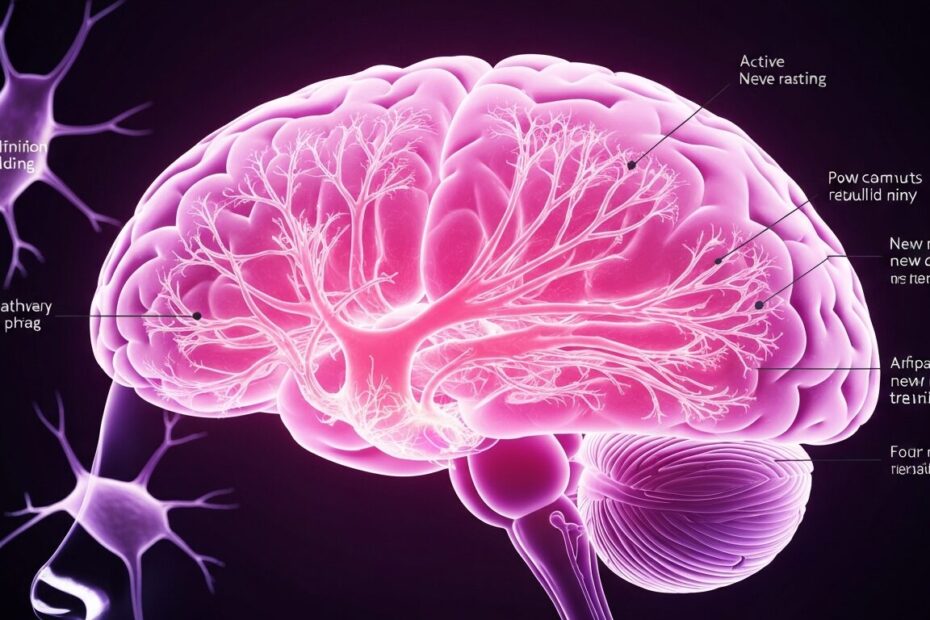
Personally, the science shows menopause is actually a powerful brain rebuild process.#Menopause #BrainHealth
Quick Video Breakdown: This Blog Article
This video clearly explains this blog article.
Even if you don’t have time to read the text, you can quickly grasp the key points through this video. Please check it out!
If you find this video helpful, please follow the YouTube channel “LifeNextDaily,” which delivers daily news.
https://www.youtube.com/@LifeNextDaily
Read this article in your native language (10+ supported) 👉
[Read in your language]
Menopause Literally Changes Brain Structure — Here’s What That Means
⚠️ DISCLAIMER: This article is for informational purposes only and does not constitute medical advice. Always consult a healthcare professional.
High-Impact Intro
👋 Hello, Health Hackers! Ever feel like your brain is going through a major renovation during midlife? You’re not alone—and science is backing it up. Recent research is shining a light on how menopause isn’t just about hot flashes and mood swings; it’s literally reshaping your brain. Based on insights from mindbodygreen.com, studies show that the menopausal transition involves structural changes in the brain, including shifts in gray matter, white matter, and even how neurons connect. Why does this matter now? In 2024 and beyond, with more women entering perimenopause earlier due to stress, lifestyle, and environmental factors, understanding these changes can empower better self-care and reduce stigma. Think of it as your brain’s “upgrade mode”—a bit chaotic, but potentially leading to renewed clarity and resilience. Stick around as we unpack the science with wit, analogies, and zero medical prescriptions.
The Problem (The “Why”)
Let’s start with an analogy: Imagine your brain as a bustling city during a massive infrastructure overhaul. Roads (neural pathways) are being repaved, buildings (brain regions) are getting facelifts, and traffic (hormonal signals) is all over the place. In the “old way” of thinking about menopause, it was dismissed as just “hormonal chaos” or worse, a decline—leading to isolation, misinformation, and untreated symptoms like brain fog, anxiety, or memory lapses. This bottleneck? It’s biological: dropping estrogen levels disrupt the brain’s equilibrium, affecting everything from emotion regulation to cognitive processing. Without awareness, women might push through with caffeine and willpower, risking burnout. Research suggests this phase can feel like running a marathon with mismatched shoes—possible, but unnecessarily tough.
The Science Behind It
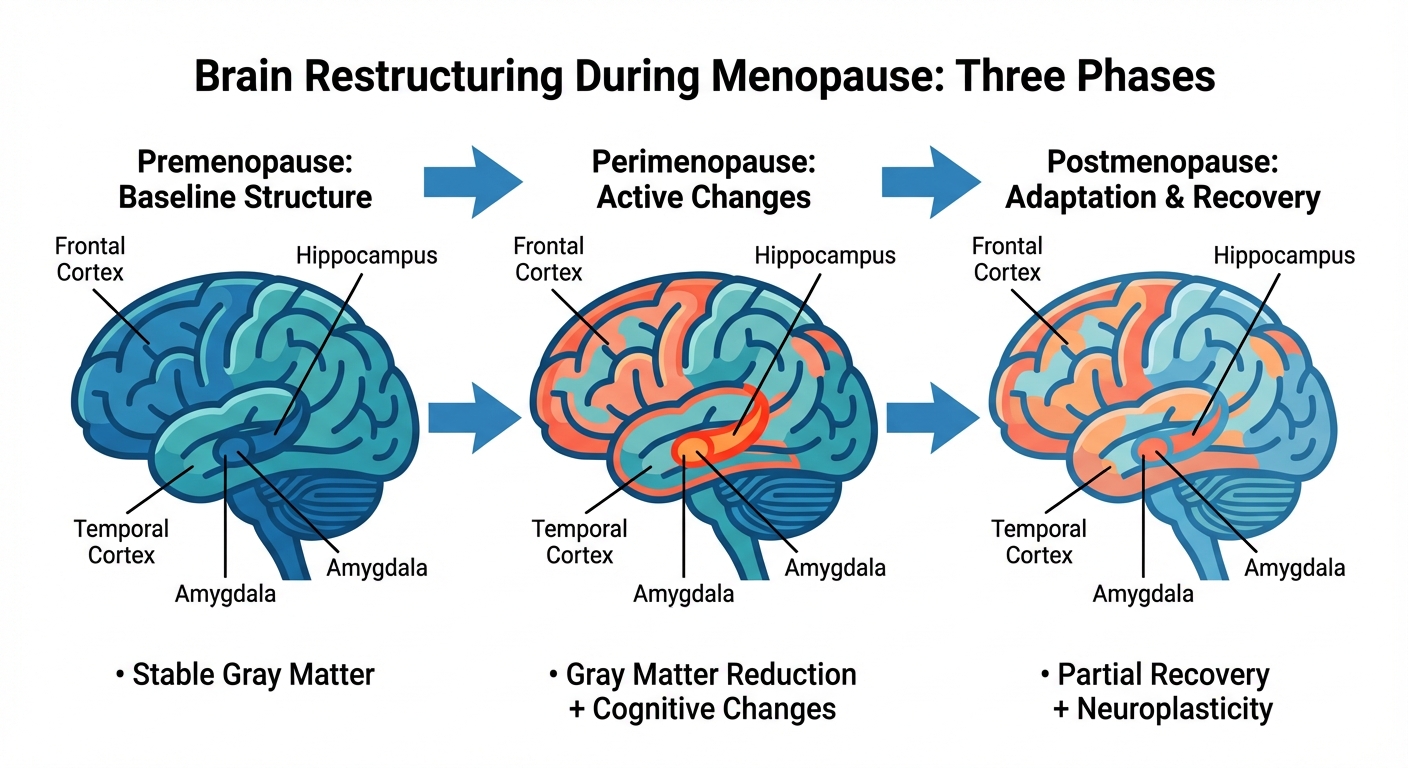
Under the hood, menopause triggers a fascinating rebuild. Here’s a beginner-friendly breakdown: Step 1—Hormonal shifts: Estrogen, a key player in brain health, plummets, affecting areas like the hippocampus (memory hub) and prefrontal cortex (decision-making zone). Step 2—Structural adaptations: Scans reveal decreases in gray matter volume but increases in white matter integrity, suggesting the brain is pruning inefficiencies and strengthening connections. Step 3—Neuroplasticity kicks in: Like a software update, this can lead to enhanced emotional intelligence post-transition. One perspective is that it’s not decay but evolution—your brain adapting to a new life stage.
| Aspect | Old Way (Pre-Menopause Stability) | New Way (Menopausal Rebuild) |
|---|---|---|
| Brain Volume | Steady gray matter, hormone-driven consistency | Temporary dips, followed by adaptive growth |
| Cognitive Impact | Reliable memory and focus | Brain fog possible, but potential for sharper intuition |
| Emotional Regulation | Estrogen-buffered stability | Initial volatility, leading to resilience |
Practical Use Cases & Application
How does this brain rebuild change daily life? For starters, in work: If you’re in a high-stress job, recognizing menopausal fog might prompt flexible scheduling or mindfulness breaks, turning potential setbacks into productivity hacks. Example 1: A teacher experiencing memory slips could use it as a cue to delegate tasks, fostering team collaboration. Example 2: In relationships, the emotional shifts might enhance empathy—research suggests post-menopausal women often report deeper connections. Example 3: For wellness routines, understanding this as a “rebuild” encourages tailored exercise, like yoga for neuroplasticity. Example 4: In decision-making, it could mean embracing slower, more intuitive choices over rushed ones, reducing errors in personal finance or career moves.
Educational Action Plan (How to Start)
Ready to navigate this? Here’s a step-by-step guide, keeping it educational and encouraging consultation with pros.
- Level 1 (Learn): Start by reading reputable sources like the North American Menopause Society’s website or books on women’s health. Watch TED Talks on neuroplasticity to grasp brain adaptability without overwhelm.
- Level 2 (Try Safely): Incorporate small habits like daily journaling to track mood patterns, or gentle activities such as walking in nature to support brain health. Consider discussing symptoms with a doctor for personalized insights—remember, this is about awareness, not self-diagnosis.
Conclusion & Future Outlook
In summary, while menopause’s brain changes bring risks like temporary cognitive dips, the rewards include potential for greater wisdom and adaptability—effort in self-care can yield significant gains. Uncertainties remain, as individual experiences vary; watch for emerging research on lifestyle interventions. Approach with curiosity, and always prioritize professional guidance.

👨💻 Author: SnowJon (Web3 & AI Practitioner / Investor)
A researcher who leverages knowledge gained from the University of Tokyo Blockchain Innovation Program to share practical insights on Web3 and AI technologies.
His motto is to translate complex technologies into forms that anyone can evaluate and use responsibly, fusing academic knowledge with practical experience.
*AI may assist drafting and structuring, but final verification and responsibility remain with the human author.
References
- Menopause Literally Changes Brain Structure — Here’s What That Means
- The Menopause Brain – North American Menopause Society
- Brain Changes During the Menopausal Transition – NCBI
- Menopause and the Brain – Harvard Health
- Menopause Impacts Human Brain Structure – Nature Scientific Reports
▼ AI tools to streamline research and content production (free tiers may be available)
Free AI search & fact-checking
👉 Genspark
Recommended use: Quickly verify key claims and track down primary sources before publishing
Ultra-fast slides & pitch decks (free trial may be available)
👉 Gamma
Recommended use: Turn your article outline into a clean slide deck for sharing and repurposing
Auto-convert trending articles into short-form videos (free trial may be available)
👉 Revid.ai
Recommended use: Generate short-video scripts and visuals from your headline/section structure
Faceless explainer video generation (free creation may be available)
👉 Nolang
Recommended use: Create narrated explainer videos from bullet points or simple diagrams
Full task automation (start from a free plan)
👉 Make.com
Recommended use: Automate your workflow from publishing → social posting → logging → next-task creation
※Links may include affiliate tracking, and free tiers/features can change; please check each official site for the latest details.