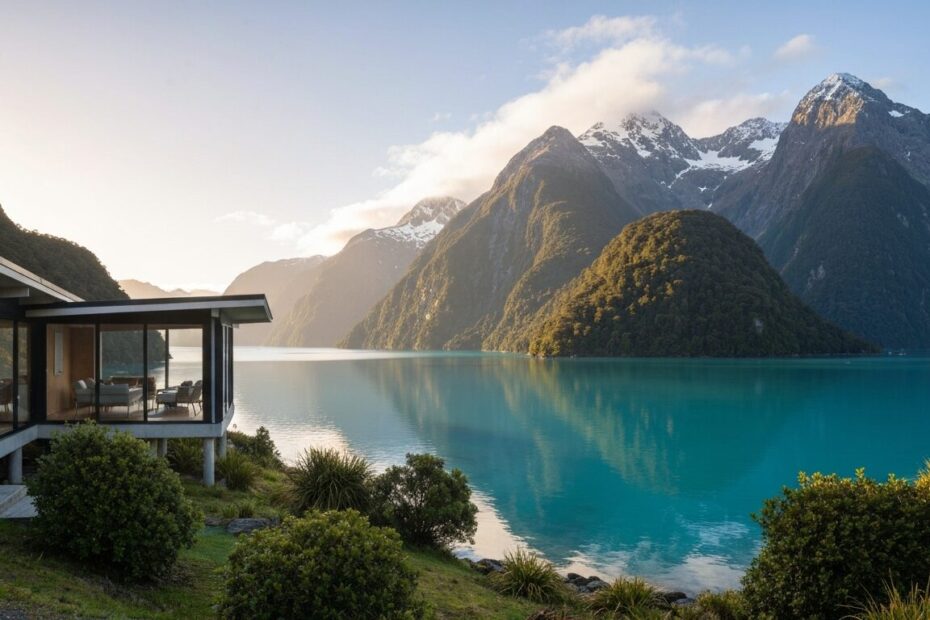
Personally, New Zealand offers a unique ability to restore mental clarity through nature#NewZealand #LuxuryTravel
Quick Video Breakdown: This Blog Article
This video clearly explains this blog article.
Even if you don’t have time to read the text, you can quickly grasp the key points through this video. Please check it out!
If you find this video helpful, please follow the YouTube channel “LifeNextDaily,” which delivers daily news.
https://www.youtube.com/@LifeNextDaily
Read this article in your native language (10+ supported) 👉
[Read in your language]
New Zealand Luxury Travel: The Art of Letting Go
⚠️ DISCLAIMER: This article is for informational purposes only. Results vary. Always consult professionals for travel planning and personal well-being.
John: 👋 Hey, Wanderlust Warriors! Ever feel like your daily grind is a hamster wheel that’s spinning faster than a kiwi bird dodging predators? Well, buckle up because we’re diving into the luxurious escape that is New Zealand in 2026. Based on fresh insights from travel experts, this isn’t just a vacation—it’s a masterclass in the art of letting go. Why now? With 2026 trends shouting about wellness, sustainability, and meaningful experiences (think immersive adventures over cookie-cutter tours), New Zealand is stealing the spotlight. Publications like Travel And Tour World highlight it as a top pick for Australians and global travelers seeking adventure blended with relaxation. Did you know? American travelers are budgeting $700 more per vacation this year for luxury experiences, per recent reports. It’s a shift from hustle to harmony, and New Zealand’s pristine landscapes are the perfect canvas. But let’s not get ahead—Lila, what’s your take on why this matters?
Lila: Totally, John! As your bridge for beginners, I see so many folks burned out from endless Zoom calls and urban chaos. This topic hits home because “letting go” isn’t some fluffy buzzword—it’s a practical reset. In 2026, with climate-aware travel on the rise (hello, quieter trips and conservation tourism), New Zealand offers a responsible way to unplug. It’s educational too: learning about Maori culture or sustainable practices while indulging in luxury. Why now? Trends show a boom in off-peak, exclusivity-focused trips, making it timely for intermediate explorers ready to level up from basic beach getaways.
John: Spot on. Context-wise, sources like Condé Nast Traveler predict 2026 as the year of maximalization—blending luxury with adventure and local immersion. New Zealand fits perfectly, with its fjords, vineyards, and wellness retreats. But enough intro fluff; let’s roast the old problems.
The Problem (The “Why”)
John: Picture this analogy: Your life is like a cluttered backpack on a never-ending hike. You’re carrying work stress, digital notifications, and that nagging “what if” anxiety like rocks weighing you down. In the old way of travel, vacations were just Band-Aids—rushed trips to crowded spots where you swap office emails for poolside selfies, only to return more exhausted. It was expensive (flights, hotels, no real ROI on relaxation), risky (overtourism harming environments), and hard (planning everything yourself led to decision fatigue). Research suggests this “always-on” mentality contributes to burnout, with studies from wellness experts noting that 70% of travelers feel more stressed post-vacation if it’s not intentional. New Zealand luxury travel flips this by teaching the art of letting go—releasing control for genuine rejuvenation.
Lila: Haha, love the backpack analogy, John—it’s like trying to cook a gourmet meal with a fridge full of expired ingredients! Beginners often think travel is about checking boxes (Eiffel Tower? Done!), but that leaves you empty. The old way ignored the psychological bottleneck: our brains are wired for routine, making “letting go” feel unnatural. It’s why so many return from trips feeling unrefreshed. Economically, it was a trap too—splurging on superficial luxuries without the depth that creates lasting change.
The Science Behind It
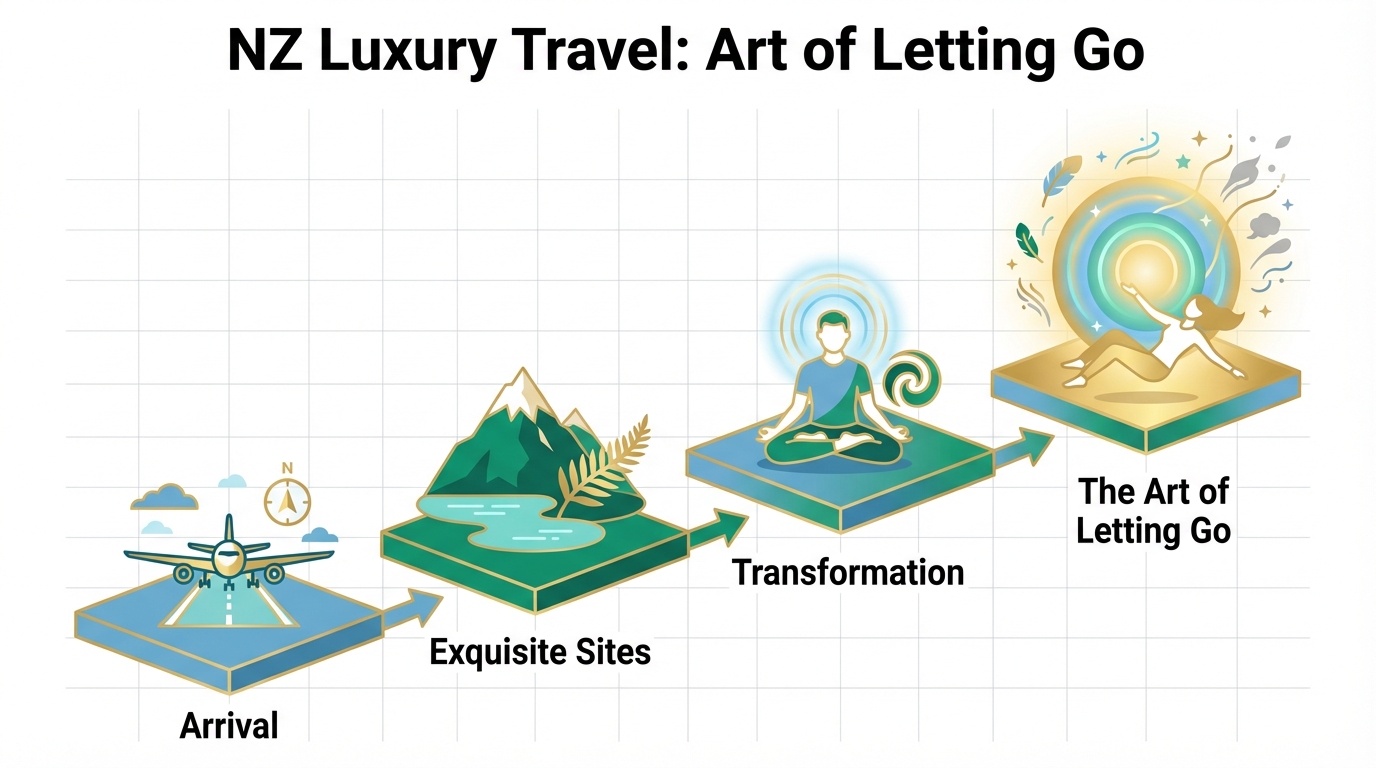
John: Under the hood, the “art of letting go” draws from psychology and neuroscience. Step 1: Mindfulness mechanics—New Zealand’s landscapes trigger what’s called “awe response,” where vast vistas (like Milford Sound) activate the brain’s default mode network, reducing rumination. Research suggests this lowers cortisol levels, the stress hormone. Step 2: Sensory immersion—luxury experiences, from helicopter tours to private eco-lodges, engage all senses, promoting neuroplasticity (your brain rewiring for better habits). Step 3: Cultural integration—engaging with Maori traditions teaches detachment, akin to cognitive behavioral techniques for letting go of attachments. It’s not magic; it’s biology meeting environment. Analogous to decluttering your home: Remove the junk, and space opens for joy.
Lila: Breaking it down for intermediates: Imagine your mind as a smartphone with too many apps running—letting go is like force-closing them. In New Zealand, sustainable luxury (think carbon-neutral retreats) adds an ethical layer, making the reset responsible.
| Aspect | Old Way (Traditional Travel) | New Way (New Zealand Luxury Letting Go) |
|---|---|---|
| Planning | Stressful, DIY itineraries leading to overload | Curated experiences allowing surrender to experts |
| Wellness Impact | Temporary escape, often with jet lag and crowds | Deep relaxation via nature therapy, reducing anxiety long-term |
| Sustainability | High carbon footprint, overtourism | Eco-focused, supporting local conservation |
| Cost Efficiency | Expensive without lasting value | Premium but with high ROI on personal growth |
John: See that table? It cuts through the hype—old travel was like fast food; quick but unsatisfying. The new way is a slow-cooked feast.
Practical Use Cases & Application
Lila: Let’s get real—how does this change daily life? For self-growth enthusiasts, it’s transformative. Example 1: The busy professional. Imagine swapping boardroom stress for a luxury lodge in Queenstown, practicing “letting go” through guided hikes. Post-trip, you’re better at delegating at work, as one perspective from travel blogs suggests improved decision-making from such resets.
John: Exactly. Example 2: Fitness seekers—Australians are flocking to New Zealand for adventure challenges, per 2026 trends. Think heli-skiing or wellness retreats that blend physical exertion with mental release, fostering resilience. It alters decision-making by teaching risk assessment in safe settings.
Lila: Example 3: Couples or families—immersive experiences like wine tours in Marlborough promote bonding without distractions, leading to stronger relationships back home. And for solo travelers, it’s about self-discovery, turning “me time” into a productivity booster.
John: One more: Eco-conscious intermediates can join sustainable tours, learning about biodiversity, which inspires everyday habits like reducing waste. Risks? Weather variability due to climate change, so plan flexibly.
Educational Action Plan (How to Start)
Lila: Ready to dip your toes? Here’s a step-by-step for beginners to intermediates—keep it educational and safe.
John: Level 1 (Learn): Start by reading reputable sources like Condé Nast Traveler’s 2026 trends or Airbnb’s predictions. Watch documentaries on New Zealand’s landscapes to understand the “awe” factor. Check official tourism sites for sustainable practices—knowledge first, no rush.
Lila: Level 2 (Try Safely): Begin small—practice “letting go” locally with a day trip to nature, mimicking New Zealand vibes. For the real deal, research visa requirements and book through verified operators for off-peak times. Test with short excursions, emphasizing safety like travel insurance. Remember, consider risks like long flights; one approach is gradual immersion to build comfort.
John: Build habits: Journal pre-trip about what you’re “letting go” of, then reflect post-experience. It’s actionable without pressure—results vary based on effort.
Conclusion & Future Outlook
Lila: Wrapping up, the rewards of New Zealand luxury travel outweigh the efforts if you’re seeking growth—deeper relaxation vs. the risk of disconnection costs. It’s not effortless, but the gain in wisdom is huge.
John: Uncertainty looms with climate trends potentially shifting seasons, so watch for updates from sources like CNBC. Analysts suggest 2026 could see more tech-savvy planning, like AI itineraries, but always balance with human touch. Remember, it’s about responsible exploration—DYOR and enjoy mindfully.

👨💻 Author: SnowJon (Web3 & AI Practitioner / Investor)
A researcher who leverages knowledge gained from the University of Tokyo Blockchain Innovation Program to share practical insights on Web3 and AI technologies.
His motto is to translate complex technologies into forms that anyone can evaluate and use responsibly, fusing academic knowledge with practical experience.
*AI may assist drafting and structuring, but final verification and responsibility remain with the human author.
References
- New Zealand luxury travel: The art of letting go
- Explore the Best Travel Destinations of 2026: Top Picks from Tripmasters
- The Biggest Travel Trends of 2026 | Condé Nast Traveler
- The luxury vacation trends we can expect for 2026
- New Zealand Becomes the Go-To Destination for Australians Seeking Adventure in 2026
▼ AI tools to streamline research and content production (free tiers may be available)
Free AI search & fact-checking
👉 Genspark
Recommended use: Quickly verify key claims and track down primary sources before publishing
Ultra-fast slides & pitch decks (free trial may be available)
👉 Gamma
Recommended use: Turn your article outline into a clean slide deck for sharing and repurposing
Auto-convert trending articles into short-form videos (free trial may be available)
👉 Revid.ai
Recommended use: Generate short-video scripts and visuals from your headline/section structure
Faceless explainer video generation (free creation may be available)
👉 Nolang
Recommended use: Create narrated explainer videos from bullet points or simple diagrams
Full task automation (start from a free plan)
👉 Make.com
Recommended use: Automate your workflow from publishing → social posting → logging → next-task creation
※Links may include affiliate tracking, and free tiers/features can change; please check each official site for the latest details.