It seems Trichloroethylene is a major hidden risk, making filtered water a smart choice.#Trichloroethylene #Parkinsons
Quick Video Breakdown: This Blog Article
This video clearly explains this blog article.
Even if you don’t have time to read the text, you can quickly grasp the key points through this video. Please check it out!
If you find this video helpful, please follow the YouTube channel “LifeNextDaily,” which delivers daily news.
https://www.youtube.com/@LifeNextDaily
Read this article in your native language (10+ supported) 👉
[Read in your language]
This Widely Used Chemical Doubles Parkinson’s Risk — How To Reduce Exposure
⚠️ DISCLAIMER: This article is for informational purposes only and does not constitute medical advice. Always consult a healthcare professional.
High-Impact Intro
👋 Hello, Health Hackers! Imagine you’re sipping your morning coffee, scrolling through the news, and bam—another headline about everyday chemicals turning against us. Today, we’re diving into a sneaky villain that’s been hiding in plain sight: trichloroethylene (TCE), a widely used industrial solvent that’s emerging as a serious risk factor for Parkinson’s disease. According to recent research, exposure to this chemical could double your risk of developing this debilitating neurological condition. But don’t panic just yet; we’re here to unpack the science, sprinkle in some wit, and arm you with knowledge on how to minimize exposure—responsibly, of course.
Why does this matter now? Well, Parkinson’s affects millions worldwide, and with an aging population, understanding environmental triggers is more crucial than ever. A study published in the Journal of the American Medical Association (JAMA) Neurology highlighted that people exposed to TCE had a 70% higher risk of Parkinson’s, but some analyses suggest it could effectively double the odds when considering long-term exposure. This isn’t just abstract science; TCE is found in everything from dry cleaning to metal degreasing, and it’s been phased out in some places but lingers in others. In our fast-paced world, where “convenience” often trumps caution, knowing about these hidden hazards empowers us to make informed choices. Stick around as we break it down with analogies, facts, and a dash of humor—because who says health education can’t be fun?
The Problem (The “Why”)
Let’s kick things off with an analogy: Picture your brain as a bustling city, with neurons zipping around like taxis delivering messages. Now, imagine a toxic fog Rolling in—TCE is that fog, gumming up the works and potentially leading to traffic jams that manifest as Parkinson’s symptoms like tremors and stiffness. The “old way” of dealing with chemicals like this? Ignorance is bliss, right? We’d use them liberally in industries, households, and even consumer products without a second thought, assuming regulations kept us safe. But here’s the rub: TCE is volatile, easily absorbed through skin or inhalation, and it doesn’t break down quickly in the environment. Historically, exposure was rampant in workplaces like factories or laundromats, making it hard, expensive, and risky to avoid—especially without awareness. Research suggests prolonged contact disrupts dopamine-producing cells, the very ones Parkinson’s targets, turning what should be a smoothly running neural highway into a pothole-filled nightmare.
The Science Behind It
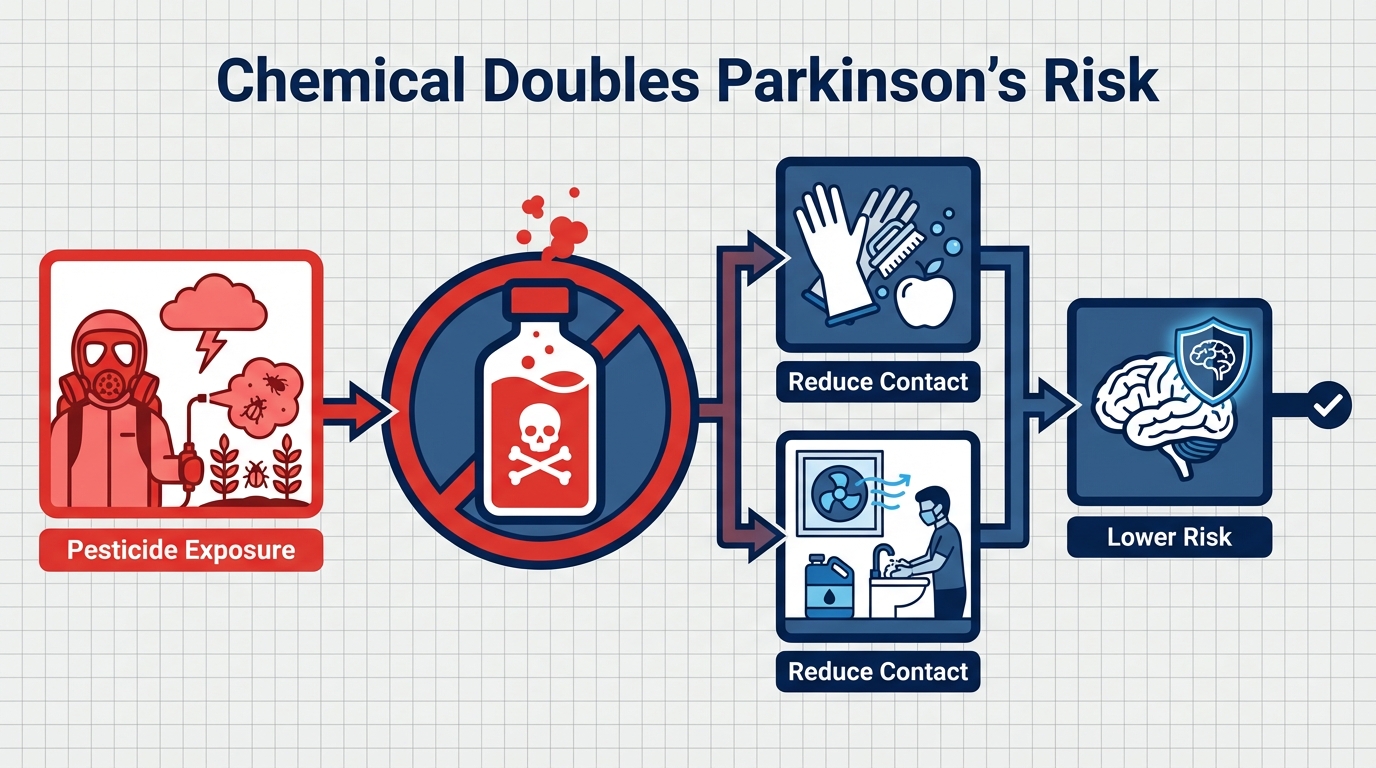
Under the hood, TCE’s mechanism is a bit like a sneaky saboteur in your body’s engine room. This chlorinated solvent sneaks past defenses, crossing the blood-brain barrier with ease. Once inside, it interferes with mitochondrial function—those are the powerhouses of your cells, folks. Research suggests it promotes oxidative stress, essentially rusting your neural machinery and leading to the death of dopamine neurons in the substantia nigra, a key brain region for movement control. Think of it step by step: 1) Exposure happens via inhalation, skin contact, or ingestion. 2) TCE metabolizes into toxic byproducts that accumulate. 3) These byproducts trigger inflammation and cell death, mimicking or accelerating Parkinson’s pathology. It’s not just correlation; animal studies show direct causation, and human epidemiology backs it up with elevated risks in high-exposure occupations.
| Aspect | Old Way (High Exposure Risk) | New Way (Reduced Exposure Approach) |
|---|---|---|
| Daily Encounter | Using TCE-laden products like spot removers or adhesives without ventilation. | Opting for water-based alternatives and ensuring good airflow. |
| Workplace Safety | No PPE, leading to chronic inhalation in factories. | Mandating masks and monitoring air quality. |
| Environmental Impact | Groundwater contamination from improper disposal. | Advocating for bans and using eco-friendly substitutes. |
| Health Outcome | Potentially doubled Parkinson’s risk per studies. | Lower risk through proactive avoidance. |
Practical Use Cases & Application
How does this knowledge change your daily life? Let’s get concrete. First, if you’re a hobbyist mechanic tinkering in the garage, TCE might lurk in degreasers—switching to safer options could prevent sneaky exposure during your weekend projects, keeping your brain’s “taxi system” running smoothly. Second, for office workers near industrial zones, understanding TCE in groundwater means advocating for filtered water at work, potentially safeguarding long-term neurological health. Third, parents might rethink dry-cleaning kids’ clothes; research suggests opting for wet cleaning services to minimize family-wide risks. Finally, in agriculture, where TCE analogs appear in pesticides, choosing organic produce could reduce indirect exposure, turning grocery shopping into a neuroprotective habit. These scenarios highlight how awareness shifts decision-making from passive to proactive, blending empathy for those affected with encouragement to act wisely.
Educational Action Plan (How to Start)
Ready to level up? Here’s a step-by-step guide tailored for beginners to intermediates—remember, this is educational, so focus on learning and safe experimentation.
- Level 1 (Learn): Start by reading the original mindbodygreen article and cross-reference with EPA guidelines on TCE. Watch documentaries like “The Devil We Know” for context on similar chemicals, and check PubMed for studies on Parkinson’s environmental links. Aim to understand the basics: What is TCE? Where is it found?
- Level 2 (Try Safely): Audit your home for potential sources—scan labels on cleaners or paints for chlorinated solvents. Experiment with ventilation: Open windows when using any strong chemicals. Test water quality if you live near industrial sites using free local resources. Build a habit of choosing “TCE-free” labeled products where available, starting small to observe how it feels without overhauling everything at once. Always prioritize safety and consult experts for personalized insights.
Conclusion & Future Outlook
In summary, while TCE poses real risks—potentially doubling Parkinson’s odds—the rewards of informed reduction strategies outweigh the effort, offering peace of mind and better health odds. Yet, uncertainty lingers; not everyone exposed develops issues, and more research is needed on thresholds. Watch for regulatory updates, like potential global bans, and emerging studies on neuroprotective lifestyles. Stay curious, stay safe, and remember: Knowledge is your best defense.

👨💻 Author: SnowJon (Web3 & AI Practitioner / Investor)
A researcher who leverages knowledge gained from the University of Tokyo Blockchain Innovation Program to share practical insights on Web3 and AI technologies.
His motto is to translate complex technologies into forms that anyone can evaluate and use responsibly, fusing academic knowledge with practical experience.
*AI may assist drafting and structuring, but final verification and responsibility remain with the human author.
References
- This Widely Used Chemical Doubles Parkinson’s Risk — How To Reduce Exposure
- Association of Occupational Exposure to Trichloroethylene With Risk of Parkinson Disease (JAMA Neurology)
- Trichloroethylene (TCE) Fact Sheet (U.S. Environmental Protection Agency)
- Trichloroethylene: A review of the literature from a health effects perspective (NCBI)
- Trichloroethylene and Parkinson’s Disease (Parkinson’s Foundation)
▼ AI tools to streamline research and content production (free tiers may be available)
Free AI search & fact-checking
👉 Genspark
Recommended use: Quickly verify key claims and track down primary sources before publishing
Ultra-fast slides & pitch decks (free trial may be available)
👉 Gamma
Recommended use: Turn your article outline into a clean slide deck for sharing and repurposing
Auto-convert trending articles into short-form videos (free trial may be available)
👉 Revid.ai
Recommended use: Generate short-video scripts and visuals from your headline/section structure
Faceless explainer video generation (free creation may be available)
👉 Nolang
Recommended use: Create narrated explainer videos from bullet points or simple diagrams
Full task automation (start from a free plan)
👉 Make.com
Recommended use: Automate your workflow from publishing → social posting → logging → next-task creation
※Links may include affiliate tracking, and free tiers/features can change; please check each official site for the latest details.