Personally, an incline walking treadmill makes staying active during work effortless.#fitness #wellness
Quick Video Breakdown: This Blog Article
This video clearly explains this blog article.
Even if you don’t have time to read the text, you can quickly grasp the key points through this video. Please check it out!
If you find this video helpful, please follow the YouTube channel “LifeNextDaily,” which delivers daily news.
https://www.youtube.com/@LifeNextDaily
Read this article in your native language (10+ supported) 👉
[Read in your language]
This Incline Walking Treadmill Helped Me Add 1,500 Steps To My Day
⚠️ DISCLAIMER: This article is for informational purposes only and does not constitute medical advice. Always consult a healthcare professional.
John: 👋 Hello, Health Hackers! Ever feel like your desk job is slowly turning you into a sloth on a couch? You’re not alone. In our fast-paced world, where sitting has become the new smoking, finding ways to sneak in movement without ditching your productivity is gold. That’s where incline walking treadmills come in—like the FlexiSpot model that’s been making waves. Based on real-user experiences, this bad boy helped one person rack up an extra 1,500 steps a day without breaking a sweat (okay, maybe a light one). But why now? Well, with remote work still dominating in 2026, and studies showing that the average adult sits for 9-10 hours a day, tools like this aren’t just trendy; they’re a lifeline for combating sedentary lifestyles. Research from the World Health Organization highlights that insufficient physical activity contributes to 3.2 million deaths annually—yikes! Today, we’re diving into how an incline walking treadmill can level up your daily routine, blending empathy for your busy life with the cold, hard science. Stick around as Lila and I break it down with some humor, analogies, and zero fluff.
Lila: Hey everyone, Lila here—the one who makes sure we don’t leave you scratching your head. John loves his data dives, but let’s keep it real: if you’re a beginner just trying to hit those 10,000 steps without quitting your job, this is for you. We’ll explore why sitting is secretly sabotaging you, how these treadmills work their magic, and practical ways to integrate one into your life. No medical prescriptions here—just encouraging insights to get you moving.
The Problem (The “Why”)
John: Picture this: your body is like a high-performance car, but you’ve parked it in the garage all day, letting the engine idle. That’s modern life for many of us—chained to desks, Zoom calls, and endless emails. The “old way” meant squeezing workouts into lunch breaks or evenings, which often felt like trying to fit a square peg into a round hole. It was hard because willpower alone doesn’t cut it; biology fights back. Sedentary behavior leads to muscle atrophy, poor circulation, and even metabolic slowdowns. Research suggests that prolonged sitting increases risks for heart disease, diabetes, and even mental health dips—think of it as your body’s “low battery” mode kicking in prematurely.
Lila: Exactly, John. It’s like being stuck in traffic: you know you need to move, but everything’s jammed. For beginners, the bottleneck is accessibility—gyms are expensive, time is scarce, and motivation? Forget it after a long day. The old way relied on big, bulky equipment or outdoor walks that weather or schedules derail. Plus, it’s risky: jumping into intense exercise without buildup can lead to injuries. One perspective is that we’re evolutionarily wired for movement—our ancestors walked miles daily—but now, we’re battling “desk disease.” Humor me: if your butt’s glued to a chair, you’re basically fermenting like forgotten yogurt in the fridge. Not pretty!
John: Spot on, Lila. Let’s roast the hype a bit: those standing desks? Great start, but they don’t burn calories like walking does. The economic cost? Billions in healthcare from inactivity-related issues. Enter incline walking treadmills—a bridge from “couch potato” to “active achiever” without the old hassles.
The Science Behind It
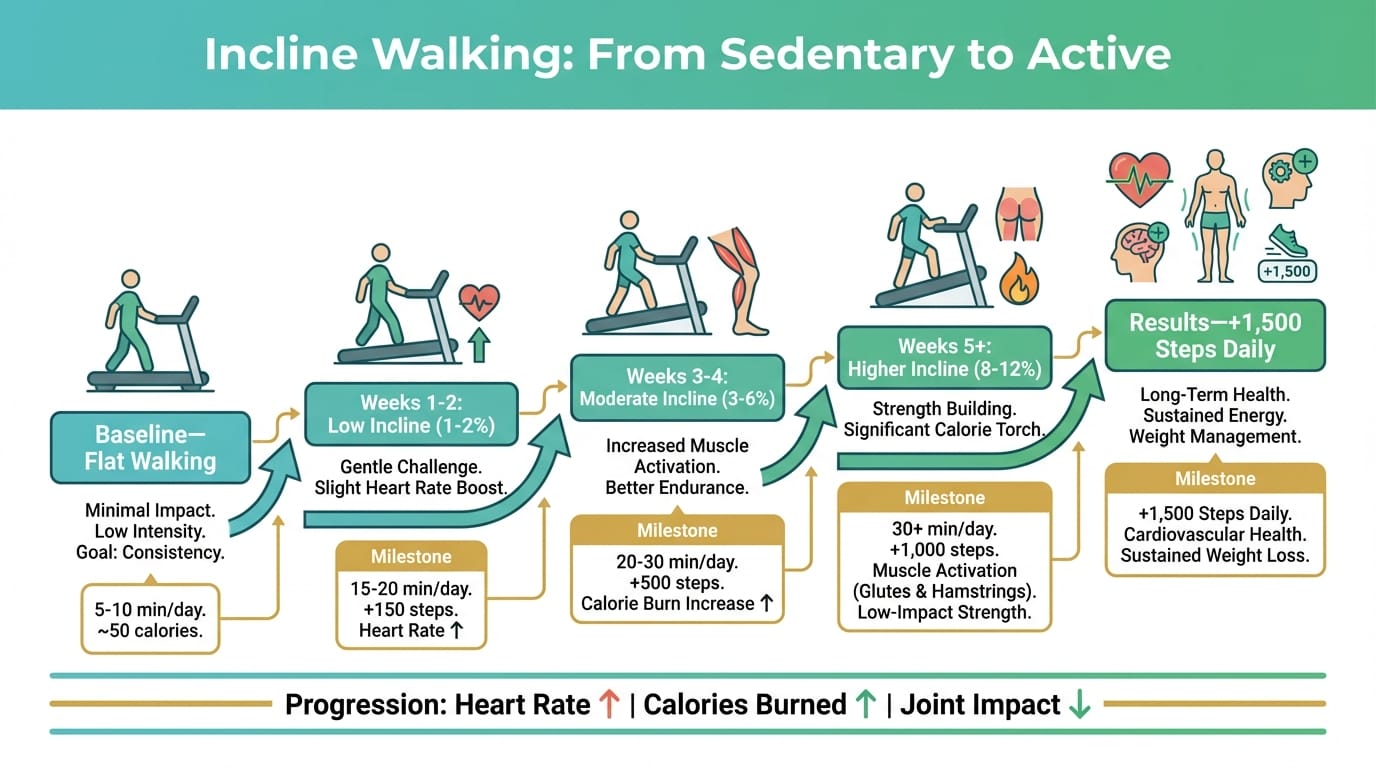
John: Alright, let’s pop the hood on how an incline walking treadmill like the FlexiSpot works. At its core, it’s a compact machine that fits under your desk, allowing you to walk while working. The “incline” feature simulates uphill terrain, ramping up the intensity without needing speed. Scientifically, walking on an incline engages more muscle groups—your glutes, hamstrings, and calves fire up like they’re climbing a hill in a video game. This boosts calorie burn by up to 50% more than flat walking, per exercise physiology studies. It also improves cardiovascular health by increasing heart rate gradually, mimicking low-impact cardio.
Break it down step-by-step for beginners:
1. **Mechanics of Movement:** The belt moves at a slow pace (think 1-4 mph), powered by a quiet motor. Incline adjusts from 0-10% or more, forcing your body to work against gravity—like pushing a shopping cart uphill.
2. **Biological Benefits:** Research suggests this activates slow-twitch muscle fibers, enhancing endurance. It also releases endorphins, those feel-good chemicals, reducing stress. Analogy: It’s like upgrading from a bicycle to an e-bike—effortless assist for your daily grind.
3. **Tech Integration:** Many models, like FlexiSpot’s, have auto-incline and app connectivity for tracking steps, but we’re keeping it educational—no promotions here.
Lila: Thanks for the breakdown, John. For intermediates, consider how this ties into NEAT (Non-Exercise Activity Thermogenesis)—the calories you burn just living actively. It’s not about marathons; it’s sustainable movement. But hey, if you’re new, start slow to avoid overdoing it.
| Aspect | Old Way (Traditional Desk Setup) | New Way (Incline Walking Treadmill) |
|---|---|---|
| Daily Steps | Limited to breaks; often under 5,000 | Easily adds 1,500+ while working |
| Calorie Burn | Minimal; sedentary burn rate | Increased by incline; up to 200-300 extra/hour |
| Health Risks | Higher chance of metabolic issues | Reduces risks with consistent movement |
| Convenience | Requires separate time/equipment | Integrates into workflow seamlessly |
John: See that table? It cuts through the noise. The new way isn’t perfect—noise or space could be issues—but it’s a game-changer for many.
Practical Use Cases & Application
Lila: So, how does this actually change your day? Let’s get concrete with examples tailored to health enthusiasts.
1. **Remote Worker Warrior:** Imagine typing emails while walking uphill at 2 mph. One user added 1,500 steps during calls, boosting focus via increased blood flow. It’s like multitasking in a cooking show—chopping veggies while the pot simmers.
2. **Beginner Fitness Fan:** If you’re starting from zero, use it for 20-minute sessions to build habits. Research suggests this low-impact approach helps with weight management without joint strain—perfect for intermediates aiming for consistency.
3. **Mental Health Booster:** Walking releases BDNF (brain-derived neurotrophic factor), like fertilizer for your neurons. Picture it as debugging your mind during a stressful day.
4. **Family Integrator:** Share it with household members for evening strolls while watching TV—turning passive time active. Humor alert: No more “Netflix and chill” turning into “Netflix and chill… out forever.”
John: These scenarios empower daily decisions. Consider risks like improper posture leading to back strain—always prioritize form.
Educational Action Plan (How to Start)
Lila: Ready to dip your toes? Here’s a step-by-step guide, keeping it safe and educational.
**Level 1 (Learn):** Start by reading reputable sources on sedentary risks, like WHO guidelines or exercise physiology books. Watch free videos on walking benefits to understand the science—think of it as scouting the terrain before hiking.
**Level 2 (Try Safely):** Begin with short, flat walks (5-10 minutes) to test balance. Gradually add incline, monitoring your body’s response. Track steps via a simple app or journal. For intermediates, experiment with intervals, but always warm up. Remember, results vary—consult pros if needed.
John: Emphasize safety: Start small to avoid burnout. It’s like planting seeds—patience yields the harvest.
Conclusion & Future Outlook
John: Wrapping up, the rewards of an incline walking treadmill outweigh the efforts for many: more steps, better health, less guilt. But risks like over-reliance or ignoring body signals exist—balance is key. Looking ahead, with AI integrations in fitness tech by 2026, these could get smarter, but uncertainty looms with market saturation. Watch for evidence-based innovations.
Lila: Ultimately, it’s about sustainable movement. Stay curious, stay moving!

👨💻 Author: SnowJon (Web3 & AI Practitioner / Investor)
A researcher who leverages knowledge gained from the University of Tokyo Blockchain Innovation Program to share practical insights on Web3 and AI technologies.
His motto is to translate complex technologies into forms that anyone can evaluate and use responsibly, fusing academic knowledge with practical experience.
*AI may assist drafting and structuring, but final verification and responsibility remain with the human author.
References
- This Incline Walking Treadmill Helped Me Add 1,500 Steps To My Day
- The 9 Best Treadmills 2026: NordicTrack, JTX and more tested
- Best Tested Walking Pads (2025): Urevo, WalkingPad, Sperax | WIRED
- World Health Organization: Physical Activity
- The Effects of Incline Walking on Energy Expenditure