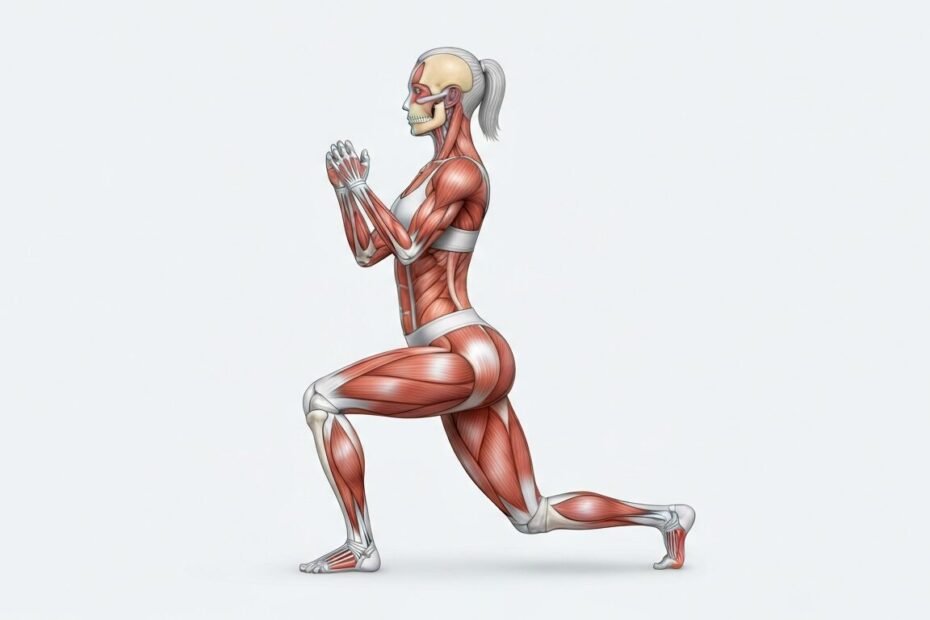
In my view, consistent injury prevention is far better than reactive rehab.
—#womenshealth #fitness
—
Quick Video Breakdown: This Blog Article
This video clearly explains this blog article.
Even if you don’t have time to read the text, you can quickly grasp the key points through this video. Please check it out!
If you find this video helpful, please follow the YouTube channel “LifeNextDaily,” which delivers daily news.
https://www.youtube.com/@LifeNextDaily
Read this article in your native language (10+ supported) 👉
[Read in your language]
4 Witty Ways Every Woman Can Prevent Injury: Straight Talk from an Orthopedic Surgeon
⚠️ DISCLAIMER: This article is for informational purposes only and does not constitute medical advice. Always consult a healthcare professional.
John: 👋 Hello, Health Hackers! Ever feel like your body’s a finely tuned machine that suddenly decides to throw a wrench in the works? As a life strategist who’s seen his share of wellness myths, I’m here to cut through the fluff. Today, we’re diving into “4 Ways Every Woman Can Prevent Injury,” inspired by insights from an orthopedic surgeon. Why now? Well, with more women embracing active lifestyles—from yoga flows to marathon runs—the injury rates are climbing. Research suggests that women are up to 8 times more likely to suffer ACL injuries than men due to anatomical differences. But fear not; this isn’t about bubble-wrapping yourself. It’s about smart, science-backed strategies to stay in the game.
Lila: Hey everyone, Lila here, your bridge for beginners. John’s right—staying active shouldn’t mean courting disaster. In a world where women’s health often gets glossed over, topics like this matter because prevention empowers. Think about it: post-pandemic, we’re all moving more, but without the right know-how, that enthusiasm can lead to setbacks. Let’s unpack this empathetically, with a dash of humor, so you can laugh off the risks and stride forward confidently.
John: Spot on, Lila. The context? Women’s bodies face unique challenges—hormonal fluctuations, bone density shifts post-menopause, and even footwear fiascos. But armed with orthopedic wisdom, we can turn potential pitfalls into power moves. Stick around; we’ll analogize, analyze, and action-plan our way to injury-free living.
The Problem (The “Why”)
Lila: Okay, let’s get real: Why do injuries happen more to women, and why is prevention such a big deal? Imagine your body as a bustling city—bones as skyscrapers, muscles as roads, and joints as intersections. In the “old way,” we’d just charge ahead, ignoring traffic jams until a crash occurs. That’s like driving without brakes; fun until it’s not.
John: Exactly. The old approach relies on luck and grit: push through pain, skip warm-ups, and hope for the best. But biologically, women often deal with wider hips leading to knee valgus (that inward collapse), lower muscle mass in certain areas, and estrogen’s influence on ligament laxity. Research suggests this makes overuse injuries like stress fractures or tendonitis more common. It was hard because prevention felt like guesswork—expensive PT sessions after the fact, or restrictive advice that killed the joy of movement. The risk? Chronic pain, sidelined goals, and a cycle of frustration.
Lila: And psychologically, it’s a bottleneck too. Fear of injury can make us avoid activity altogether, leading to sedentary traps. The old way was reactive: wait for the sprain, then rehab. But that’s inefficient and demoralizing, like fixing a leaky roof during a storm instead of sealing it beforehand.
The Science Behind It
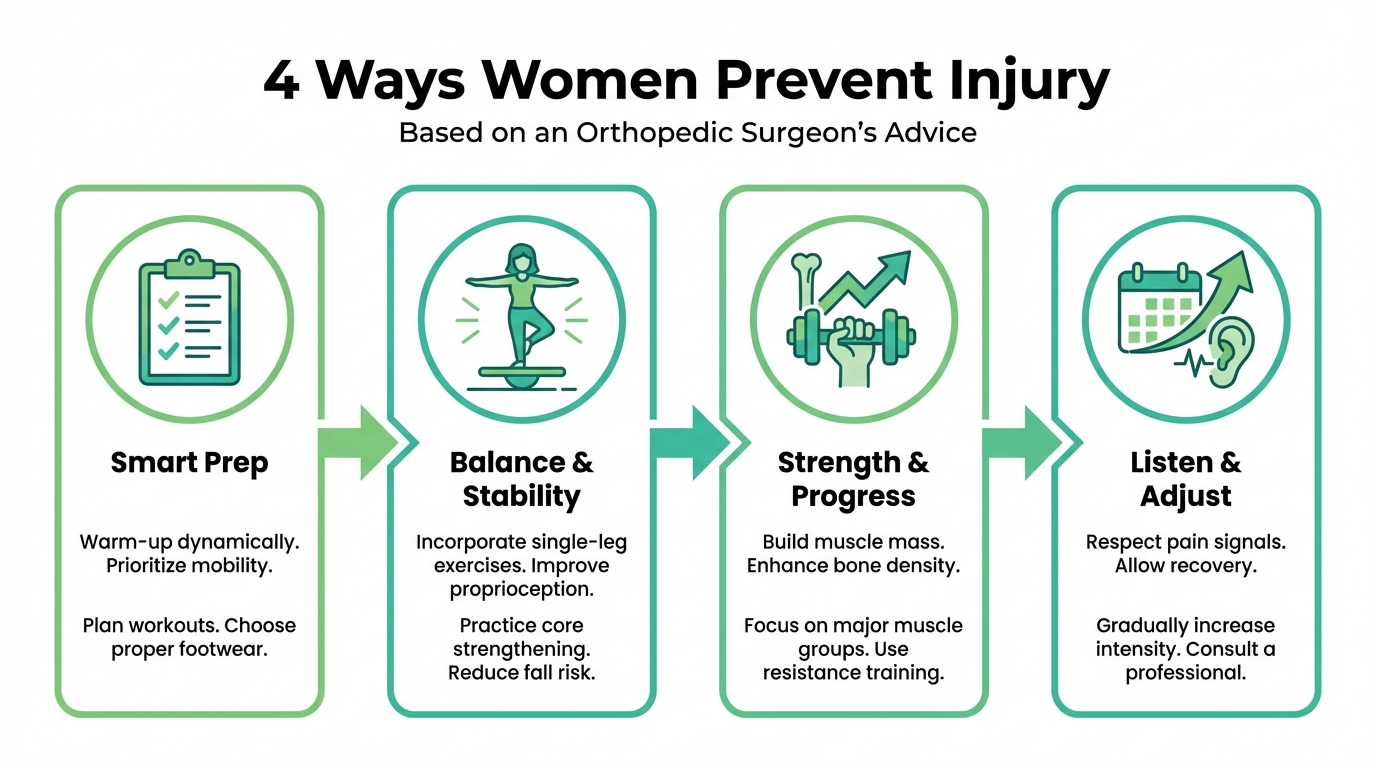
John: Under the hood, preventing injuries boils down to biomechanics, physiology, and smart habits. Let’s break it into beginner-friendly steps. First, understand your anatomy: Women’s Q-angle (the angle from hip to knee) can stress joints more. Step one: Build strength asymmetrically—focus on glutes and core to stabilize. Research suggests resistance training can reduce injury risk by up to 50%.
Lila: Step two: Flexibility isn’t just bending; it’s about dynamic mobility. Think of it like oiling a hinge—static stretches are old-school, but yoga or Pilates enhances range without over-laxity.
John: Step three: Nutrition and recovery. Bones need calcium and vitamin D, especially as estrogen dips. One perspective is incorporating anti-inflammatory foods to support tissue repair. Finally, listen to your body—pain is a signal, not a badge of honor.
| Aspect | Old Way | New Way |
|---|---|---|
| Strength Training | Sporadic or none, leading to imbalances | Targeted routines for glutes, core, and stabilizers |
| Warm-Up | Skipped or minimal, risking strains | Dynamic movements to increase blood flow |
| Recovery | Ignore and push through | Incorporate rest, nutrition, and monitoring |
| Footwear | Fashion over function, causing misalignments | Supportive shoes tailored to activity |
Lila: See? The new way flips the script from reactive to proactive, making injury prevention accessible.
Practical Use Cases & Application
John: How does this change daily life? Let’s get concrete. Example one: The weekend warrior mom. Instead of jumping into a HIIT class cold, she warms up with arm circles and leg swings—research suggests this cuts sprain risk. Now, she chases kids without knee woes.
Lila: Example two: Office worker turned runner. By strengthening her hips with bridges, she avoids IT band syndrome. It transforms her jogs from painful to empowering, boosting mental health too.
John: Third: Post-menopausal hiker. Focusing on bone-building weights and balance exercises prevents falls. One perspective is it enhances confidence in adventures.
Lila: Fourth: Yoga enthusiast. Proper form checks and recovery days prevent overuse. This keeps her practice sustainable, turning potential burnout into lifelong wellness.
Educational Action Plan (How to Start)
John: Ready to act? Here’s a step-by-step, no-hype plan.
Lila: Level 1 (Learn): Start by reading reputable sources like the American Orthopaedic Society for Sports Medicine. Watch free videos on biomechanics—think TED Talks on women’s health. Check your posture in a mirror; note any asymmetries.
John: Level 2 (Try Safely): Begin with small habits. Warm up for 5-10 minutes before activity—try marching in place. Incorporate bodyweight exercises like squats twice a week, focusing on form. Track how you feel in a journal, and consider the risks of overdoing it. Remember, this is educational—consult pros for personalization.
Lila: Build gradually; if something hurts, stop and reassess.
Conclusion & Future Outlook
John: Summing up: The rewards of prevention—pain-free movement, sustained energy—outweigh the effort of habits. Risks? Ignoring signals could lead to setbacks, but balanced approaches minimize that.
Lila: Looking ahead, advancements in wearable tech might offer real-time feedback, but uncertainty remains—always prioritize evidence. Watch for evolving research on gender-specific training.

👨💻 Author: SnowJon (Web3 & AI Practitioner / Investor)
A researcher who leverages knowledge gained from the University of Tokyo Blockchain Innovation Program to share practical insights on Web3 and AI technologies.
His motto is to translate complex technologies into forms that anyone can evaluate and use responsibly, fusing academic knowledge with practical experience.
*AI may assist drafting and structuring, but final verification and responsibility remain with the human author.
References
- 4 Ways Every Woman Can Prevent Injury, From An Orthopedic Surgeon
- Gender Differences in Musculoskeletal Injury Risk: A Review
- Preventing Injuries in Women – American Academy of Orthopaedic Surgeons
- Exercise and Injury Prevention – Mayo Clinic
- Tips to Prevent Injuries in Women – Harvard Health