
Tired of carb confusion? Discover how smart carbs empower women to boost energy and age gracefully. Science-backed insights await.
—#WomensHealth #SmartCarbs #AgingWell
—
Quick Video Breakdown: This Blog Article
This video clearly explains this blog article.
Even if you don’t have time to read the text, you can quickly grasp the key points through this video. Please check it out!
If you find this video helpful, please follow the YouTube channel “LifeNextDaily,” which delivers daily news.
https://www.youtube.com/@LifeNextDaily
Read this article in your native language (10+ supported) 👉
[Read in your language]
Want To Age Well? These Are The Carbs Women Should Be Eating
⚠️ DISCLAIMER: This article is for informational purposes only and does not constitute medical advice. Always consult a healthcare professional.
High-Impact Intro
👋 Hello, Health Hackers! Ever feel like carbs are the villains in your wellness story—the sneaky saboteurs lurking in every slice of bread or bowl of pasta? Well, buckle up, because we’re about to flip the script. In a world obsessed with low-carb diets (looking at you, keto warriors), new science is whispering a different tale, especially for women aiming to age gracefully. Think of carbs not as foes, but as fuel for your body’s inner engine, helping you cruise through menopause, maintain muscle, and keep that glow going strong.
Why does this matter now? With women’s health finally getting the spotlight it deserves—thanks to rising awareness around hormonal shifts and longevity—research is debunking old myths. For instance, a 2023 study in The Lancet highlighted how balanced carb intake could support metabolic health in midlife women, potentially reducing risks of chronic issues like osteoporosis or heart disease. Amidst the noise of fad diets, understanding the “right” carbs isn’t just trendy; it’s a game-changer for sustainable vitality. We’re talking energy that lasts, moods that stabilize, and a body that ages like fine wine, not wilted lettuce. Stick around as we unpack the science with wit, analogies, and zero fluff—because who has time for dietary drama?
The Problem (The “Why”)
Let’s kick things off with a relatable analogy: Imagine your body as a bustling city, where carbs are the delivery trucks hauling energy to every neighborhood (your cells). In the “old way,” low-carb trends treated these trucks like traffic jams to avoid entirely—slashing them out in favor of high-protein or fat-heavy routes. But for women, especially as we navigate hormonal highways like perimenopause, this can lead to detours: fatigue, mood swings, and even slowed metabolism. Research suggests that completely ditching carbs often backfires, leading to nutrient gaps and yo-yo energy levels. It was hard because it ignored biology—women’s bodies process carbs differently due to estrogen fluctuations, making blanket restrictions risky and unsustainable. Picture trying to run a marathon on an empty tank; that’s the old low-carb trap, expensive in terms of health costs and frustratingly ineffective for long-term aging well.
The Science Behind It
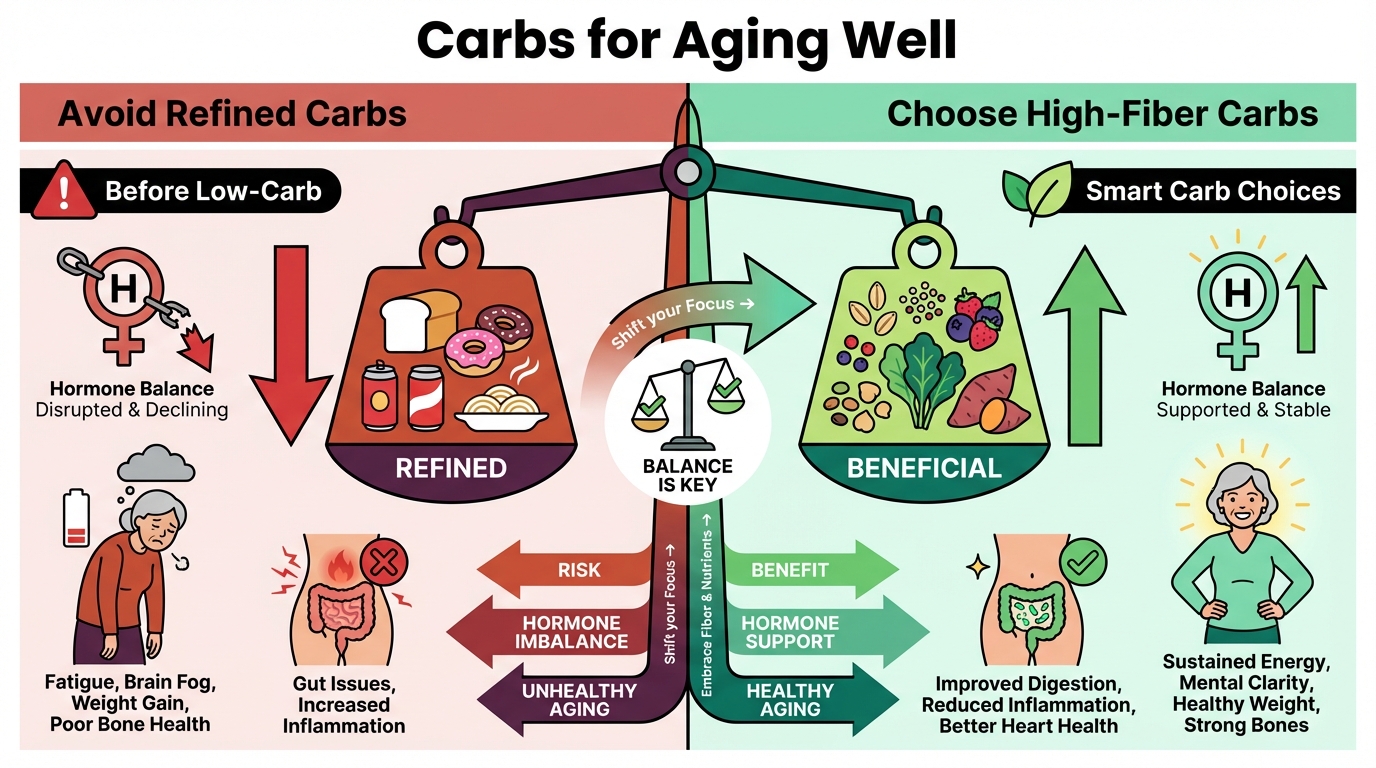
Diving into the nitty-gritty, carbs aren’t all created equal. The science boils down to how your body breaks them down: simple carbs (like sugary treats) spike blood sugar like a rollercoaster, while complex ones (think oats or sweet potatoes) provide a steady climb. For women, this matters because hormonal balance relies on stable glucose—estrogen and insulin dance together, and disruptions can accelerate aging markers like inflammation or bone loss.
Step 1: Digestion starts in the mouth, where enzymes turn carbs into glucose, your body’s preferred fuel. Step 2: In the bloodstream, insulin shuttles it to cells for energy or storage. Step 3: For aging well, fiber-rich complex carbs support gut health, which research links to better hormone regulation and reduced chronic disease risk. One perspective is that women over 40 benefit from these for maintaining muscle mass and cognitive sharpness, as per studies on Mediterranean-style eating. Humor alert: It’s like choosing a reliable sedan over a flashy sports car—less crash, more cruise control.
| Aspect | Old Way (Low-Carb Extremes) | New Way (Balanced Complex Carbs) |
|---|---|---|
| Energy Stability | Frequent crashes and fatigue from glycogen depletion. | Steady release, supporting workouts and daily tasks. |
| Hormonal Impact | Potential disruptions in estrogen and cortisol levels. | Supports balance, aiding menopause symptoms. |
| Long-Term Health | Risk of nutrient deficiencies and metabolic slowdown. | Promotes gut health and reduces inflammation risks. |
| Sustainability | Hard to maintain, leading to rebound weight gain. | Easier integration into enjoyable, varied meals. |
Practical Use Cases & Application
How does embracing the right carbs reshape a woman’s daily grind? Let’s get real with scenarios tailored to health and wellness.
Example 1: Busy Mom in Her 40s. Juggling kids and career, she swaps white rice for quinoa in family dinners. Research suggests this fiber boost stabilizes blood sugar, curbing those afternoon slumps and helping her power through without the crankiness. It’s like upgrading from a leaky battery to a solar panel—consistent energy for playtime and deadlines.
Example 2: Active Woman Approaching Menopause. She incorporates sweet potatoes and whole grains into post-workout meals. Science points to how these carbs replenish glycogen, supporting muscle recovery and bone density—key for warding off osteoporosis. Picture it as armor against the hormonal storm, keeping her hiking trails instead of sidelined.
Example 3: Office Worker Battling Stress. Opting for oat-based breakfasts over sugary cereals, she notices improved mood and focus. Studies link complex carbs to serotonin production, acting as a natural chill pill. Witty twist: It’s carb therapy without the therapist’s bill!
Example 4: Retiree Focusing on Longevity. Adding legumes like lentils to soups provides resistant starch, fostering gut microbes that research associates with anti-aging benefits. This changes decision-making from restrictive dieting to joyful, nutrient-packed eating, making social meals a health ally rather than an enemy.
Educational Action Plan (How to Start)
Ready to dip your toes? Here’s a step-by-step guide, keeping things educational and safe—remember, this isn’t personalized advice, so tailor it to your needs with professional input.
Level 1 (Learn): Start by reading beginner-friendly resources. Check out articles from reputable sites like Harvard Health on carb types and women’s nutrition. Watch short videos explaining glucose metabolism—aim for ones from nutrition experts. Track your current carb intake for a week using a simple journal to spot patterns, like how sugary snacks affect your energy.
Level 2 (Try Safely): Experiment in small, low-risk ways. For instance, replace one refined-carb meal (e.g., white bread) with a complex alternative like whole-grain toast, observing how it feels over a few days. Incorporate veggies like broccoli or berries into snacks for natural fiber—start with one serving daily. Monitor your body’s response, such as energy levels or digestion, and adjust gradually. Consider the risks, like if you have conditions like diabetes, where carb timing matters more. The goal is mindful exploration, not overhaul.
Conclusion & Future Outlook
In summary, while low-carb hype promises quick fixes, the rewards of choosing complex carbs—like sustained energy, hormonal harmony, and graceful aging—often outweigh the efforts, especially for women. That said, risks exist: overdoing even good carbs can lead to imbalances, and individual factors like activity level play in. It’s about balance, not perfection. Looking ahead, with ongoing research into personalized nutrition (think gut microbiome studies), we might see more tailored carb guidelines. Uncertainty remains—bodies vary, so stay curious and watch for updates from sources like the WHO. Here’s to aging well, one smart bite at a time!

👨💻 Author: SnowJon (Web3 & AI Practitioner / Investor)
A researcher who leverages knowledge gained from the University of Tokyo Blockchain Innovation Program to share practical insights on Web3 and AI technologies.
His motto is to translate complex technologies into forms that anyone can evaluate and use responsibly, fusing academic knowledge with practical experience.
*AI may assist drafting and structuring, but final verification and responsibility remain with the human author.
References
- Want To Age Well? These Are The Carbs Women Should Be Eating
- Carbohydrates – Harvard T.H. Chan School of Public Health
- Carbohydrate Intake in the Context of Exercise in Women – NCBI Study
- Carbohydrates: How Carbs Fit into a Healthy Diet – Mayo Clinic
- Women’s Health and Nutrition – The Lancet
- Healthy Diet – World Health Organization