
Is inflation eating your savings? Learn how the stock market is your ultimate shield to preserve and grow your wealth long-term.#InflationHedge #StockMarket #WealthProtection
Quick Video Breakdown: This Blog Article
This video clearly explains this blog article.
Even if you don’t have time to read the text, you can quickly grasp the key points through this video. Please check it out!
If you find this video helpful, please follow the YouTube channel “LifeNextDaily,” which delivers daily news.
https://www.youtube.com/@LifeNextDaily
Read this article in your native language (10+ supported) 👉
[Read in your language]
The Best Hedge
⚠️ WARNING: Technology and investments involve risks. This is not financial advice. DYOR (Do Your Own Research).
High-Impact Intro
👋 Hey, Aspiring Investors! Ever feel like your savings are getting eaten alive by inflation, like a sneaky fox raiding the henhouse? Well, buckle up because we’re diving into “The Best Hedge”—not some exotic plant for your garden, but the ultimate shield against the erosive power of rising prices. In a world where inflation can turn your hard-earned cash into confetti, understanding smart hedging strategies is more crucial than ever, especially as we head into 2025 with economic uncertainties looming.
Why does this matter now? Recent market insights, like those from A Wealth of Common Sense blog published just days ago, highlight that the stock market has historically been a powerhouse for outpacing inflation over the long haul. With inflation rates fluctuating and geopolitical tensions stirring the pot, as noted in sources like Forbes and Morningstar from 2025, investors are scrambling for reliable hedges. Prediction markets have quadrupled in capital, and hedge funds are betting big on volatility for 2026. But here’s the kicker: while short-term dips happen, the stock market’s track record suggests it’s your best bet for preserving wealth. Think of it as the tortoise in the race—slow and steady, but it wins against inflation’s hare.
Researching deep topics like market trends or inflation data can be exhausting—hours of scrolling through reports and analyses. Stop endless scrolling. Ask Genspark to summarize the facts for you.
The Problem (The “Why”)
Let’s get real: Inflation is like that uninvited guest at a party who slowly devours all the snacks. It erodes your purchasing power over time, making today’s dollar worth less tomorrow. Economically, this bottleneck happens because money supply grows faster than goods and services, or due to supply chain shocks—think oil prices spiking or global events disrupting trade. Without a hedge, your savings sit there, vulnerable, like a sitting duck in a pond full of alligators.
Analogy time: Imagine your wealth as a boat on a rising tide (inflation). If you don’t have oars or a sail (a hedging strategy), you’ll just drift aimlessly, possibly crashing into rocks. But with the right hedge, like investing in assets that appreciate faster than inflation, you can navigate those waters smoothly.
Need to explain this concept to your team or family? Use Gamma to generate a visual presentation in seconds.
Under the Hood: How it Works
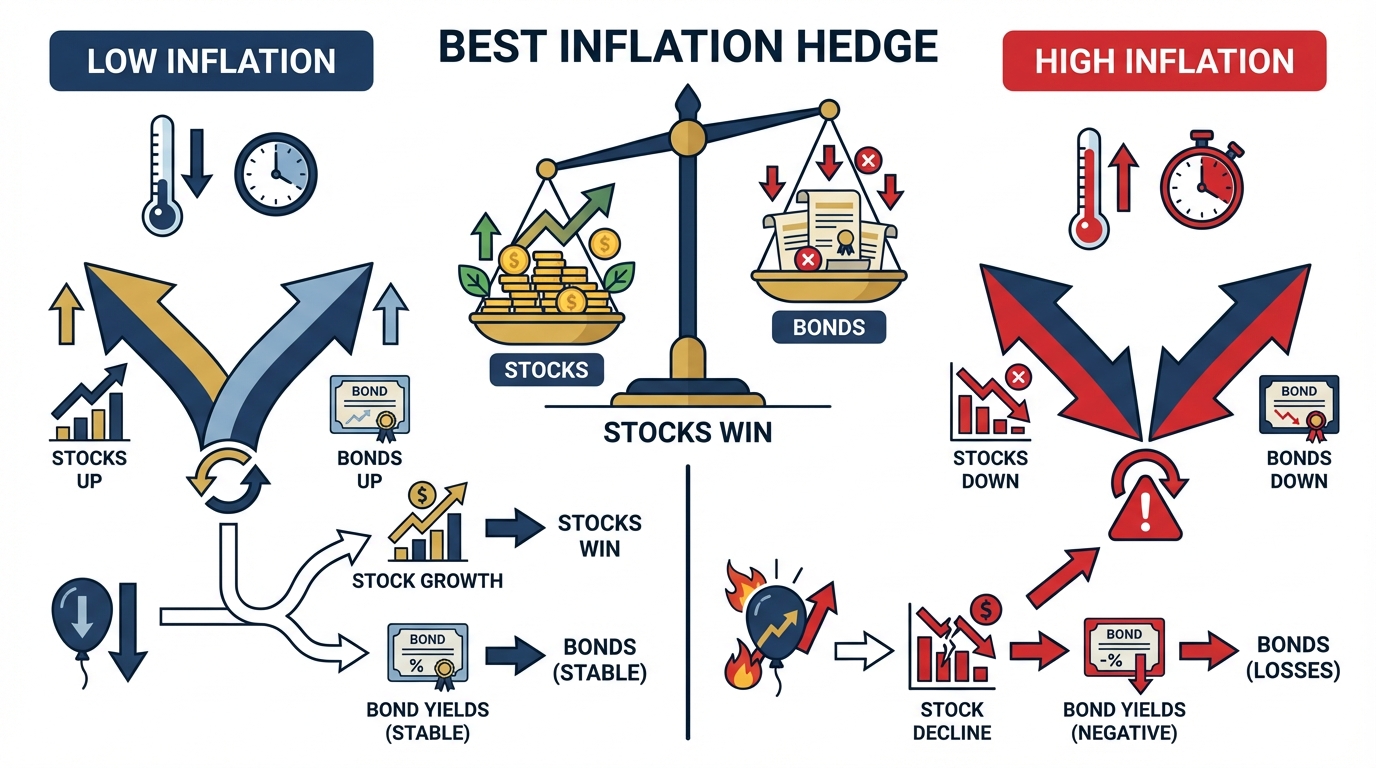
At its core, hedging against inflation involves allocating resources to assets that historically grow in value at a rate exceeding inflation. According to the blog “The Best Hedge” from A Wealth of Common Sense, the stock market stands out as a prime example. Why? Because equities represent ownership in companies that can raise prices, innovate, and expand, effectively passing on inflationary costs to consumers while rewarding investors with returns.
Break it down: Inflation measures like the CPI (Consumer Price Index) track average price increases. Stocks, particularly in diversified indices like the S&P 500, have delivered average annual returns of around 7-10% after inflation over decades. This isn’t magic—it’s compound growth fueled by corporate earnings, dividends, and market expansions. Research suggests that while bonds or cash might lag during high-inflation periods, equities often thrive, as seen in 2025’s performance where quant strategies yielded 45% returns, crushing benchmarks.
One perspective is to view it through Modern Portfolio Theory: Diversify to minimize risks while maximizing returns. But consider the risks—market volatility can lead to short-term losses, so it’s not a guarantee.
| Aspect | Old Way (Cash Savings) | New Way (Stock Market Hedge) |
|---|---|---|
| Inflation Protection | Low; interest rates often below inflation, leading to real losses. | High; historical returns outpace inflation by 4-7% annually. |
| Risk Level | Low volatility but high erosion risk. | Higher short-term volatility but long-term growth potential. |
| Accessibility | Easy; bank accounts for everyone. | Simple via ETFs or index funds, but requires research. |
| Examples | Savings accounts, CDs. | S&P 500 index, tech stocks like AI leaders. |
Practical Use Cases & Application
How does this change your daily life or portfolio? Imagine you’re a beginner investor in 2025, facing rising costs for groceries and rent. By hedging with stocks, you could allocate part of your savings to low-cost index funds, potentially growing your nest egg faster than inflation eats it away. For instance, amid global tensions boosting defense stocks like General Dynamics (as per Yahoo Finance insights), or AI tech plays highlighted by hedge funds, your portfolio becomes a shield.
In real scenarios: A young professional might use this to build retirement savings, countering inflation’s bite on future expenses. Or, during volatile times like November 2025’s market swings, hedge funds generated 15% returns by playing long and short themes. It’s not about getting rich quick—it’s about steady protection. Consider the risks, though; diversification is key to avoid overexposure.
Want to share this insight on TikTok/Shorts? Turn this article into a viral video using Revid.ai.
Educational Action Plan (How to Start)
Ready to hedge wisely? Here’s a step-by-step guide tailored for beginners to intermediates.
- Level 1 (Learn): Start by reading foundational resources like the A Wealth of Common Sense blog or Motley Fool’s guide on inflation-proof investments. Check charts on historical stock performance vs. inflation using tools like TradingView. Understand basics: Research suggests equities have beaten inflation 80% of the time over 20-year periods.
- Level 2 (Act): Open a brokerage account and invest small amounts regularly via Dollar Cost Averaging (DCA)—buying fixed amounts regardless of price to average out costs. Test with low-risk ETFs tracking the S&P 500. Monitor via apps, but remember, one perspective is to hold long-term; short-term trading amplifies risks.
Too much text? Let Nolang explain this document to you in a video summary.
Conclusion & Future Outlook
In summary, the rewards of hedging with the stock market—long-term growth outpacing inflation—far outweigh the risks if approached cautiously, but effort is required for research and patience. Versus just holding cash, the gain is in preserving real wealth. Looking ahead to 2026, with hedge funds eyeing volatility and AI trends persisting, the landscape favors informed investors. But always DYOR; markets can surprise, as seen in 2025’s leveraged ETF booms in gold and AI.
Smart people automate. Whether it’s health logs or price alerts, set up workflows with Make.com to save time.
🛑 General Disclaimer
This article is for educational purposes only. I am not a doctor or financial advisor. Information regarding health, investments, or law should be verified with professionals. DYOR and take responsibility for your own decisions.
🛠️ Tools Mentioned: