Want to turn back your biological clock by 12 years? A new study reveals a specific exercise routine could be your secret to extended youth.#Longevity #Exercise #AntiAging
Quick Video Breakdown: This Blog Article
This video clearly explains this blog article.
Even if you don’t have time to read the text, you can quickly grasp the key points through this video. Please check it out!
If you find this video helpful, please follow the YouTube channel “LifeNextDaily,” which delivers daily news.
https://www.youtube.com/@LifeNextDaily
Read this article in your native language (10+ supported) 👉
[Read in your language]
This Type Of Exercise Can Make You Live 12 Years Longer, Study Finds
⚠️ DISCLAIMER: This article is for informational purposes only and does not constitute medical advice. Always consult a healthcare professional.
John: 👋 Hello, Health Hackers! Ever feel like time is slipping away faster than sand through your fingers? Well, buckle up because recent research is flipping the script on aging. We’re talking about a specific type of exercise that could potentially add a whopping 12 years to your life—or at least slow down the biological clock by that much. Based on a study highlighted in mindbodygreen, a 75-minute workout routine focused on endurance and strength might just be the fountain of youth we’ve been searching for. But hold the hype—I’m John, your no-BS life strategist, and with my co-pilot Lila, we’re diving deep into this without the wellness woo-woo.
Lila: Hey everyone! As the beginner’s bridge here, I get it—claims like “live 12 years longer” sound too good to be true. But let’s ground this in reality. Why now? In 2025, with longevity science exploding (think Stanford studies showing aging spikes at 44 and 60), people are desperate for actionable ways to fight back. This isn’t about magic pills; it’s about movement that tweaks your cells. Research suggests that consistent exercise can limit disease and slow cellular aging, potentially making your body function like it’s 8 to 12 years younger. But researching all these studies? Exhausting. Stop endless scrolling. Ask Genspark to summarize the facts for you—it’s like having a personal research assistant.
John: Exactly. Context matters: We’re in an era where sedentary lifestyles are killing us slowly. The CDC reports that only 23% of adults get enough exercise, and with aging populations, this study’s findings are a wake-up call. It’s not just about living longer; it’s about living better—sharper mind, stronger body. Let’s break it down wittily and wisely.
The Problem (The “Why”)
John: Picture this: Your body is like an old car rusting in the garage. Without regular tune-ups, parts wear out—engine sputters (that’s your metabolism), tires deflate (muscle loss), and the whole thing grinds to a halt prematurely. That’s aging in a nutshell: sarcopenia (muscle decline), inflammation, and cellular fatigue accelerate after 40, as per CNN and Women’s Health reports. Studies show our bodies age rapidly in the 40s and 60s, with molecular changes spiking. Without intervention, you’re looking at frailty, disease, and a shorter lifespan. It’s the biological bottleneck where entropy wins—unless you fight back with exercise.
Lila: Oof, that analogy hits home, John. For beginners, it’s like ignoring oil changes until your car breaks down on the highway. The “why” is simple: Sedentary life speeds up aging markers like telomere shortening (those are like protective caps on your DNA). But hey, need to explain this to your skeptical family? Use Gamma to generate a visual presentation in seconds—diagrams make the science stick!
John: Spot on. The raw reality? Without strength and endurance training, you’re losing 3-5% muscle mass per decade after 30, per fitness experts. That’s not just vanity; it’s linked to higher mortality. Enter this 75-minute workout protocol—research suggests it counters that by boosting mitochondrial function and reducing inflammation. Let’s get under the hood.
The Science Behind It
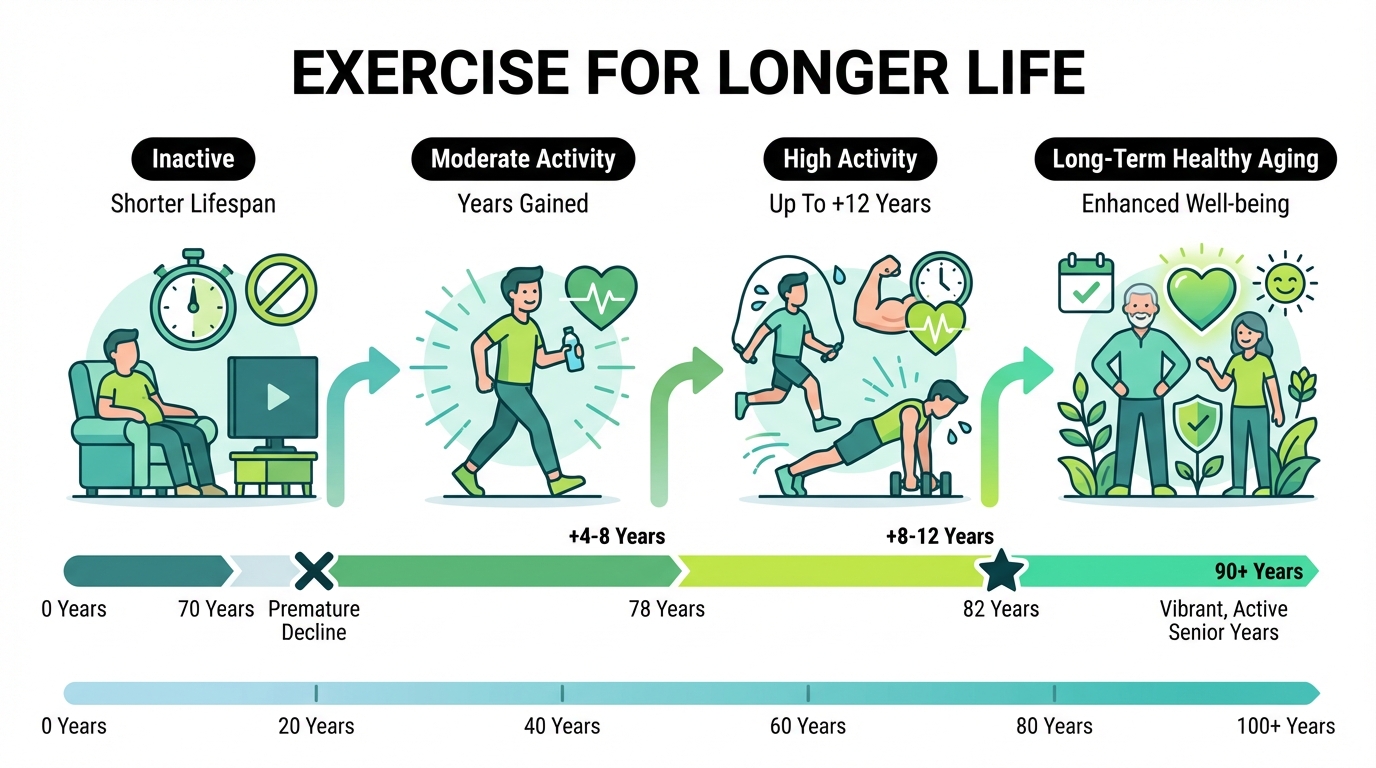
John: Alright, let’s cut through the fluff. The core mechanism? This isn’t your average jog; the study points to a 75-minute mix of moderate-to-vigorous aerobic exercise and strength training. Think cycling, running, or swimming combined with weights. Why 75 minutes? It’s the sweet spot—enough to trigger anti-aging cascades without overkill. Scientifically, exercise sparks autophagy (cells cleaning house), reduces oxidative stress, and enhances telomerase activity, effectively slowing biological aging by up to 12 years, as per the mindbodygreen article and supporting research from ScienceDaily.
Lila: For us intermediates, break it down: Endurance work trains your immune system (like veteran athletes having “younger” immune cells), while strength training builds muscle that acts as an anti-aging factory, pumping out myokines to fight inflammation. It’s like upgrading your body’s software—Huberman’s protocols style.
John: Precisely. To compare, let’s roast the old vs. new ways:
| Aspect | Old Way (Sedentary Lifestyle) | New Way (75-Minute Workout) |
|---|---|---|
| Cellular Impact | Accelerated telomere shortening, high inflammation | Slower aging, reduced inflammation via myokines |
| Muscle Maintenance | 3-5% loss per decade, leading to frailty | Preserves mass, potentially reverses 8 years of decline |
| Longevity Potential | Higher risk of chronic disease | Could add up to 12 functional years |
| Mental Benefits | Faster cognitive decline | Sharper brain, dementia protection (per 40-year study) |
John: See? The new way isn’t magic—it’s biochemistry. Exercise mimics anti-aging molecules, as recent findings show kidneys orchestrating whole-body responses.
Practical Use Cases & Application
Lila: So, how does this change daily life? For a busy parent, slot in 75 minutes thrice weekly—jog with weights, feel energy soar, chase kids without huffing. Office workers? Combat desk slump; stronger muscles mean better posture, fewer aches, and a brain that stays sharp for promotions.
John: In portfolios of health, this is diversification—mix aerobics (cycling for heart) with resistance (squats for bones). Seniors? It slows brain aging, per TODAY.com—walking or dancing prevents shrinkage. Want to share this on TikTok? Turn this article into a viral video using Revid.ai—humor included!
Lila: And for intermediates, track progress with MyFitnessPal; combine with optimism and sleep for an 8-year brain boost, as ScienceDaily notes.
Educational Action Plan (How to Start)
John: No fluff—here’s your zero-to-hero plan. We’re building sustainable habits, Atomic Habits style.
Lila: Level 1 (Learn): Read up on the study via mindbodygreen or check symptoms of aging (fatigue, weakness). Study Huberman’s exercise protocols for basics.
John: Level 2 (Act): Start small—15-minute walks building to 75 minutes. Week 1: Brisk walk 20 mins + bodyweight squats. Track with a journal. Too much text? Let Nolang explain this document to you in a video summary.
Lila: Level 3 (Optimize): Add variety—yoga for mobility (like the malasana squat to slow aging). Consult pros for personalization.
Conclusion & Future Outlook
John: Risks vs. rewards? Overdoing it could lead to injury, but moderated, the gains are massive—effort low, lifespan extension high. Future? With AI tracking and molecules mimicking exercise (ScienceDaily), longevity is evolving. Research suggests starting in midlife maximizes brain protection.
Lila: Smart people automate—whether it’s health logs or workout reminders, set up workflows with Make.com to save time.
🛑 Disclaimer
This article contains affiliate links. Tools mentioned are based on current information. Health/Finance decisions are your responsibility.
▼ Recommended Tools for Growth & Efficiency
-
🔍
Genspark
Cut through the noise. AI search that summarizes complex topics instantly. -
📊
Gamma
Visualize your ideas. Create diagrams and presentations in seconds. -
🎥
Revid.ai
Turn your knowledge into viral short videos for social impact. -
👨💻
Nolang
Learn any new skill (Coding, Finance, Biology) via AI tutoring. -
⚙️
Make.com
Automate your life admin, habit tracking, and financial alerts.
▼ Access to Future Assets (Infrastructure)
-
Start Asset Management / Crypto
👉 Global Crypto Exchange Guide (Free Sign-up)
References & Further Reading
- This Type Of Exercise Can Make You Live 12 Years Longer, Study Finds
- Study Finds Strength Training Can Make Your Body 8 Years Younger
- Even modest strength training can counter age-related decline | CNN
- Your Body Ages Rapidly In Your 40s And 60s. Doctors Say These Habits Will Help Slow It Down
- These simple habits could make your brain 8 years younger, study finds | ScienceDaily