
Is your brain aging too fast? Learn how a key metabolic marker drives early Alzheimer’s-like changes in young adults.#BrainHealth #MetabolicHealth #Alzheimers
Quick Video Breakdown: This Blog Article
This video clearly explains this blog article.
Even if you don’t have time to read the text, you can quickly grasp the key points through this video. Please check it out!
If you find this video helpful, please follow the YouTube channel “LifeNextDaily,” which delivers daily news.
https://www.youtube.com/@LifeNextDaily
Read this article in your native language (10+ supported) 👉
[Read in your language]
Alzheimer’s-Like Changes Seen In Young Adults — This Metabolic Marker Drives It
⚠️ DISCLAIMER: This article is for informational purposes only and does not constitute medical advice. Always consult a healthcare professional.
High-Impact Intro: Why Your Brain Might Be Aging Faster Than You Think
👋 Hello, Health Hackers! Imagine waking up in your 20s or 30s, feeling sharp as a tack, but sneaky changes are already brewing in your brain—like a slow-burning fuse you didn’t even light. Recent buzz in the science world is shining a light on Alzheimer’s-like shifts happening way earlier than we thought, especially in young adults dealing with obesity or metabolic woes. Why does this matter now? Well, with rising rates of metabolic issues like insulin resistance and nutrient deficiencies hitting younger folks (thanks, modern diets and lifestyles), we’re seeing warning signs of cognitive decline that could snowball into bigger problems down the line. Research from sources like ScienceDaily and SciTechDaily points to early brain stress markers resembling those in Alzheimer’s, driven by things like low choline levels and inflammation. It’s not just “old age” stuff anymore; it’s a wake-up call for prevention in your prime years.
This isn’t scare tactics—it’s empowerment. Understanding these metabolic markers can help you make smarter choices today. But diving into health research can be a rabbit hole of endless tabs and conflicting info. Stop endless scrolling. Ask Genspark to summarize the facts for you.
Key stat: Studies show young adults with obesity exhibit elevated neurofilament light chain levels, a marker of neuron injury, potentially priming the brain for future decline.
The Problem (The “Why”)
Let’s break this down with a real-world analogy: Think of your brain as a bustling city. Normally, traffic flows smoothly—signals firing, memories zipping along neural highways. But toss in metabolic stress, like a nutrient deficiency or chronic inflammation from poor diet, and it’s like construction zones popping up everywhere, causing backups and breakdowns. The culprit? Often, something as simple as low choline—a nutrient crucial for brain cell maintenance. Without enough, your “city” starts showing wear and tear early, mimicking the plaque buildup and neuron damage seen in Alzheimer’s.
Research suggests this isn’t rare; in young adults with obesity, metabolic strain leads to liver issues, higher inflammation, and those pesky early indicators of brain damage. It’s like your body’s engine running on low oil—fine for a bit, but eventually, things grind to a halt.
Need to explain this concept to your team or family? Use Gamma to generate a visual presentation in seconds.
The Science Behind It
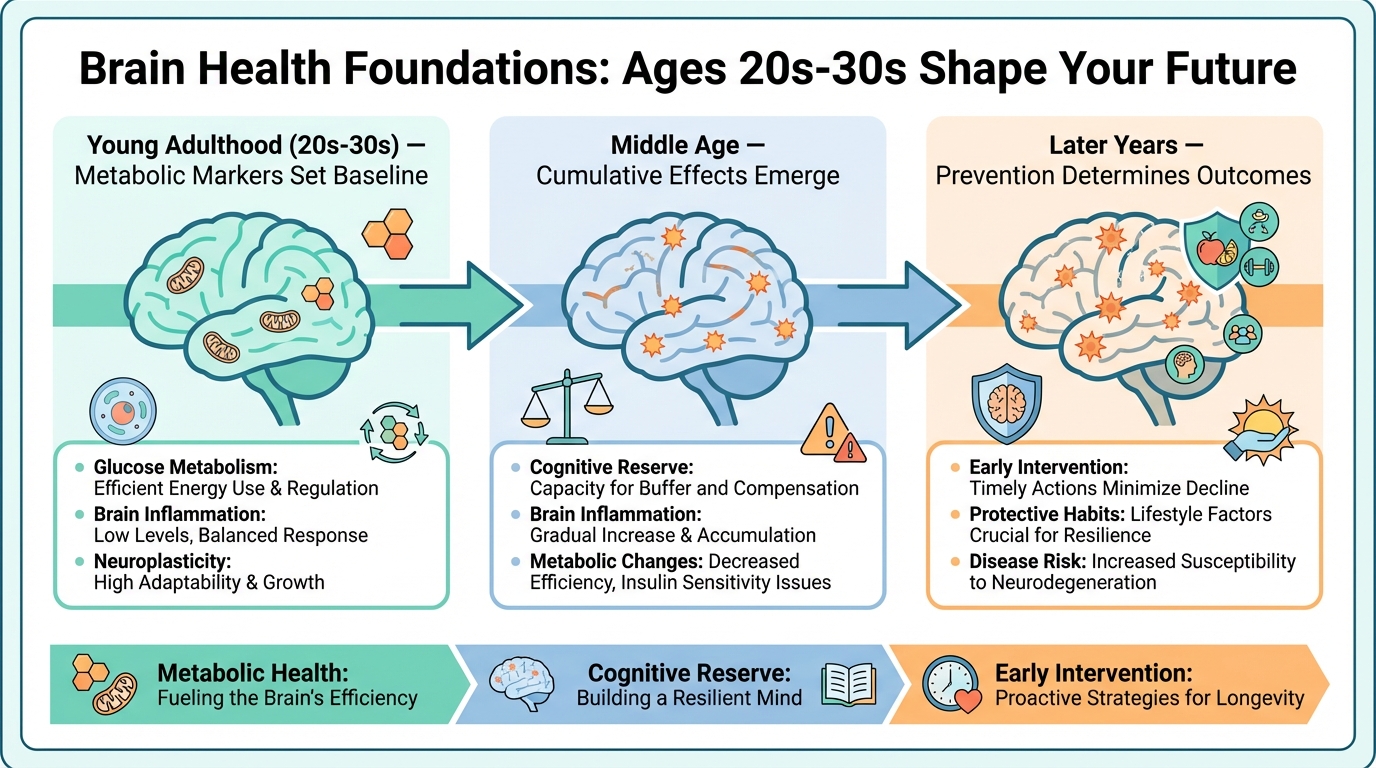
Alright, let’s peel back the layers. At the heart of these Alzheimer’s-like changes is metabolic stress, particularly linked to deficiencies in key nutrients like choline. Choline is a building block for acetylcholine, a neurotransmitter vital for memory and learning. When levels dip—often due to diets low in eggs, liver, or soybeans—your brain faces oxidative stress and inflammation. Studies from Nature Communications and Medical News Today highlight how blood biomarkers for Alzheimer’s, like amyloid and tau proteins, start showing up in tandem with metabolic shifts, even in those without full-blown dementia.
In young adults, obesity amplifies this: Excess fat leads to insulin resistance, which disrupts brain glucose metabolism. It’s like your brain’s fuel system getting clogged. Elevated markers such as neurofilament light chain (NfL) indicate neuron injury, while inflammation from cytokines acts as a slow poison, accelerating aging processes. Research also ties this to liver strain, where poor metabolic health spills over to brain health via the gut-liver-brain axis.
To make it clearer, here’s a comparison of traditional views versus emerging insights:
| Aspect | Old Way (Traditional View) | New Way (Emerging Research) |
|---|---|---|
| Age of Onset | Primarily 65+ years | Markers seen in young adults (20s-40s) with metabolic issues |
| Key Driver | Genetics and aging alone | Metabolic markers like low choline and inflammation |
| Detection | Late-stage symptoms | Blood biomarkers and early imaging |
| Prevention Focus | General brain games | Nutrient optimization and metabolic health |
This table underscores how our understanding is evolving—shifting from inevitability to actionable prevention.
Practical Use Cases & Application
So, how does this play out in real life? For a busy young professional, ignoring metabolic health might mean subtle forgetfulness creeping in during meetings or workouts feeling mentally foggy. Research suggests incorporating choline-rich foods could help—think adding eggs to breakfast or supplementing wisely (after consulting a doc). In families with obesity history, early screening for biomarkers via blood tests could flag risks, allowing lifestyle tweaks like exercise to boost brain blood flow.
For athletes or students, maintaining metabolic balance might prevent that “brain drain” during high-stress periods. One perspective is viewing your diet as brain insurance—small changes today could ward off bigger issues tomorrow.
Want to share this insight on TikTok/Shorts? Turn this article into a viral video using Revid.ai.
Educational Action Plan (How to Start)
Ready to take charge? Here’s a step-by-step guide tailored for beginners to intermediates.
- Level 1 (Learn): Start by reading up on choline and metabolic health. Check resources like the SciTechDaily article on nutrient deficiencies or track your diet with an app like MyFitnessPal to spot gaps. Research suggests aiming for 425-550mg of choline daily from foods like eggs, broccoli, and nuts.
- Level 2 (Act): Incorporate small habits: Add a choline boost to meals, aim for 30 minutes of daily exercise to improve metabolic function, and monitor inflammation with basic bloodwork. Consider the risks of over-supplementing—balance is key.
Too much text? Let Nolang explain this document to you in a video summary.
Conclusion & Future Outlook
In summary, while the risks of early Alzheimer’s-like changes are real—driven by metabolic markers like low choline—the rewards of proactive steps are huge: A sharper mind, better long-term health, and potentially dodging cognitive decline. It’s effort (diet tweaks, exercise) versus gain (brain longevity). Looking ahead, breakthroughs like GLP-1 drugs (e.g., Ozempic) show promise for Alzheimer’s, per NBC News, but always weigh individual factors.
Smart people automate. Whether it’s health logs or price alerts, set up workflows with Make.com to save time.
Author Profile
Written by John, the battle-hardened Life Strategist, with insights from Lila, the pragmatic Lifestyle Architect. Together, we demystify health science for everyday wins.
🛑 General Disclaimer
This article is for educational purposes only. I am not a doctor or financial advisor. Information regarding health, investments, or law should be verified with professionals. DYOR and take responsibility for your own decisions.
🛠️ Tools Mentioned:
References & Further Reading
- A common nutrient deficiency may be silently harming young brains | ScienceDaily
- A Common Nutrient Deficiency May Be Triggering Early Brain Damage in Young Adults
- Blood biomarkers of Alzheimer’s disease and progression across different stages of cognitive decline in the community | Nature Communications
- Dementia: Neurovascular, metabolic changes may predict progression
- Low choline level can expose you to Alzheimer’s, boost it with these in daily diet