How Many Glasses Of Alcohol It Takes To Disrupt Your Sleep
⚠️ DISCLAIMER: This article is for informational purposes only and does not constitute medical advice. Always consult a healthcare professional.
👋 Hello, Health Hackers! Ever poured yourself a nightcap thinking it’d usher you into dreamland, only to wake up feeling like you wrestled a bear all night? You’re not alone. In our fast-paced world, where stress is the unwelcome guest that never leaves, many turn to alcohol as a quick fix for shut-eye. But here’s the twist: that relaxing glass might be sabotaging your slumber more than you think. With sleep disorders on the rise—did you know that according to recent studies, over 30% of adults report poor sleep quality?—understanding how booze plays into this is crucial. And right now, in 2025, with wellness trends emphasizing recovery and biohacking, it’s the perfect time to dive into the science. Research suggests that even moderate alcohol intake can throw your sleep cycles out of whack, leading to fragmented rest and next-day grogginess. We’re talking reduced REM sleep, increased wakefulness, and a hit to overall sleep efficiency. Why does this matter now? Because quality sleep is the foundation of everything—from productivity to immune function—and if your evening drink is chipping away at it, it’s time to reassess.
Researching deep topics like the biochemical effects of alcohol on sleep stages can be exhausting, sifting through endless studies and articles. Stop endless scrolling. Ask Genspark to summarize the facts for you.
Key stat: Studies show that just one drink can reduce sleep quality by up to 4%, with effects compounding per additional serving.
The Problem (The “Why”)
Imagine your sleep as a well-orchestrated symphony, with different stages harmonizing to restore your body and mind. Now picture alcohol as that one tone-deaf musician who shows up uninvited, blasting a trumpet during the quiet parts. It’s disruptive! Biologically, alcohol acts as a sedative initially, helping you nod off faster, but it messes with your sleep architecture. It suppresses REM sleep—the dreamy phase where your brain processes emotions and memories—and boosts slow-wave sleep early on, only to cause rebounds of wakefulness later. This leads to poorer sleep quality, shorter duration, and that hungover feeling even without a headache. Psychologically, it’s a vicious cycle: bad sleep leads to more stress, which might tempt you to reach for another drink. One perspective is that this bottleneck keeps you from achieving optimal recovery, turning what should be restorative nights into fragmented ordeals.
Need to explain this concept to your team or family? Use Gamma to generate a visual presentation in seconds.
The Science Behind It
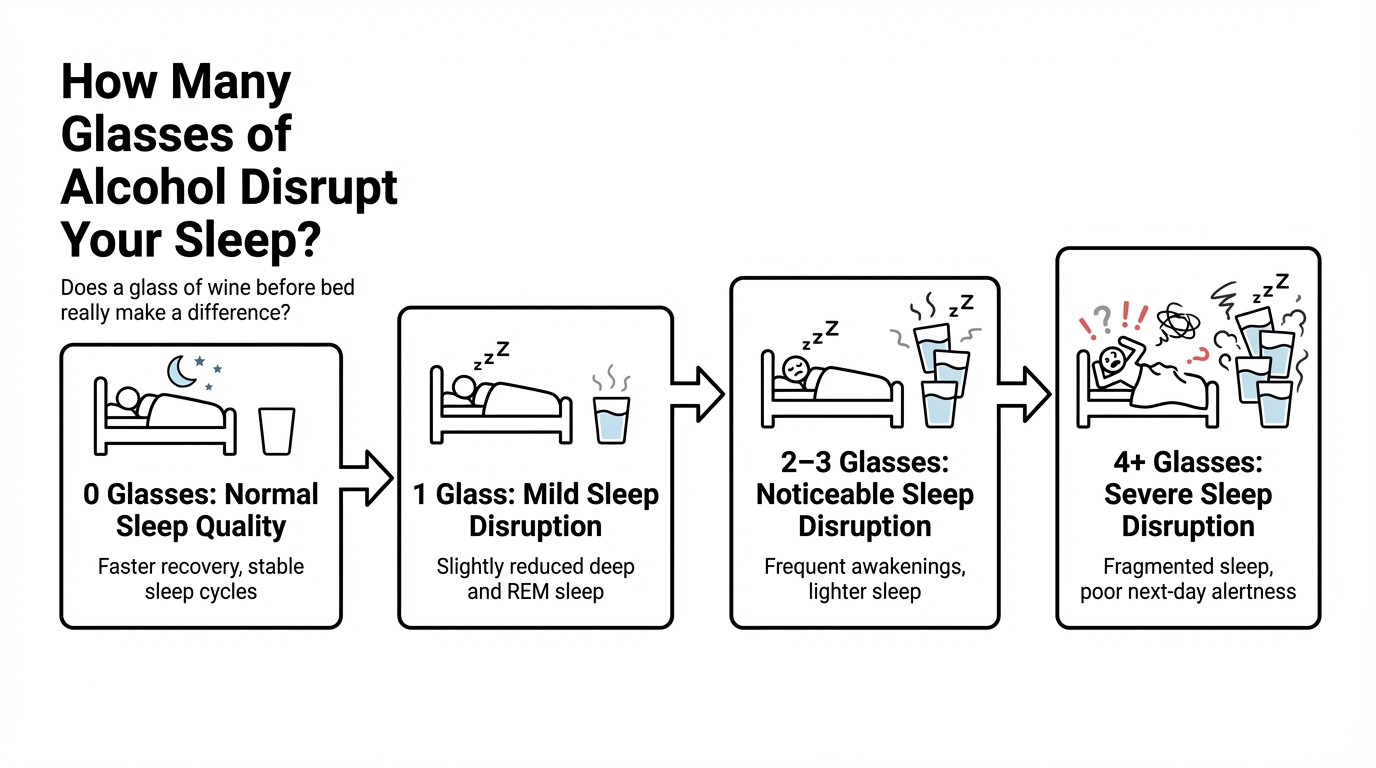
Let’s peel back the layers on how alcohol interacts with your sleep. At its core, alcohol is a central nervous system depressant. When you consume it, it boosts gamma-aminobutyric acid (GABA) levels, which calms the brain and reduces sleep onset latency—fancy talk for falling asleep quicker. Sounds great, right? But here’s the catch: as your body metabolizes the alcohol (at about one standard drink per hour), it creates byproducts like acetaldehyde, which can stimulate the nervous system, leading to arousal and fragmented sleep. Research from sources like ScienceDirect highlights that acute alcohol intake consolidates non-REM sleep initially but disrupts overall homeostasis, reducing delta power in later cycles.
Timing and quantity matter hugely. A 2023 review in Neuropsychopharmacology notes that alcohol before bed hastens sleep onset but negatively impacts quality by suppressing REM by up to 20% in moderate doses. Even low amounts—say, one glass of wine—can alter your circadian rhythm, mimicking jet lag without the travel perks. For heavier intake, it’s worse: multiple drinks imbalance slow-wave and REM sleep, as per The Indian Express, leading to restless nights and daytime fatigue. And get this—combining it with factors like cabin pressure or caffeine can amplify issues, per recent studies on hypobaric hypoxia and substance interactions.
| Aspect | No Alcohol (Old Way) | With Alcohol (New Disruption) |
|---|---|---|
| Sleep Onset | Natural, may take 10-20 minutes | Faster, but artificial sedation |
| REM Sleep | Full cycles for memory consolidation | Reduced by 10-20%, fragmented |
| Overall Quality | Restorative, 7-9 hours efficient | Declines 4% per drink, wakeful |
| Next-Day Impact | Energized, focused | Groggy, reduced productivity |
To put it wittily: alcohol is like inviting a party crasher to your bedtime routine—they start fun but end up trashing the place. Studies, including a 2024 Runner’s World piece, confirm that even one drink messes with your REM cycle, leaving you less refreshed. For context, a standard drink is about 5 ounces of wine, 12 ounces of beer, or 1.5 ounces of spirits. Cross that one-drink threshold, and you’re in disruption territory, with effects scaling up. A longitudinal twin study from SLEEP Advances even links chronic alcohol use to sustained poor sleep over years.
Practical Use Cases & Application
How does this knowledge change your daily life? Picture this: you’re a busy professional winding down with a glass of red after a long day. Sure, it helps you unwind, but if you’re skimping on sleep quality, your morning meetings suffer—foggier thinking, mood dips, and even weakened immunity. Research suggests considering the risks of habitual evening drinking if you’re chasing fitness goals; alcohol disrupts recovery, making workouts less effective. For parents or students, it’s a game-changer: better sleep without booze means sharper focus and less reliance on caffeine the next day.
In social scenarios, like a dinner party, opting for one drink max (or none) could preserve your rest. Track it—apps like sleep logs show patterns. One perspective is swapping that second glass for herbal tea, turning potential disruption into deeper slumber. And for travelers? A 2024 study on flight risks warns that alcohol plus cabin hypoxia tanks sleep even more, so skip the in-flight wine.
Want to share this insight on TikTok/Shorts? Turn this article into a viral video using Revid.ai.
Educational Action Plan (How to Start)
Ready to apply this? Here’s a step-by-step guide tailored for beginners to intermediates.
Level 1 (Learn): Start by educating yourself. Read up on sleep hygiene via resources like the Calm Blog or Healthline articles on alcohol’s effects. Track your baseline: for a week, note your sleep without alcohol using a journal or app like MyFitnessPal for habits. Understand symptoms—waking up multiple times? That’s a sign. Research suggests monitoring how even small amounts affect you personally.
Level 2 (Act): Implement small habits. Set a “last call” time—stop drinking at least 3-4 hours before bed to allow metabolism. Experiment with alternatives: try mocktails or chamomile tea. Test initial trials: go alcohol-free for a weekend and compare sleep quality. Consider the risks of overdoing it, and build in buffers like hydration to mitigate effects. Over time, aim for moderation—research from CNET advises logging drink quantity to spot patterns.
Too much text? Let Nolang explain this document to you in a video summary.
Conclusion & Future Outlook
In summary, the risks of alcohol on sleep—fragmented cycles, reduced REM, and overall poorer quality—often outweigh the short-term relaxation rewards. Even one glass can disrupt, with two or more amplifying issues, but the effort to moderate yields big gains in energy and well-being. Looking ahead, as biohacking evolves, tools like wearables might quantify these effects in real-time, helping us optimize. Remember, it’s about balance; research suggests mindful consumption can coexist with good sleep if timed right.
Smart people automate. Whether it’s health logs or price alerts, set up workflows with Make.com to save time.

👨💻 Author: SnowJon (Tech & Life Researcher)
A researcher leveraging insights from the University of Tokyo Innovation Programs to share practical wisdom on Health, Wealth, and Self-Growth. While working as a professional, he operates 8 blog media outlets & 9 YouTube channels.
His motto is to translate complex theories (whether blockchain or biology) into tools anyone can use.
*This article utilizes AI for drafting, but all verification is performed by the human author.
🛑 General Disclaimer
This article is for educational purposes only. I am not a doctor or financial advisor. Information regarding health, investments, or law should be verified with professionals. DYOR and take responsibility for your own decisions.
🛠️ Tools Mentioned: